

I’ve sat through enough wedding mornings in salon chairs to know one thing: a bridal hairstyle has about 11 hours to behave. Through tears, tight hugs, dancing, outdoor humidity, and a photographer who wants you to tilt your chin down for the 40th time. That’s what separates an inspiration photo from a style that actually works on your real hair, on your real day.
The looks I’m about to walk you through aren’t just pulled from runway fantasy — they come from conversations with stylists who fix updos that collapsed by cocktail hour, and from brides who learned the hard way that certain textures need a completely different approach. I’ll tell you what holds, what slips, what makes fine hair look sparse after three hours, and what thick hair will fight back against.
No “timeless yet modern” fluff. Just 17 specific bridal styles, the hair types they actually work on, and what you’ll be dealing with when you’re no longer standing still in air conditioning.
1. The Low Twisted Chignon With Face-Framing Tendrils
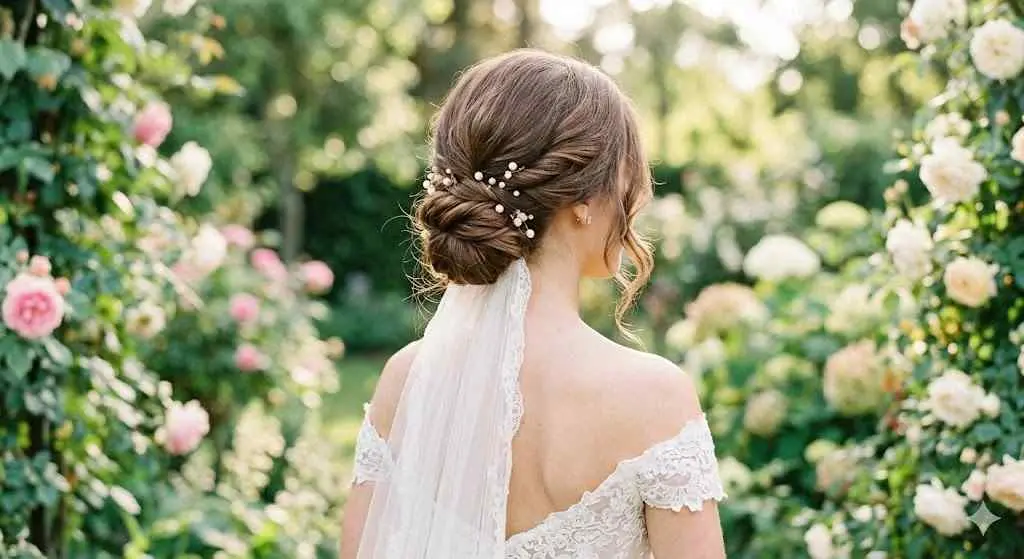
It’s the chignon you’ve seen on every second bride on Pinterest, but the difference between a flat, forgettable knot and something that photographs beautifully usually comes down to twist placement. This style sits at the nape, built from two or three loose twisted sections pinned into a soft, almost un-done knot, with a few wispy bits pulled free at the temples.
Works best on hair that hits at least collarbone length — any shorter and those twists won’t have enough length to anchor. If you have fine hair, your stylist will likely need to add a small mesh donut or a few hidden padding pieces inside the chignon. Otherwise the knot can end up looking the size of a walnut, which isn’t the look anyone wants in their detail shots. On very thick hair, expect your stylist to remove some internal bulk first; if they don’t, the chignon will feel heavy by hour three and start drooping lower than intended.
Face shape note: The front wisps can soften a stronger jaw, but if you have a rounder face, ask for slightly longer pieces that hit around the chin instead of the cheekbone — shorter face-framing can sometimes visually widen.
2. Sleek Center-Part Low Bun
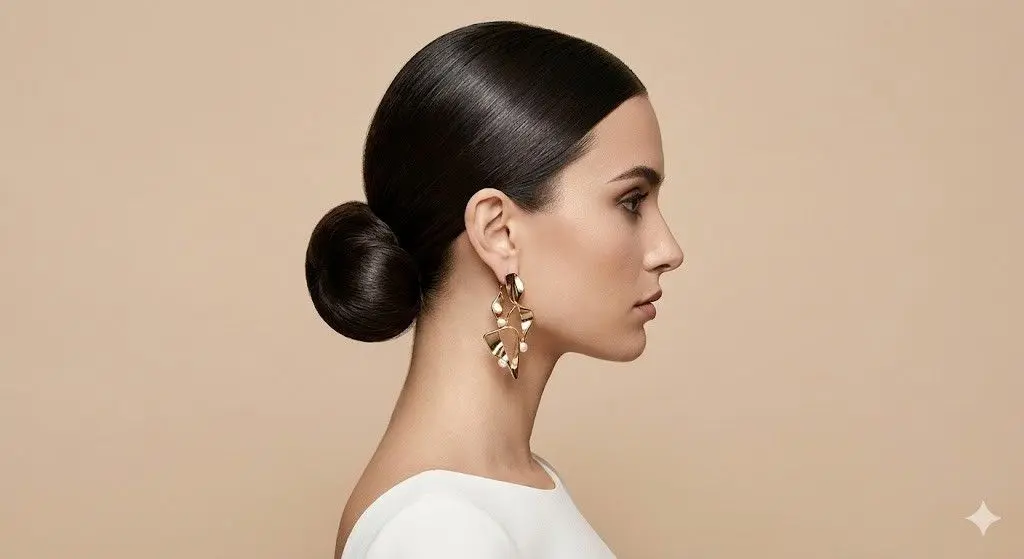
This is the architectural one. Glass-like hair pulled cleanly back into a low, tight bun at the crown’s base. It reads modern, a little bit fashion-editorial, and it shows off your dress’s neckline better than almost anything else.
But let’s be real: this style has no hiding spots. Every bump from an elastic, every flyaway, every tiny cowlick shows. You need seriously smooth hair texture to pull it off without a full head’s worth of gel and a blow-dryer round before you even start. Natural curl patterns will fight this — if you have type 3 or 4 curls, you’re looking at a blowout and flat-iron pass first, which means you’ll also want a solid humidity-blocking spray. Fine, straight hair is the easiest canvas here, though you’ll still need product to keep those shorter broken hairs around the hairline from lifting.
Ask your stylist about the bun’s position. Too low and it hits the veil attachment point awkwardly; too high and the sleekness can start to look severe. The sweet spot is usually where the head starts to curve inward toward the neck.
3. Voluminous Curtain-Bang Half-Up Style
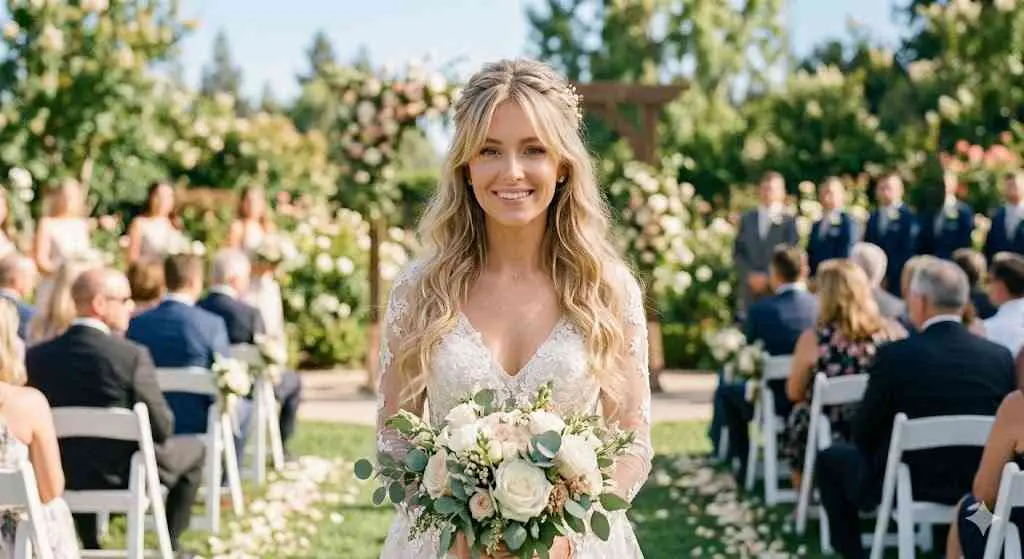
This one works for the bride who wants to feel like she’s got her hair down, but not fully in her face during the vows. The top half is sectioned from temple to temple, pulled back and pinned softly at the back crown, leaving the bottom half loose in waves or curls — and curtain bangs left free at the front.
If you’ve got curtain bangs, this is where they shine. They frame the eyes without hiding your dress detail. But bangs are temperamental on wedding days. Humidity or nerves can make them separate and look stringy. Have your stylist on standby with a tiny amount of dry texturizing powder to refresh them right before you walk down. On fine hair, the half-up section can sometimes pull too flat against the scalp — ask for a little backcombing at the crown before the pinning, not after.
This look needs your hair to hold a curl for hours. If your hair drops waves in under two hours normally, this might not be the one unless you’re okay with a mid-reception refresh.
4. Boho Braided Crown With Baby’s Breath
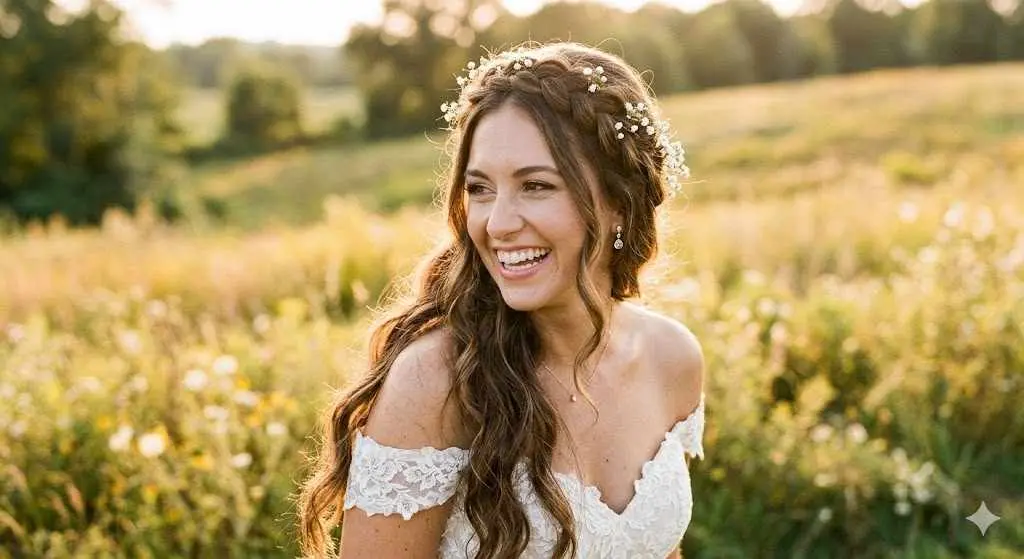
The flower crown alternative. A loose Dutch or lace braid wraps across the front hairline like a headband, with the rest of the hair left down in soft texture, tiny sprigs of baby’s breath woven into the braid itself.
It reads meadow wedding, outdoor ceremony, destination on a cliffside. But wind is its enemy. On a breezy day, those loose pieces around the braid can whip into your lip gloss within minutes. Textured, day-two hair holds the braid far better than freshly washed hair — if your stylist washes you the morning of, ask for a salt spray prep to add some grip.
Curly and wavy textures naturally work well for this because the braid doesn’t need to look perfectly neat. Stick-straight fine hair might slip out of the braid after a few hours unless the stylist anchors it with tiny clear elastics and pins at multiple points.
5. Soft Hollywood Waves Pinned to One Side
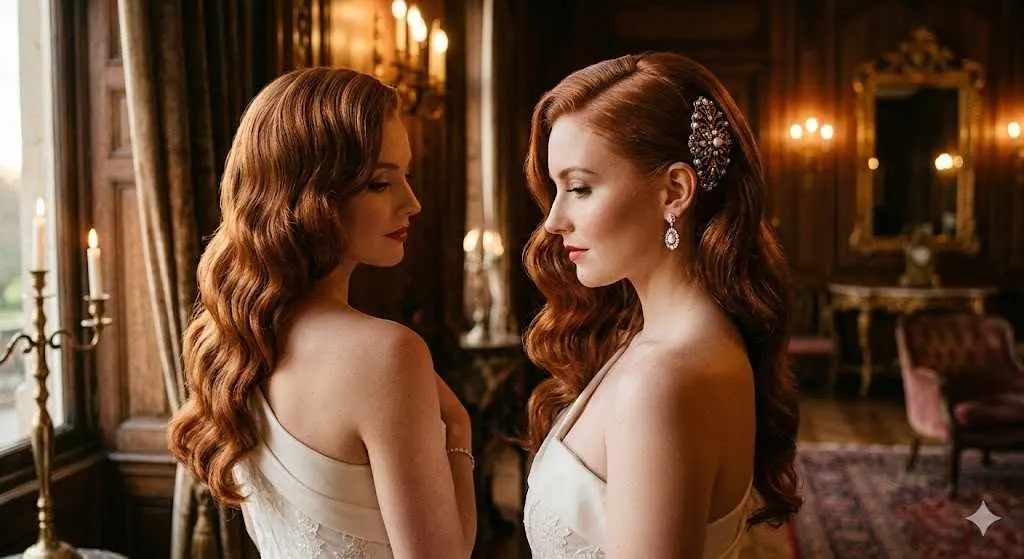
Old Hollywood glamor, but pinned behind one ear so the opposite side does all the sculptural work. The waves are brushed out to a soft S-shape, then a decorative comb or clip secures the heavier side back.
This looks incredible with a one-shoulder gown or an asymmetrical neckline. The wave pattern needs patience — it’s not a quick wand curl job. Each section is set in the same direction to create that uniform sweep, so your stylist will need extra time compared to a typical loose curl look. Fine hair loses the wave definition faster; thicker hair can hold it well into the evening but may need a stronger-hold hairspray that doesn’t turn crunchy.
One thing nobody mentions: if you’re wearing a veil, pinning to one side can cause the veil to pull slightly off-center all day. Test the balance before you leave the chair.
6. Textured Low Ponytail With Wrapped Base
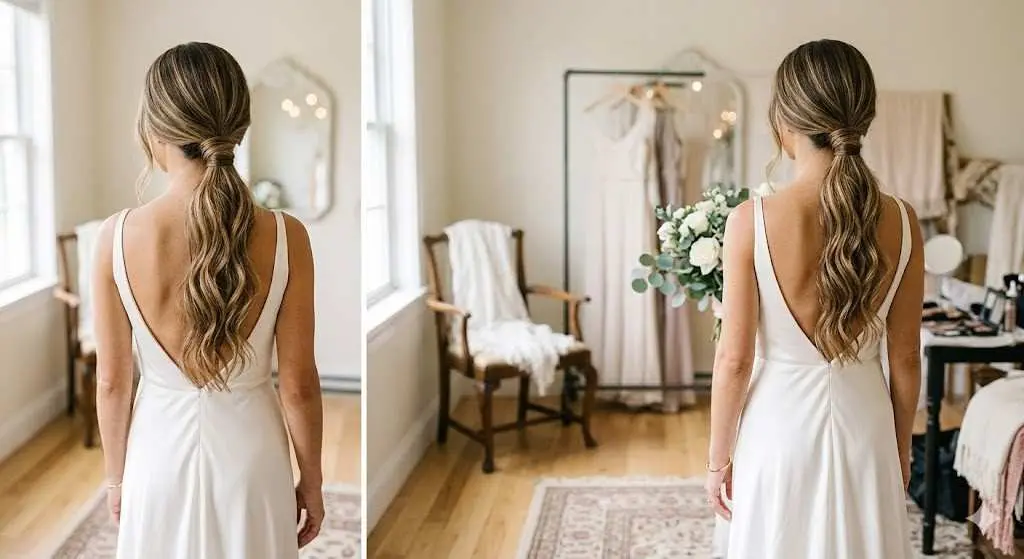
Not the gym ponytail. This one sits low at the nape, the hair textured with soft waves or a slight bend, and the elastic is completely hidden by a strand of hair wrapped around it and pinned underneath.
Works on almost any length past the shoulders, but the texture is everything. Stick-straight hair needs a wave pass or it’ll read “office ponytail” instantly. Curly and coily hair gets a gorgeous voluminous shape here, though you’ll want your stylist to avoid over-smoothing the top — a little natural texture at the roots keeps it from looking too “done.”
A major plus: this is one of the few styles that genuinely transitions well to the reception. If your veil comes off, you’ve still got a defined look that won’t unravel. The wrapped base sometimes loosens if you dance hard, so ask for one pin tucked vertically into the wrap for extra insurance.
7. Messy Braided Updo With Pulled Loops
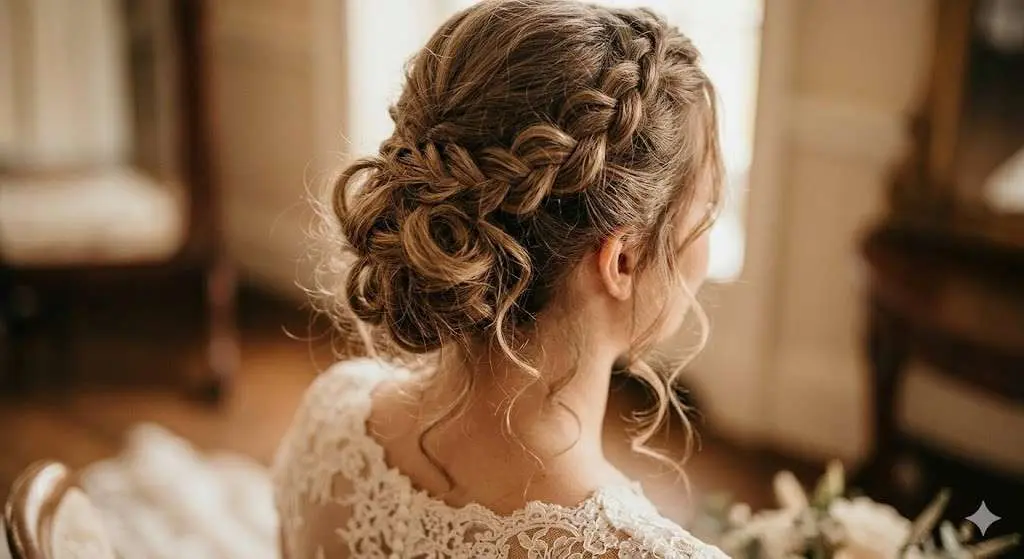
This is the style that looks like you just gathered everything up and it magically fell into place — except it takes 40 minutes and 35 pins. The “mess” is actually carefully placed pulled loops of braid pinned at different angles, with small pieces pulled out around the ears and nape.
Works best on medium to thick hair. If your hair is fine, the braid sections can look sparse and you’ll see through the loops to the scalp — a little colored dry shampoo or root powder underneath can help camouflage that. On very curly hair, the loops need to be pulled gently so the curl pattern doesn’t frizz apart.
This style pairs well with a low back dress because the updo sits mid-crown and doesn’t compete with the dress back details. It does require a stylist who’s good at “undone” without it turning into genuinely messy by hour five.
8. Sleek High Ballerina Bun
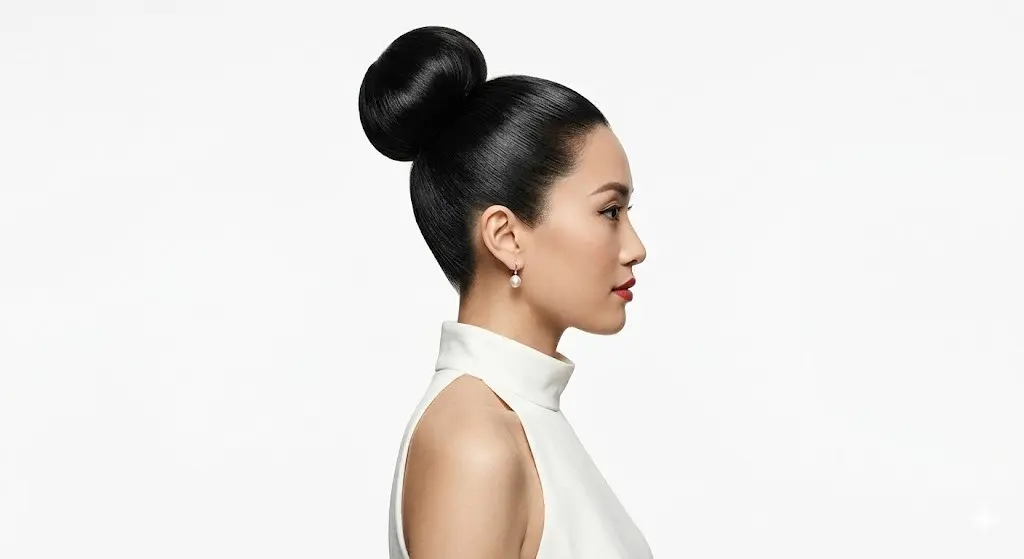
Pulled tight, high on the crown, perfectly round, not a hair out of place. It’s the architectural counterpart to the low sleek bun.
The height elongates your neck and makes a strapless dress look even more striking. But the tension is no joke — if you’re prone to headaches from tight ponytails, think twice. The bun itself is often built around a foam donut, and if your hair is thin, you’ll need that donut sized carefully so it doesn’t peek through the wrapped hair. Thick hair will require serious pinning to keep the bun balanced on top without leaning backward slowly throughout the day.
Frizz at the hairline is the biggest enemy. Even a hint of humidity can raise those baby hairs along the forehead and around the ears. A toothbrush sprayed with strong-hold hairspray can lay them flat, but you’ll need someone to check on it before the ceremony.
9. Half-Up Top Knot for Short Hair
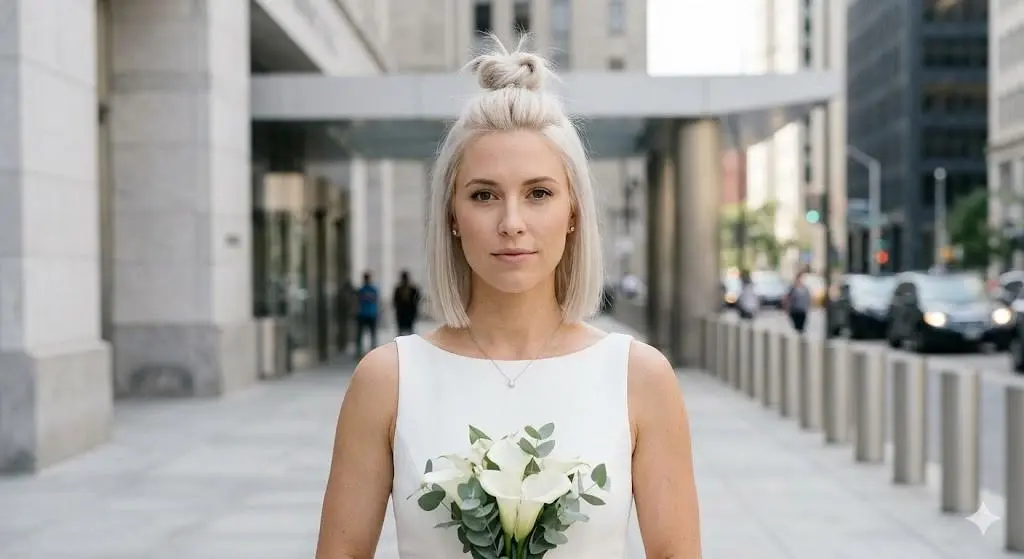
Short hair brides — above the chin or bob length — often get told their options are limited. This style pushes back against that. The top section is pulled into a small, deliberately undone knot high on the crown, while the bottom section is left down in textured waves or kept sleek and straight.
Works for hair that hits at least ear length on the top layers. If the sides are shaved or undercut, you’ll need to embrace the contrast — which can look incredible with the right earrings. The knot itself is small, sometimes just a twisted mini-bun secured with pins. Don’t try to make it big; the proportion looks off.
This style has an edge to it — it reads modern, a little downtown cool, not soft romantic. Perfect for a courthouse wedding or a jumpsuit over a gown.
10. Loose Romantic Updo With Braided Detail
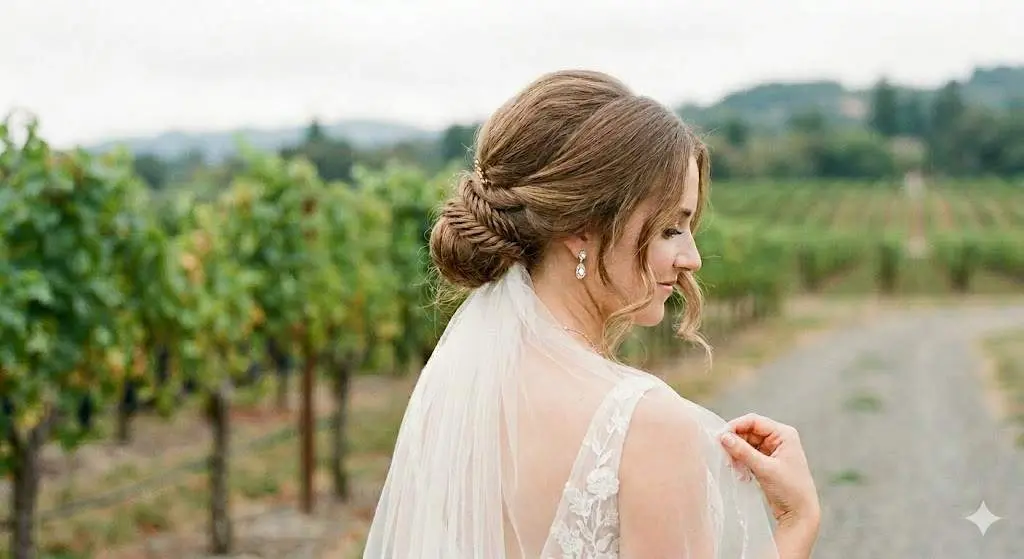
A swept-up style with just enough looseness to feel soft, with a single braid — often a fishtail or a small French braid — worked into one side as a detail. It’s usually pinned low, with volume at the back crown and soft pieces pulled out at the front.
If your hair is slippery straight, the loose parts can slide out of the pins unless your stylist uses a texture spray as a foundation. Curly hair works beautifully here because the natural texture adds volume and grip, but the curl pattern needs to be defined before pinning; otherwise you risk a frizzy silhouette in photos.
One thing to check: if you’re wearing a cathedral-length veil, the bulk of the updo plus the braid can create a lump under the comb. Ask your stylist to place the veil comb above or below the braid, not directly over it.
11. Side-Swept Curly Cascade
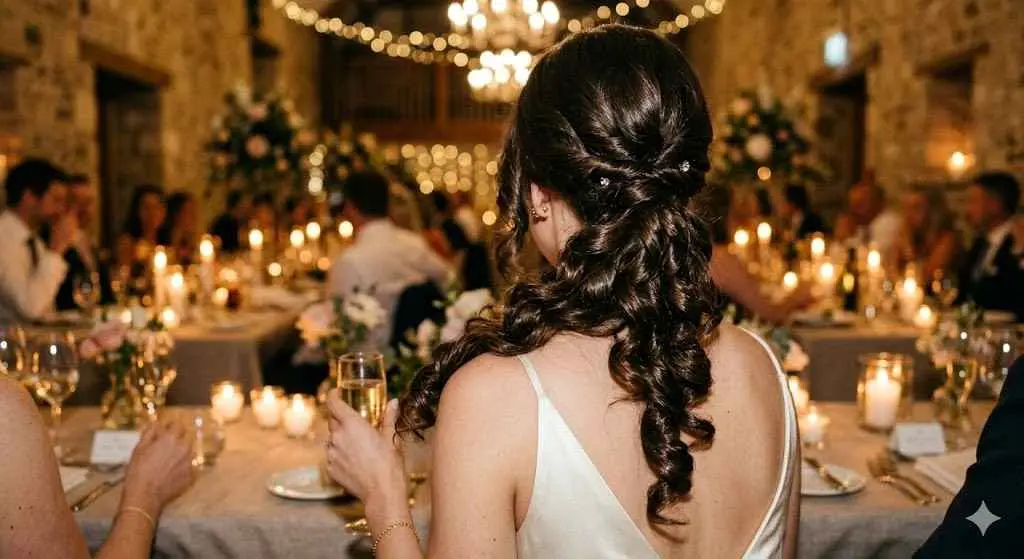
All the hair is gathered over one shoulder, falling in defined curls that spill down the front. It’s dramatic, asymmetrical, and frames the face and neckline completely differently than a centered style.
Curly-haired brides — this one’s yours, truly. Natural curl clumps will hold the cascade shape without needing to curl every piece. For straight or wavy hair, your stylist will use a wand to create uniform spirals that are then pinned subtly to stay over one shoulder. The pins need to be hidden along the back of the neck — a high-neck dress will hide them; a backless dress might not.
Weight is the factor nobody thinks about. All that hair over one side can feel physically heavy after a few hours, especially if your hair is dense. You might find yourself unconsciously tilting your head. If you have very heavy hair, ask for some internal thinning a week before — not the day of.
12. Retro Rolled Updo (Victory Roll Inspired)
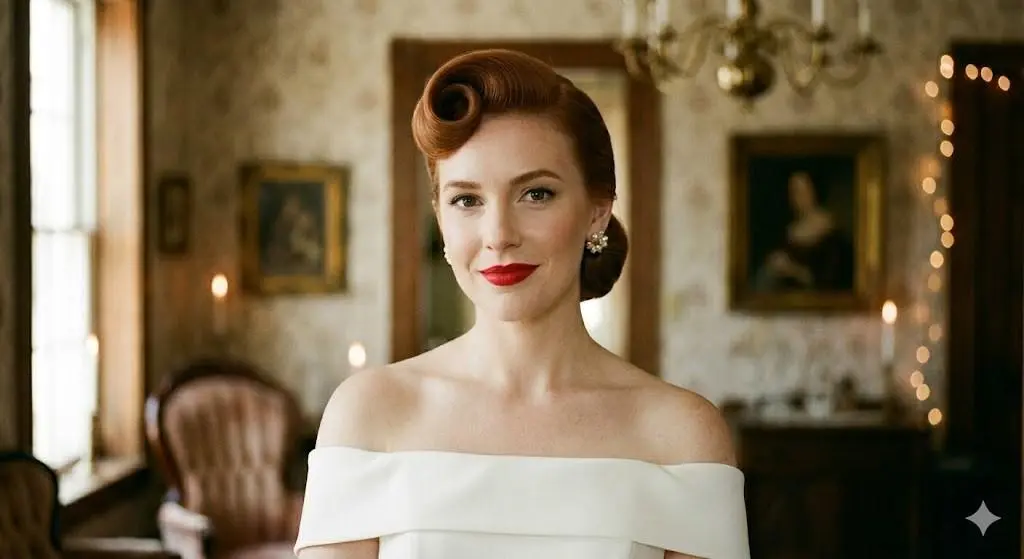
A modern take on the 1940s rolled updo, with a soft barrel-like roll at the front hairline and the back gathered into a low chignon or padded roll. It’s vintage in spirit but can look surprisingly fresh with minimalist makeup and a sleek modern dress.
The front roll requires a solid foundation — usually backcombing and a good setting lotion that doesn’t flake. If your hair is very short in the front, you may not have enough length to roll securely. Fine hair tends to collapse unless the roll is shaped around a small hair rat or padding. Your stylist should secure the roll with crisscrossed pins inside, not just at the surface.
Glasses brides — be careful here. The front roll can bump against the arms of your frames if they sit high on the bridge. Bring your glasses to the trial.
13. Twisted Rope Braid Ponytail
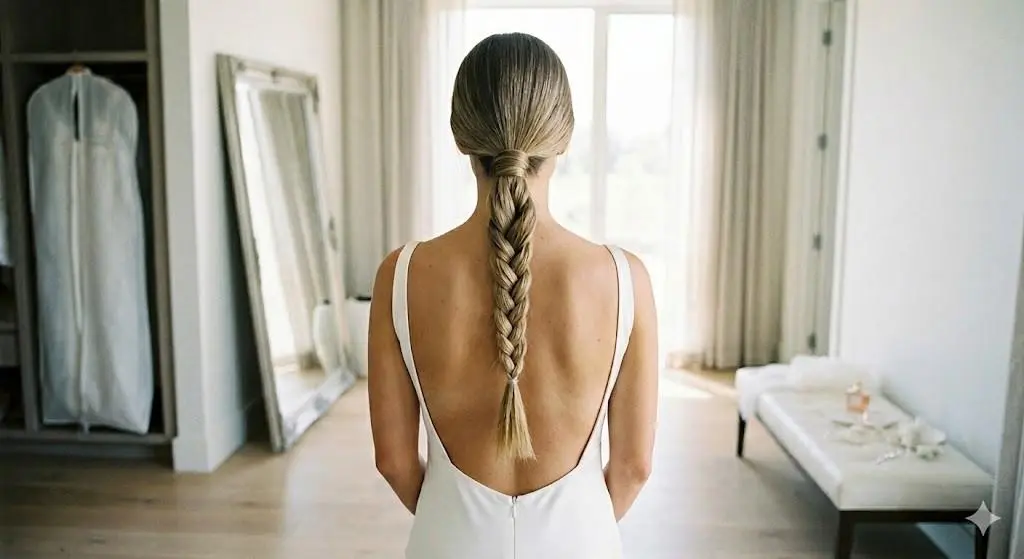
A low ponytail that’s been split and twisted into a thick rope braid, then lightly pancaked for volume. It’s more polished than a regular three-strand braid and catches the light beautifully because of the twist’s spiral shape.
This one works for mid-length to long hair. Shorter pieces around the face will need to be pinned or gelled into place so they don’t escape the twist. If your hair is heavily layered, the shorter pieces inside the rope braid will pop out within the first hour, so this style really wants fairly blunt length.
A rope braid can unwind from the bottom if the elastic isn’t tight enough. Your stylist will likely wrap a tiny clear elastic and then cover it with a small section of hair pinned with a bobby pin pushed upward from underneath.
14. Natural Curls With Pearl Pins
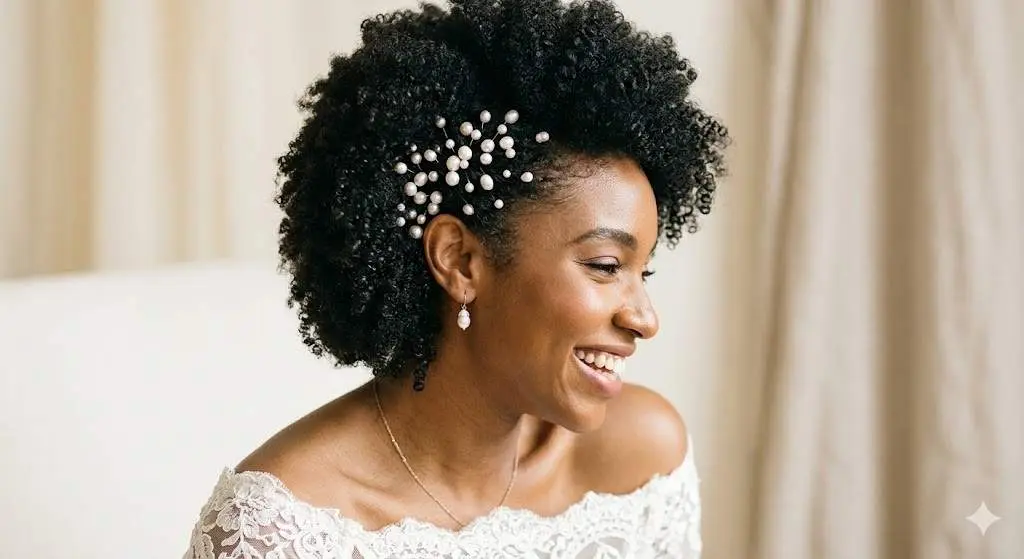
No curling irons, no smoothing. This style works with your natural curl pattern — whether it’s loose waves, tight coils, or a kinky texture — and uses scattered pearl pins or small pearl clips as the only adornment.
The trick is shape. A curly fro or defined coils need a shape that frames the face intentionally. That usually means your stylist does a dry cut a week or two before the wedding to create the silhouette, then on the day simply refreshes your curls with a water-based spray or a light curl cream and places the pins strategically — often clustered around one temple or along the back.
Humidity is your friend here, not the enemy. But avoid heavy oils the morning of; they can transfer onto your dress, and they’ll stain satin or silk bodices in ways you won’t notice until you see the photos.
15. Double Braids Into a Low Bun
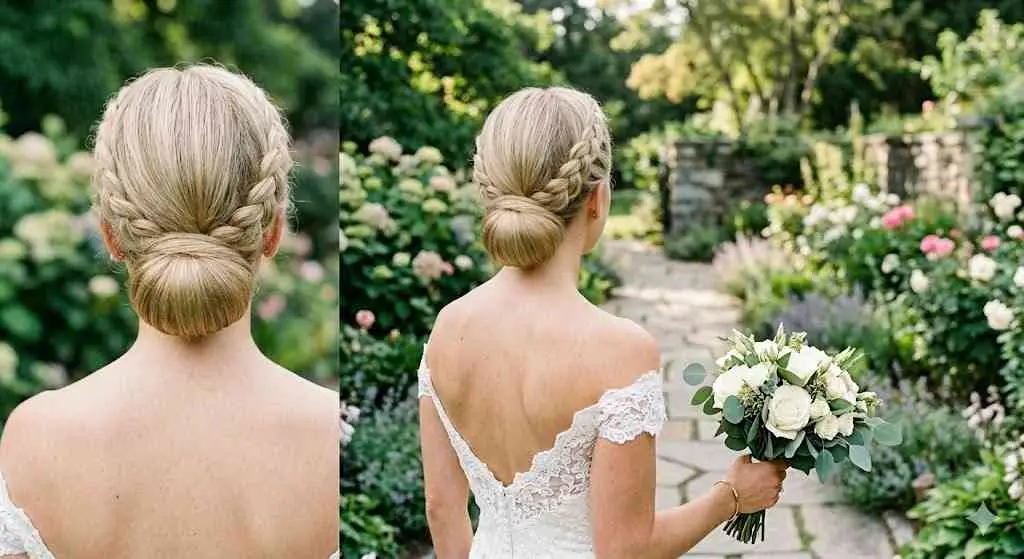
Two French or Dutch braids starting at the hairline, running back along the sides of the head, and meeting in a low bun at the nape. It’s part sporty, part polished, and keeps every hair off your face — useful for warm-weather weddings or if you just know you’ll be crying.
This style needs enough length for the braids to reach the back without pulling the bun too high. If your hair is shoulder-length, the braids may stop short, and the stylist will have to build the bun slightly higher to meet them. Thick hair will produce two substantial braids that add bulk under the bun — some stylists will pancake them flatter to reduce the overall volume at the back of the head.
Fine hair will produce thinner braids; pinning them into the bun with visible texture can help them look intentional rather than skimpy.
16. Textured Pixie With Embellished Clip
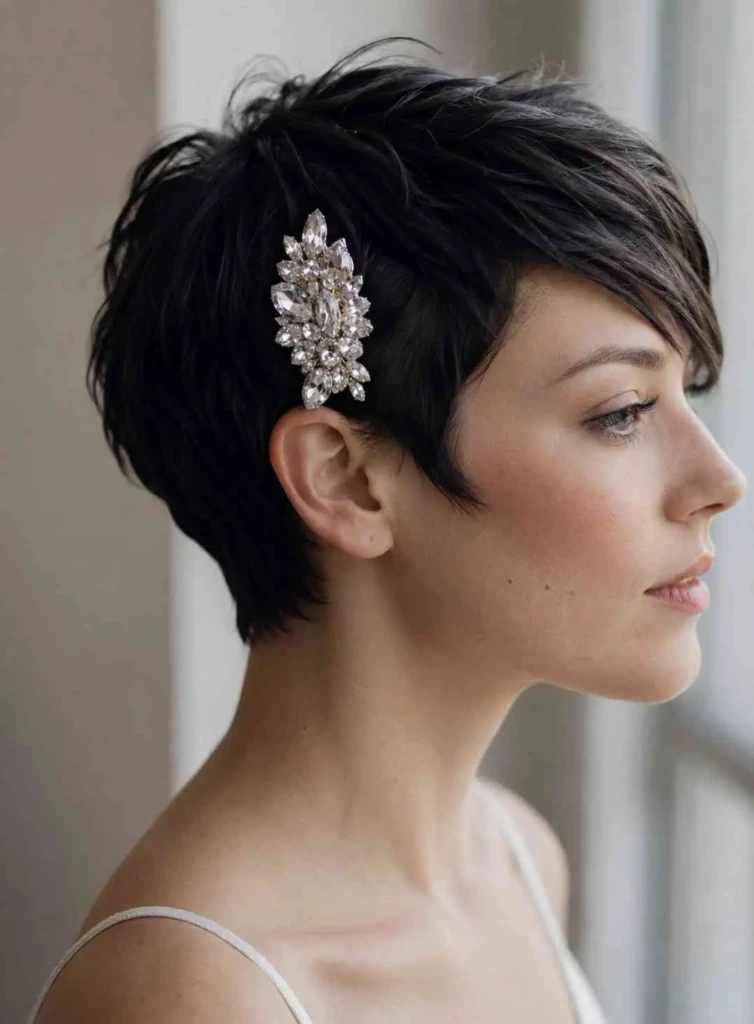
Short hair brides, again. If you’ve got a pixie cut or a cropped cut, a single well-placed embellished clip — crystals, pearls, or a vintage brooch — can do more than any elaborate styling attempt. The hair itself is usually swept to one side or worn with a little piece-y texture at the front.
This is the lowest-maintenance style on the list. You’ll still need a fresh trim about a week out so the neckline and around the ears looks sharp. Products matter more here: a wax or pomade to define the pieces on top, maybe a shine spray to give it a more deliberate, dressed-up look. No veil is needed, but a birdcage veil can sit beautifully over the crown without overwhelming the cut.
One note: if you usually style your pixie forward over the forehead, an embellished clip at the side can shift the balance in a way that feels unfamiliar. Do a test run a few weeks before to sit with the new placement.
17. Bubble Ponytail With Hidden Wire
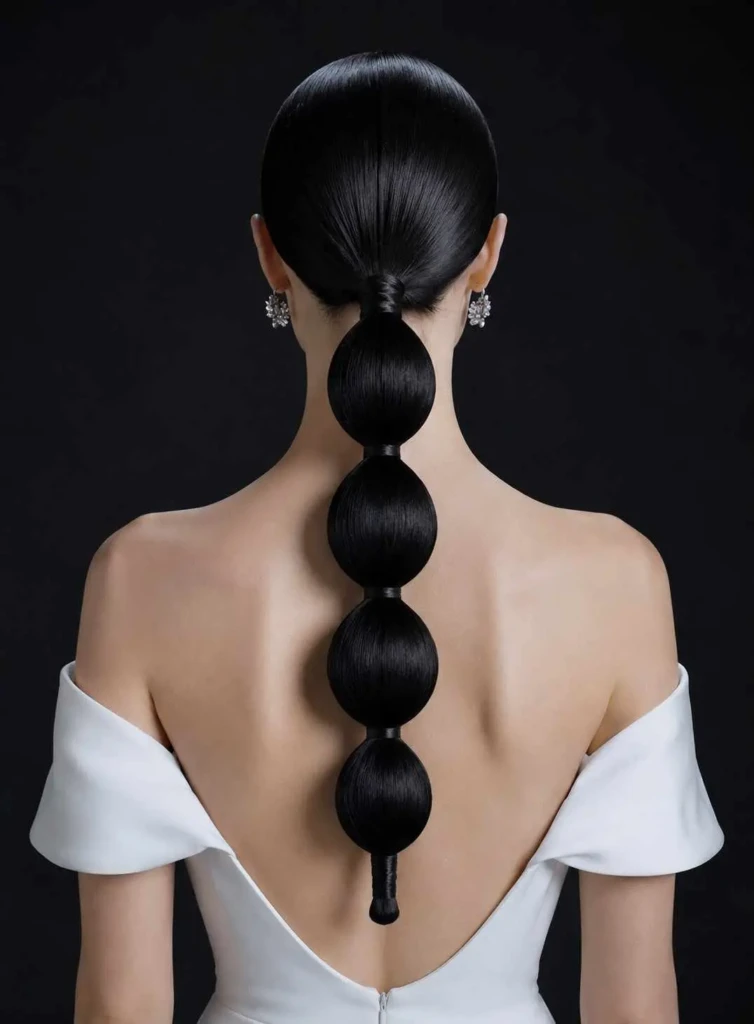
The bubble ponytail has had a resurgence, but the wire version — where a thin bendable wire is threaded through the hair to shape each “bubble” into a soft globe — looks far more sculptural and intentional than the old elastic-and-tease method.
It starts as a mid-to-high ponytail, then the wire is inserted and the hair is shaped into spherical sections down the length. It’s structured, a bit fashion-forward, and works best on one-length hair. Layers cause the bubbles to look inconsistent — hair pokes out between the sections and breaks the line. If you have blunt-cut hair past your shoulders, this can look incredible.
The wire itself can sometimes poke if the ends aren’t tucked and padded well. Ask your stylist to wrap the very end with a small piece of hair and tape or a tiny elastic to keep it completely covered. Not every stylist knows how to do this well — if it’s on your list, find someone who’s actually done it on wedding hair before, not just in a tutorial.
Styling & Maintenance Realities Across All These Looks
No matter which style you choose, there are a few things that hold true across the board. First, a trial is non-negotiable. Not a “maybe” — a booked appointment at least four to six weeks out. Take photos from multiple angles, wear a top with a similar neckline to your dress, and move around. Sit in a warm room. See if the style survives a tight hug and 20 minutes outside.
Heat styling: almost every look above, except the natural curls and the short pixie, involves some kind of thermal tool. That means your hair needs to be in decent shape before the day. A deep conditioning treatment a week before can help your hair hold the style without looking fried, but don’t do it the day of — freshly conditioned hair is slippery and resistant to holding curl.
Humidity is the silent ruiner. If you’re getting married somewhere coastal or in peak summer, bring a small anti-humidity spray to the venue and have a bridesmaid carry it. Frizz won’t respect your timeline. Fine-haired brides in humidity: your volume at the roots will drop faster, so tell your stylist to go slightly bigger than you think you want in the trial.
Trimming before the wedding: get any major cut or shape change done at least two weeks out. A last-minute trim can leave blunt ends that don’t hold waves the same way.
Products you’ll want on hand for touch-ups: a mini dry texturizing spray (for volume at the roots), a small can of strong-hold hairspray that doesn’t smell like a prom in 2004, and matte bobby pins that match your hair color — metallic ones flash in photos.
What to Ask Your Stylist at the Trial
Walking in with just a photo and saying “this” rarely works because hair behaves differently from head to head. Ask these instead:
- “Can you show me where you’ll place the padding or support if my hair is too fine for this shape?”
- “How will this hold up in humidity — and what should I keep on hand?”
- “If I dance for three hours, what part will loosen first?”
- “Where exactly will the veil comb sit in relation to the style — above, below, or through it?”
- “If I want to take the veil off later, what does the back look like on its own?”
- “What’s the grow-out or slip risk with my hair type? Do you need to use any anchoring pins that might show?”
- “Can we test this with a blusher veil so I know how it pulls when flipped back?”
The best stylists will be honest if your hair type can’t quite get the exact look. Listen when they offer a modified version — they’re saving you from a 4 p.m. hair disaster.
Common Mistakes Brides Make With Wedding Hairstyles
One of the biggest is choosing a style they’ve never worn in any form before. If you never pull your hair off your face and suddenly you’re in a tight high bun for 12 hours, you might feel exposed and uncomfortable. It translates in photos. Pick something that feels like an elevated version of you.
Another mistake: washing hair the morning of, even if it feels counterintuitive. Day-old hair holds a style better. Freshly washed strands are too soft and slippery. Your stylist will likely tell you to wash the night before, blow-dry smooth if needed, and sleep with it loose or in a loose braid.
Veil placement timing — it needs to go in after the style is finished, not halfway through, but many brides get anxious and ask for it too early. Let the stylist finish the hair, spray it, set it, and then place the comb.
And the last one: not eating or drinking because you don’t want to mess up your lip or hair. You’ll get lightheaded, your eyes will look tired, and the hair won’t suddenly fall apart because you sipped water through a straw. The style should hold through that.
FAQS
Which wedding hairstyle works best for fine, thin hair?
Structured styles like the sleek low bun or the twisted chignon with added hidden padding work well. Avoid very loose, piece-y styles that can look stringy when volume drops. Tell your stylist your hair is fine so they can build internal support.
Can I wear a veil with a high bun?
Yes, but the veil comb needs to be placed beneath the bun, at the point where the bun meets the head. If your bun is very high, the veil will drop from a higher point, which changes the drape length in the back — something to check at the trial.
How do I keep my curls from falling out during an outdoor wedding?
Start with hair that wasn’t washed the same day, use a heat protectant with hold, and let each curl cool completely before touching or pinning. A flexible-hold hairspray is better than a stiff one because it lets the curl move without separating. Have a bridesmaid carry a curling wand for emergency spot fixes.
What’s the best updo for a backless dress?
A mid-to-high updo or a low style that sits at the nape but not below it, like a chignon, works well because it leaves the back bare. The twisted rope braid ponytail can also work if positioned to fall over one shoulder rather than down the back.
How long before the wedding should I get my hair colored?
Two weeks is safe — it allows the color to settle and look natural, and gives you time to correct anything. A fresh highlight a week before can look too stark and might not hold texture the same way.
Do I need extensions for a fuller bridal look?
Not always. If you want a very voluminous half-up style or a thick braid and your hair is fine, clip-in extensions can help, but they need to be color-matched perfectly and placed by your stylist. Avoid them if they’re not absolutely necessary — they add weight and can make some styles harder to pin.
Can short hair work with a veil?
Yes. A birdcage veil or a short blusher veil comb can be placed directly into a pixie or bob with the right anchoring. Your stylist will backcomb a tiny section or use a hidden clip to hold it.
What hairstyle works best with a high-neck dress?
An updo that lifts the hair off the neck, like a high bun or a voluminous twisted updo, prevents hair from competing with the collar. If the dress has a detailed back neckline, avoid styles that sit at the nape.
Final Thoughts
Wedding hair doesn’t have to be the most expensive or the most complicated thing you do all day. What matters more is that the person doing it understands your hair’s personality — how it reacts to heat, what the weather will do to it, and whether you’ll feel like yourself when you catch your reflection in the window during the first dance.
Try something once. If it feels wrong, you still have time to change direction. And if something small comes undone, remember: the photos where you’re laughing with your partner will matter so much more than whether a single pin stayed perfectly in place.

