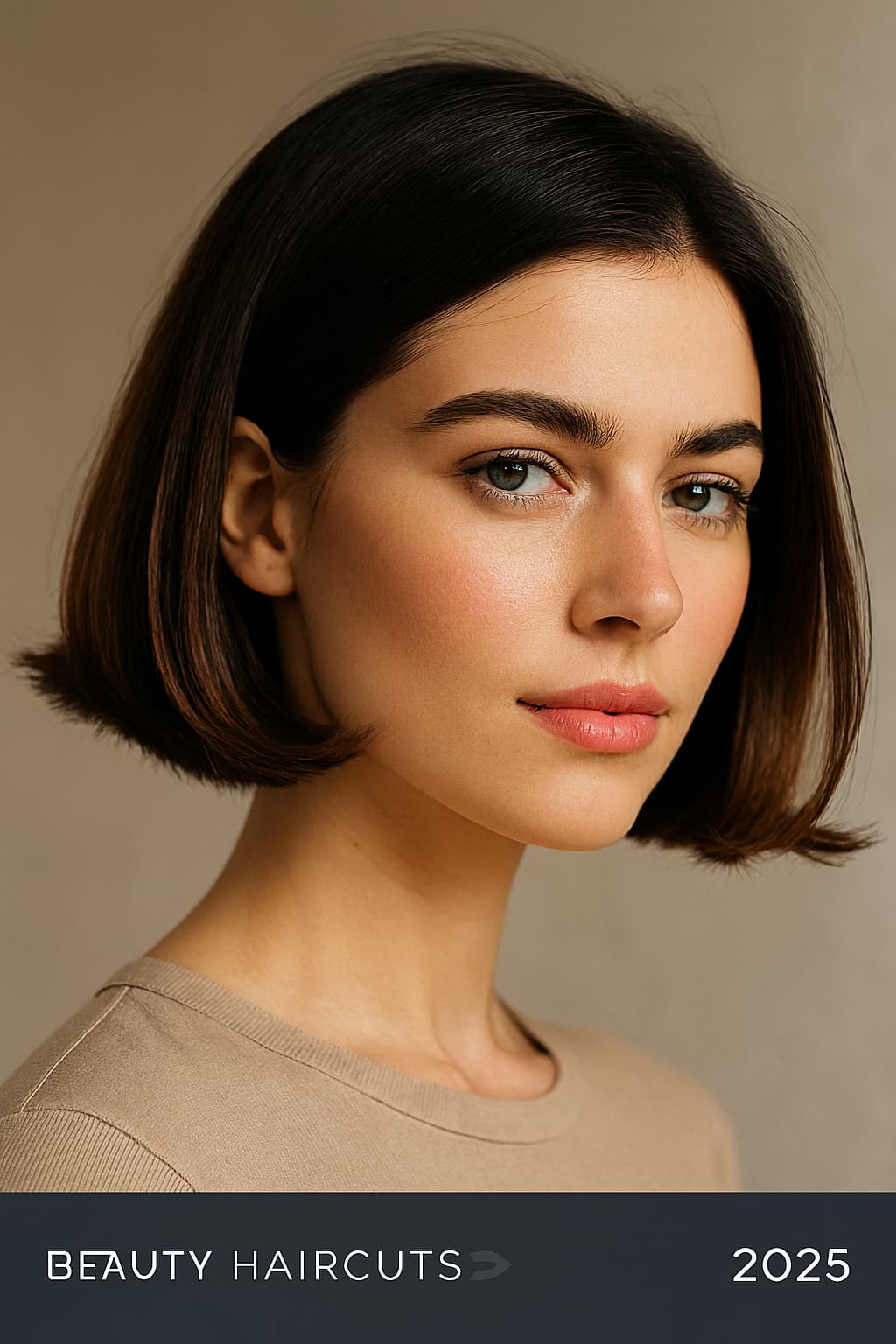
The Italian bob has somehow managed to feel both nostalgic and completely of-the-moment. It’s the haircut you spot on a stranger in a café and immediately wonder if you could pull off — that chin-grazing, slightly undone shape that looks like the person just stepped out of a 1960s film but didn’t try too hard. It’s bouncy without being bouffant, sharp without being severe, and oddly forgiving for a style that sits right at the jawline.
What sets an Italian bob apart from a French bob or a classic American blunt bob is the combination of volume at the roots, subtle internal texture, and a length that moves. It’s not a helmet. It’s not a lob. It sits somewhere in the middle, usually hovering between the chin and an inch below the earlobe, with enough movement that you can tuck it behind one ear and forget about it. That nonchalance is exactly why it’s appealing.
Over the last few seasons, we’ve seen this cut slowly take over salon appointments, partly because it works with the natural wave that many people already have, and partly because stylists have gotten so good at tailoring it. They no longer just cut a heavy line and call it a day. They carve into the ends, slice out bulk where needed, leave strategic weight at the crown, and build the shape around how hair actually behaves, not just how it looks wet in the mirror.
But a cut that ends right at the chin comes with some real practical considerations. If your hair grows quickly, you’ll see that sharp line soften within three weeks. If you’ve got a cowlick at the nape, it might kick out in a way you didn’t expect. If you have fine hair and don’t use a root spray, the crown volume can collapse by lunchtime. None of this is a dealbreaker — it’s just the reality of wearing a shorter, specific shape. Knowing those truths upfront is what makes the difference between a cut you love for two days and one you love for months.
Below are 19 ways to wear the Italian bob, with honest notes on who each version flatters, what it demands in the morning, and the things your stylist won’t always say unless you ask.
1. The Classic Blunt Italian Bob with Full Bangs

This is the iconic silhouette: a solid, straight-across perimeter that hits just below the chin, paired with a thick, eyebrow-skimming fringe. There’s no feathering, no point-cutting at the ends — just a clean, dense line. Visually, it adds incredible weight and structure, which is exactly why it works wonders on fine to medium hair that can look wispy at the ends. On very thick hair, however, the bluntness can start to feel blocky unless the stylist removes a little internal weight without disturbing the outline.
It suits oval and heart-shaped faces beautifully. Rounder faces might want to keep the bangs a touch longer and slightly piecey to avoid shortening the face too much. Styling is straightforward but non-negotiable: you’ll need a flat iron or a really good round-brush blowout to keep the ends from flipping out in odd directions, especially if you have any wave at the nape. Maintenance is high. The fringe needs trimming every two to three weeks, and the perimeter starts to lose its crispness within a month. If you’re not someone who visits the salon regularly, this version might frustrate you.
2. Textured Italian Bob with Curtain Bangs

Take that classic shape and swap the heavy fringe for a softer, center-parted curtain bang that splits gently around the brow, and you’ve got a cut that feels much easier to live with. The ends are sliced into rather than cut bluntly, which gives the perimeter a slightly feathered, piecey look. This version breathes a lot more, so it’s an excellent pick for medium-density hair that needs movement without losing density.
Because the bangs grow out more gracefully — slowly turning into face-framing layers — you can stretch bang trims to five or six weeks. The cut still needs a reshaping every seven to eight weeks to maintain its jawline length, but the grow-out doesn’t look as harsh as a fully blunt line. On square face shapes, the softness around the cheekbones helps break up angularity. Styling is flexible: air-drying with a little mousse gives a lived-in texture, while a quick pass with a blow-dry brush smooths the fringe.
3. Wavy Italian Bob with Tousled Volume

This is the version you see most often on naturally wavy or curly-haired influencers — and it’s the easiest to style if you already have some bend in your strands. The cut itself is often a little longer in the front, subtly angling towards the collarbone, with a ton of internal layering to encourage wave formation rather than collapse. When it works, it’s effortlessly sexy in that Italian beach-vacation way.
The catch: on barely-there waves, it can just look like a grown-out bob that hasn’t been styled. You need at least a 2A wave pattern to carry the shape without heat tools. Humidity will puff it up, so a curl cream with some hold is your best friend. On round faces, keep the front pieces slightly longer to create a vertical line. Salon visits can stretch to eight to ten weeks, but you’ll need regular dusting of the layers so they don’t sag and widen the silhouette.
4. Italian Bob with Wispy Bangs for Fine Hair

A heavier fringe can overwhelm fine hair, pulling too much density from the lengths and leaving the back looking sparse. Wispy, see-through bangs solve that problem. The bangs are cut with a light hand, almost like baby bangs but longer and airier, blending into the sides. The bob itself is kept fairly blunt through the back to preserve the illusion of thickness, with just the slightest graduation at the nape.
This cut looks beautiful on fine, straight hair and can hold its shape with a minimal amount of product — think a texturizing spray at the roots and nothing more. On very oily scalps, however, those wispy bangs can start to piece together by day two. Dry shampoo becomes a non-negotiable. Faces with delicate features carry this best; if you have a prominent jaw, the wispiness can sometimes read as unkempt rather than intentional. Ask your stylist to keep the bang section narrow so you don’t lose too much hair from the sides.
5. Chin-Length Italian Bob with Deep Side Part

Shifting the part dramatically to one side instantly changes the geometry of a bob. The hair cascades over one side of the forehead, giving you an asymmetrical sweep that lifts the crown on the heavier side. This cut is a savior for those with a cowlick at the crown that refuses to lie flat — the deep part hides it completely.
It’s especially flattering on long and oval face shapes, as the side sweep breaks up vertical length. If you have a very square jaw, though, the asymmetry can sometimes emphasize rather than soften it, so ask your stylist to soften the ends around the chin. Styling is laughably simple: a blow-dry directed away from the face, a tiny bit of pomade on the ends, and you’re done. Maintenance is moderate. The side bang will start poking your eye around week four, which is your signal for a trim.
6. Layered Italian Bob for Thick Hair

Thick-haired individuals know the struggle of a bob that starts to triangle out at the bottom. The Italian approach to this problem is internal layering — the top layers aren’t short or choppy, but weight is carved out underneath so the hair falls into a rounded, collapsed shape rather than mushrooming. The exterior stays sleek while the interior is thinned with texturizing shears or slide-cutting.
You’ll feel the difference immediately: less heaviness around the ears, no dreaded shelf of bulk at the nape. However, if your stylist removes too much weight, you might end up with frizz if you have any wave, as the shorter internal pieces can puff up in humidity. Ask for “soft internal thinning” rather than aggressive razoring. This cut grows out beautifully over eight weeks, actually developing a softer, more effortless shape as it lengthens.
7. Italian Bob with Choppy Ends and No Bangs

This is the bob for someone who wants zero fringe maintenance but still wants the Italian silhouette. The perimeter is cut bluntly at first, then point-cut or sliced into so the ends are visibly piecey and jagged. The result is a slightly rock-and-roll, low-key cool shape that reads more casual than its blunt counterpart.
It works on almost every hair type except very frizzy, coarse curls, where the choppiness can turn into a fuzzy line. On straight and wavy textures, it adds enough visual interest that you can honestly wash and go, adding a dab of styling cream to define the piecey ends. Because there are no bangs, you can go longer between appointments — around eight weeks before the shape loses its outline. Just be aware that the choppy texture means your ends will show splits faster, so regular dusting is wise.
8. Curly Italian Bob (Embracing Natural Texture)

An Italian bob on curly hair is a completely different creature. It’s cut dry, curl by curl, to create a rounded, cloud-like shape that springs up around the cheeks. The length is usually a bit longer when wet to account for shrinkage, often starting at the collarbone and bouncing up to jaw level. The key is a stylist who knows how to cut curls — you can’t just chop a wet straight line and hope for the best.
This cut adds an astonishing amount of volume at the crown and can make fine curls look twice as dense. The catch? It requires serious hydration and a defined curl routine. Without gel or curl cream, the shape can collapse unevenly. Humidity will either make it huge in a great way or huge in a frizzy way, depending on your products. Refresh days are real. Face shape is less of a concern because the curly texture softens everything, but those with round faces might want a bit more length in the front to avoid a perfectly round silhouette.
9. Italian Bob with Subtle A-Line Angle

Slightly longer in the front, slightly shorter in the back, this angled take on the Italian bob borrows from the classic graduated bob but keeps the line soft and the angle subtle — nothing severe or stacked. The front pieces just graze the jaw or an inch below, while the back lifts gently off the nape.
It’s a flattering option for heart-shaped faces, as the length around the chin adds balance. On square faces, the forward angle can draw the eye downward, softening the jawline. Styling requires a bit more attention at the back, where a slight bevel on the ends can flip out annoyingly if not blown dry properly. A small round brush aimed under the back sections and dried downward fixes that. Salon visits every six to seven weeks keep the angle from disappearing into a shapeless grown-out lob.
10. The “Wet Look” Italian Bob (Sleek and Glossy)

This is the Italian bob as red-carpet editorial: drenched in gel or pomade, combed back or down, looking like you just walked out of a Fellini film. The hair sits tight against the head with no visible part, creating a sculpted, glossy helmet effect. It requires a very precise cut — any unevenness will be magnified by the shine.
It suits oval, heart, and angular faces spectacularly, though round faces might feel it accentuates fullness since there’s no volume at the sides. Hair type matters less here than patience: this look takes time. You’ll need a high-shine gel or serum, a fine-tooth comb, and possibly a blow-dryer with a concentrator to set everything in place. Frizz is the enemy, so it’s not a rainy-day style. The payoff is head-turning, but daily wear of this look can feel heavy and product-laden. Reserve it for nights out when you want to feel impossibly chic.
11. Italian Bob with Micro Bangs

Short, eyebrow-grazing baby bangs paired with a jaw-skimming bob create a sharp, graphic silhouette. It’s a confident choice that works best on those who aren’t afraid to show their forehead. The blunt line of the bangs draws attention straight to the eyes, so if you’ve got a strong brow game, this cut frames them perfectly.
Hair texture is crucial: the bangs must be poker-straight or deliberately piecey, but any curl or strong cowlick will make them lift and shorten in unpredictable ways. Unless you’re willing to flat-iron your bangs daily, skip this if your hair is wavy. Maintenance is the highest of any style on this list — micro bangs need trimming every two weeks. The bob itself stays classic. On longer face shapes, the short fringe shortens the forehead beautifully; on short faces, it can compress proportions, so approach with caution.
12. The French-Italian Hybrid Bob

A slightly softer, more lived-in version that sits at the lip line rather than the jaw, with subtle inward bending and often a little flippy detail at the ends. It’s less about blunt precision and more about that just-rolled-out-of-bed Parisian vibe, crossed with Italian volume. The cut often has minimal layering, with weight concentrated through the ends, then gently textured so it curls under on its own.
This hybrid works wonderfully on fine to medium hair that tends to fall flat in a shorter bob. The extra inch of length means you can still tuck it behind your ears, and the inward bend gives a cocoon-like shape that frames the face without overwhelming it. Styling is forgiving: a blow-dry with a round brush focused on the mid-lengths, followed by a cool shot to set the curve. Trims every eight weeks suffice. If your hair is very thick, however, the lack of internal layering can make this look heavy.
13. Italian Bob with Hidden Undercut for Super Thick Hair

This is the insider trick for anyone whose bob always feels too puffy at the nape or pushes out into a triangular mess. A small undercut, shaved discreetly at the very back of the neck, removes bulk without altering the visible silhouette. When the rest of your hair falls down, nobody can see it, but you feel the weight lifted immediately.
It’s the ultimate option for dense, coarse, or very wavy hair that resists a sleek shape. The trade-off: that undercut requires upkeep. When it grows in, it creates a fuzzy ledge of short hair under your smooth bob, so you’ll either need to maintain it yourself with clippers or visit the salon every three to four weeks. Also, growing it out eventually means an awkward stage where the undercut reaches your bob length, requiring patience and strategic pinning. But if you love the Italian bob shape and struggle with bulk, it’s genuinely life-changing.
14. Bleached Blonde Italian Bob with Shadow Roots

Color changes the whole personality of this cut. A pale, buttery blonde — the kind you see on Milanese street style — makes the sharp lines pop, while a soft shadow root keeps things grounded and low-maintenance. The contrast between the dark root and light ends emphasizes the bob’s blunt perimeter and adds depth around the crown.
The visual impact is huge, but the upkeep of both cut and color is demanding. Blonde of this level requires toning every four to six weeks to avoid brassiness, especially on dark hair. The cut must stay sharp to carry the high-impact color; once the ends start fraying, the whole look goes from editorial to messy. This works on olive skin and warm undertones beautifully. On very fine hair, the bleaching can cause breakage, so you must be realistic about hair health before committing.
15. Italian Bob with Feathered Layers Around the Face

Instead of blunt bangs or a heavy side piece, this version features soft, feathered layers that start around the cheekbones and gently cascade towards the jaw. It’s essentially a seamless blend of bang and face frame — you can style them forward as wispy fringe or sweep them aside. The back stays fairly blunt, keeping the Italian bob’s signature density.
This is a brilliant option for those who like the idea of movement around the face but hate the commitment of traditional bangs. The feathering softens square and rectangular face shapes significantly and adds a romantic, almost 1970s quality. The catch: those feathered pieces can get stringy on fine hair if over-layered. Ask your stylist to point-cut lightly rather than using a razor. Maintenance is moderate, with face-framing trims needed every four to five weeks.
16. The Messy, Piece-y “Boyfriend” Italian Bob

Imagine an Italian bob that’s been lived-in, slept on, and rumpled with fingers — not unkempt, but deliberately undone. The cut uses a combination of chunky point-cutting and slide-cutting to create disconnected pieces that stick out just slightly at the ends, giving it a cool, borrowed-from-the-boys feel.
This style suits natural texture brilliantly; waves, bends, even slight kinks all contribute to the piece-y effect. On pin-straight hair, you’ll need a texturizing spray and a bit of salt spray scrunching to get the same vibe. It’s not a cut for those who crave polished precision — it’s meant to move and separate. The grow-out is extremely forgiving because the cut is already messy by design. You could go ten to twelve weeks between trims and it would simply look like a different intentional shape. The risk: on very fine, thin hair, the piece-y-ness can start to look sparse, so keep the layering minimal.
17. Italian Bob with Hair Accessories (Barrettes, Clips, Headbands)

Sometimes the cut itself is a canvas. A simple Italian bob — blunt or textured — styled with a high-placed barrette, a velvet headband, or a row of snap clips transforms into something polished and current. This is less a distinct haircut and more a styling approach, but it deserves its own spot because of how effectively it solves the “what do I do on day three” problem.
A side-parted bob with a single crystal clip at the temple instantly looks intentional. A headband pushed back into a middle part adds height at the crown, creating the illusion of volume without teasing. For short bobs, small details matter: avoid oversized claw clips that overwhelm the proportion. The beauty is that no extra maintenance is required for the cut — just have a little collection of accessories ready for days when your blowout has fallen and you still need to look put together.
18. Italian Bob with Shaggy Layers

Crossing the Italian bob with a modern shag results in a heavily layered, collar-grazing cut with lots of texture around the crown and wispy ends. The shag element lifts the top, while the bob shape keeps the perimeter from getting too long and stringy. It’s a high-volume, high-movement cut that feels very 1970s rock-star.
It thrives on naturally wavy and curly hair, where the layers encourage spring and bounce. On straight hair, you’ll need to use a texture powder or dry shampoo daily to prevent the layers from falling flat and looking thin. This is not a low-maintenance style if you want it to look purposely messy rather than just unkempt. Bangs are often included, usually short and choppy, which adds another layer of commitment. Round faces benefit from the height at the crown; long faces might want the bangs a bit longer to shorten the forehead. Be very specific with your stylist about how short you want the top layer — a shag can quickly turn into a mullet if you’re not careful.
19. The Grown-Out Italian Bob (Collarbone Length)

What happens when an Italian bob hits the three-month mark without a trim? It becomes this soft, collarbone-grazing style that’s essentially a long bob with the original heavy shape still haunting the ends. Some people intentionally aim for this length from the start. The cut is still blunt enough to look substantial, but the extra length means you can pull it into a low ponytail or a tiny bun — a freedom that the chin-length versions don’t allow.
The crown volume will have naturally diminished as the hair grows, so root lift products become your best friend. This is the easiest version to maintain; you can go three to four months between trims. It works on all face shapes and most hair textures, though those with very fine hair might find the length drags the volume down too much. Ask your stylist for minimal layering at the back and just a slight graduation at the front so the shape doesn’t turn into a shapeless triangle. This is the Italian bob for commitment-phobes.
Styling & Maintenance Advice
No Italian bob is completely wash-and-go — not even the textured, messy versions. You’ll almost always need a product that creates grit or lift at the roots. A volumizing spray applied to damp roots before blow-drying is the baseline. If you’re air-drying, a mousse scrunched through the mid-lengths can help prevent the shape from collapsing. For blunt styles, a blow-dry brush with a rounded barrel is your best tool for tucking the ends under or flipping them out deliberately. Expect to spend five to ten minutes on styling most mornings, more if you have cowlicks or resistant growth patterns.
Humidity is the silent enemy of a sharp bob. If you live in a damp climate, the ends can swell slightly, and any internal layering can puff up. A lightweight anti-humidity spray or a serum applied only to the ends helps seal the cuticle. Frizz around the hairline is common; a tiny dab of pomade smoothed over the surface with your palms can tame it without flattening.
Trimming frequency depends on the version you choose. Blunt bobs with bangs need a shape-up every four to five weeks. Textured, layered bobs can go six to eight weeks. The grown-out version can last up to twelve weeks. The more precise the perimeter, the more you’ll notice when it’s time for a cut. A good rule of thumb: if you start tucking it behind your ears constantly because it’s bothering you, you’re probably overdue.
What to Ask Your Stylist
Walking into a salon and saying “I want an Italian bob” can mean wildly different things depending on the stylist’s training. Be specific. If you have thick hair, say, “I want to keep the visible line blunt but remove weight from underneath — no stacked back.” If you have fine hair, say, “I want the ends to look heavy and dense, so please keep the internal layering to a minimum.” For waves, ask for a dry cut so the stylist can see how your curls actually bounce — wet cutting often results in a shape that shrinks up too much.
If you’re nervous about bangs, request a longer, softer fringe that can be pushed aside, and ask for “textured points rather than a straight-across line” so they break up naturally. And if you’re growing out a previous style, let the stylist know so they don’t cut into areas you’re trying to lengthen. A simple phrase: “I want the shape to grow out softly over the next two months without getting boxy” — a good cutter will know exactly how to achieve that.
Common Mistakes
One of the biggest mistakes is cutting an Italian bob too short on someone with a short neck or a soft jawline. Without the elongation of the jaw, the bob can round the face unflatteringly. Another frequent misstep is over-texturizing fine hair. Stylists sometimes get carried away with thinning shears, and fine-haired clients leave with ends that look transparent rather than full.
At home, the most common error is using too much heavy product. Creams and oils that would be perfect on long hair can weigh down a chin-length bob and make it look stringy by noon. Stick to lightweight mousses, texture sprays, and dry shampoo. Also, many people underestimate how much a bob exposes the condition of your ends. If you have split ends or damage, a bob will magnify it — get a good trim before committing.
FAQ Section
Does an Italian bob suit a round face?
It can, but pay attention to length and angles. A bob that ends exactly at the widest part of the face can emphasize roundness. Keeping it slightly longer in the front, with a side part or curtain bangs, creates vertical lines that elongate the face. Avoid very short, blunt bangs on round faces unless you’re going for a specific mod look.
How do I style an Italian bob with naturally wavy hair?
How do I style an Italian bob with naturally wavy hair?
Let your waves do most of the work. On damp hair, apply a curl-enhancing mousse or lotion, scrunch lightly, and either air-dry or diffuse. If the crown looks flat, clip the roots up while drying. Avoid brushing once dry — finger-comb only to keep the piece-y definition.
What’s the difference between an Italian bob and a French bob?
A French bob typically ends higher, often at the cheekbones, and is frequently paired with short bangs. It’s more gamine and minimalist. The Italian bob is usually a bit longer, ranging from chin to jawline, and is characterized by volume at the crown and a slightly more undone, sensual feel.
Will an Italian bob work on very fine, straight hair?
Yes, but choose the blunt or lightly textured versions. Avoid heavy layering and shags. The weight in the ends is what makes fine hair look thicker. Use a root-lifting spray and a small round brush to create body.
How often should I trim an Italian bob?
Every 5 to 8 weeks for most versions. If you have very precise bangs, you might need a fringe trim every 2 to 3 weeks in between full cuts.
Can I put an Italian bob up?
If it’s on the longer side (jawline or below), you can manage a low ponytail, mini bun, or half-up style. Chin-length bobs are trickier — tiny clips and accessories are your best bet for getting hair off your face.
Does an Italian bob require a lot of product?
Not a lot, but the right ones. A volumizing spray, a light-hold texturizer, and a dry shampoo are the staples. Heavy serums will flatten it quickly, so use them sparingly and only on the very ends.
Final Thoughts
The Italian bob has earned its staying power because it manages to be both polished and undone at the same time. It’s a shape that requires some attention — not obsessive, but consistent — and it rewards you with a look that photographs beautifully and feels like an actual style, not just a default length. Know your hair texture honestly, communicate clearly with your stylist, and don’t be afraid to let it grow out a little; sometimes the best version of this cut appears around week six.
Further reading: 19 Old Money Blonde Hair Ideas.
Further reading: 20 Old Money Brunette Hairstyles.
Further reading: 15 Grunge Hairstyles Edgy.
Further reading: 16 Hairstyles for Women Over 50.
Further reading: 16 Subtle Mullet for cool girls.
Further reading: 20 Wolf Cut Haircut Trends.
Further reading: 19 Long Pixie Bob Hairstyle.
Further reading: 17 Kitty Cut Haircut Inspiration.
Further reading: 19 Medium Shag Haircuts with Layers.
Further reading: 18 Half Up Half Down Hairstyles That Look Effortlessly Gorgeous.
Further reading: 20 Long Jellyfish Haircuts That Are Bold & Trending in 2026.
Further reading: 17 Must-See Wedding Hairstyles for the Ultimate Bridal Look.
Further reading: Wolf Cut Jellyfish Hair Ideas That Are Edgy & Viral.
Further reading: 17 Rat Tail Haircut Ideas That Are Making a Comeback.
Further reading: 15 Loc Styles for Short Hair.
Further reading: 23 Korean Hairstyles That Will Make You Want a Haircut Immediately.
Further reading: 22 Swirl Cornrows Braids Style.
Further reading: 23 Wolf Cut Braids That Look Super Trendy.
Further reading: 22 Korean Wolf Cut Styles Trending Now.
Further reading: 21 Cute Haircuts Everyone Is Saving Right Now.
Further reading: 25 Wolf Cut With Colored Bangs for Bold Style.
Further reading: 24 Stunning 70s Layered Long Shag Hair Ideas.
Further reading: 22 Bixie 90s Haircut Ideas Making a Comeback.
Further reading: Valentine’s Day Hairstyles 2026: 20 Romantic & Easy Hair Looks.
Further reading: 30 Festive Christmas Party Hairstyles for All Hair Types (2025 Guide).
Further reading: 22 Dutch Braid Hairstyles That Are Effortlessly Easy and Editorial.
Further reading: 16 Short Shaggy Hair Looks That Redefine Cool.
Further reading: The Morning Dash: 20 School Hairstyles That Look Effortless (But Take Minutes).
Further reading: The Curtain Call: 19 Layered Haircuts with Bangs That Frame Everything.
Further reading: 17 Shaggy Lob Haircut Inspo.
Further reading: 17 Birthday Hairstyles for Party.
Further reading: 20 Types of Bangs for You.
Further reading: 19 Side Shaved Haircuts Edgy.
Further reading: 18 Soft Mullet Haircut Inspo.
Further reading: 19 Fulani Braids with Beads.
Further reading: 20 Oval Face Hairstyles Guide.
Further reading: What Is a Brazilian Blowout? A Guide to the Smoothing and Straightening Treatment.
Further reading: 15 Elegant Bun Hairstyles for a Chic and Sophisticated Look.
Further reading: 19 Star Part Hairstyles for Kids: Cute, Easy Looks for School.
Further reading: 19 Short Curly Pixie Hairstyles for 3C, 4B & 4C Hair.