The wolf cut sits in a strange place right now — half cult obsession, half cautionary tale. Scroll through TikTok or Instagram and you see it on square faces, heart faces, oval faces, all looking effortless. But for round faces, the wolf cut can go wrong fast. Too much volume on the sides, layers that hit at the widest part of the cheekbone, bangs that draw a horizontal line across the face — suddenly the cut works against you instead of with you.
That doesn’t mean you have to write it off. A wolf cut, which is really just a modern shag with a touch of mullet energy, can shift the proportions of a round face beautifully when the layers are placed with intention. The trick is moving the visual weight up and forward, not out to the sides. Think soft vertical lines, a bit of height at the crown, and curtain or wispy bangs that break up the roundness rather than frame it in a circle.
This guide walks through 17 wolf cut variations that actually work for round faces — what they look like, which hair textures they need to function, how much effort they’ll demand from you on a Tuesday morning, and the awkward grow-out truths nobody posts about. No sweeping promises, no empty hype. Just realistic, editor-backed observations from real salon conversations.
1. Classic Shaggy Wolf Cut with Curtain Bangs for Round Faces

This is the wolf cut that went viral first — loads of short, choppy layers through the crown and nape, paired with long curtain bangs that open up around the cheekbones. On a round face, the centre part and the way the bangs sweep to the sides create two diagonal lines that visually lengthen the face. The shorter top layers pull the eye upward, which offsets roundness at the jaw.
Best for: Medium-thick straight or wavy hair. Fine hair can work if the stylist doesn’t over-layer; too many short pieces and the density disappears. Curly hair tends to make the shape wider unless you request a longer layer length.
Styling difficulty: Medium. You’ll need a round brush and blow-dryer or a large-barrel curling wand to flick the curtain bangs away from the face. Air-drying without product leaves the layers looking flat and shapeless.
Maintenance: Every 5–7 weeks. The crown layers lose their bounce when they get heavy. The bangs start poking you in the eye around week four.
Salon reality: Ask for the shortest layer to start just below the top of the ear, not at the cheekbone. Specify that you want the face-framing pieces to hit between your chin and collarbone — any shorter and they’ll widen your jaw.
2. Long Layered Wolf Cut with Soft Ends for Round Faces

Not everyone wants the dramatic chop. This version keeps the overall length around the mid-back while carving out internal layers that shape the silhouette. The sides fall straighter, which narrows a round face, while soft face-framing pieces start around lip length to draw the eye downward.
Best for: Straight to slightly wavy hair, medium to thick density. Fine hair can look sparse at the ends if too much weight is removed from the bottom. Curly textures will shrink up and might lose the elongated effect unless cut on dry hair.
Styling difficulty: Low to medium. A smoothing blow-dry cream and a paddle brush usually suffice. If your hair doesn’t hold a bend, you might want to run a flat iron through the face-framing pieces to create a slight curve.
Maintenance: 8–10 weeks. The layers grow out gracefully because there’s no severe disconnection. You’ll still want to keep the face-framing pieces refreshed.
Salon reality: Ask for “internal layering, not disconnected top layers.” Describe the feel as a softened shag, not a mullet. Bring a photo of a long wolf cut on a model with a face shape similar to yours.
3. Short Choppy Wolf Pixie for Round Faces
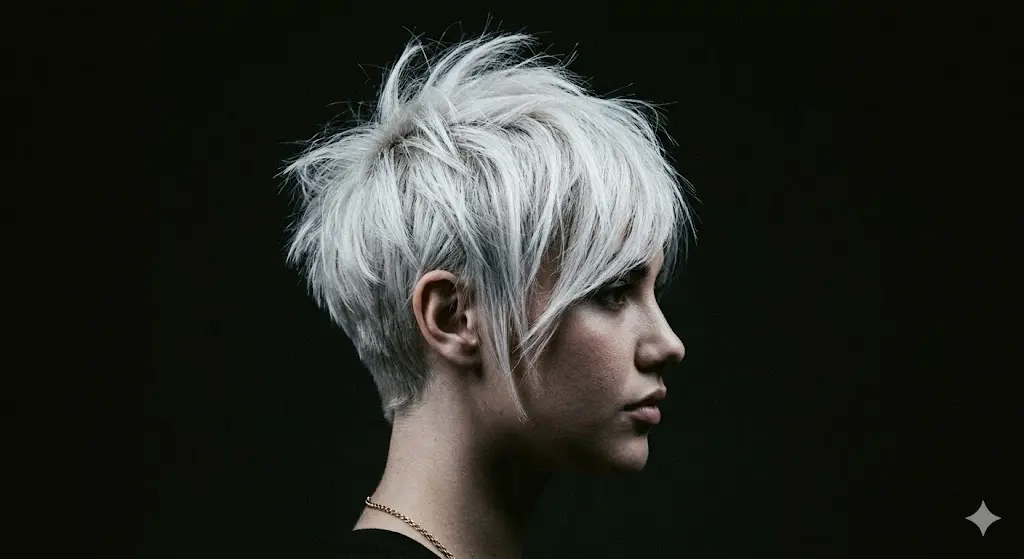
A round face and a pixie can be a risky pairing, but the wolf pixie uses shattered texture on top to create vertical height and an asymmetrical fringe that cuts across the forehead diagonally. That diagonal line breaks up the symmetry of a round face and adds an angular point of focus.
Best for: Fine to medium hair that can hold a bit of texture without collapsing. Thick hair will need aggressive thinning, or it will turn into a mushroom shape. Not ideal for very curly hair — the shape reads as round and adds width.
Styling difficulty: High. You need a texture paste or dry wax every day to piece out the top layers and keep the fringe in place. A quick blast with a mini flat iron on the fringe can save the look.
Maintenance: Every 3–4 weeks. The nape grows out into an awkward shelf very quickly. The top loses its edgy separation.
Salon reality: Show a photo of a pixie with visibly disconnected top layers. Emphasise that you want the fringe to fall to one side, creating a diagonal line, not a straight-across blunt line. Ask for point-cutting on the ends to avoid a heavy perimeter.
4. Wavy Wolf Cut with Piece-y Fringe for Round Faces

This style leans into natural wave, using a diffuser to coax out texture. The fringe is cut piece-y — little separated strands that break up the forehead without forming a solid block. That openness reduces the visual heaviness across the top of a round face.
Best for: Naturally wavy hair, type 2A–2C. Frizz-prone hair can make the piece-y effect look messy instead of intentional, so you’ll need a good curl cream. Not the best choice for pin-straight hair unless you’re willing to curl it daily.
Styling difficulty: Medium to high. Diffusing takes time. Scrunching in mousse and letting it air-dry works for looser waves but can fall flat by midday. Refresh sprays help on non-wash days.
Maintenance: 6–8 weeks. The fringe will need dusting around week three.
Salon reality: Ask for a razor-cut fringe with micro-gaps so the forehead skin shows through. Tell the stylist not to cut the fringe too wide — keep it within the arch of the eyebrows to avoid widening the face.
5. Platinum Blonde Wolf Cut with Dark Roots for Round Faces

The colour placement is just as important as the cut here. Dark roots and a bright platinum blonde through the mid-lengths and ends create a vertical stripe of lightness that pulls the eye up and down. On a round face, that vertical line cuts through the horizontal width. The wolf cut’s messy layers then break up any solid blonde blocks.
Best for: Lightened hair with enough integrity to hold texture. If your hair is fragile from bleaching, the layering can make ends look fried. Works on straight to wavy textures.
Styling difficulty: Medium. The colour does a lot of the heavy lifting; you just need a purple shampoo to keep the brass out and a texturising spray to maintain the lived-in feel.
Maintenance: High for colour (root touch-ups every 4–6 weeks). The cut needs a trim every 7–8 weeks to keep split ends from creeping up the bleached strands.
Salon reality: Get a shadow root smudge so the regrowth isn’t as stark. For the cut, keep the top layers shorter to maintain lift, but don’t let the stylist go too short on the sides — you want the platinum to hang, not poof.
6. Volumized Wolf Cut with Deep Side Part for Round Faces

A deep side part instantly creates an asymmetrical line across the forehead, and when combined with a voluminous crown, it shifts the face’s visual weight diagonally. The wolf cut’s shaggy layers fall heavily to one side, breaking the round symmetry.
Best for: Medium to thick hair that can hold volume. Fine hair will require backcombing or a volumising mousse. Straight hair shows the part most clearly.
Styling difficulty: Medium. You’ll need to blow-dry the roots in the opposite direction of the part, then flip it over. A light-hold hairspray keeps the swoop in place.
Maintenance: 6–8 weeks. The side-swept fringe can get heavy and start falling flat.
Salon reality: Ask for the fringe to be cut on an angle so that when you part it deep, the shortest piece hits around the brow and gradually lengthens to the jaw. That diagonal curtain frames a round face without adding width.
7. Curly Wolf Cut with Tapered Mullet for Round Faces
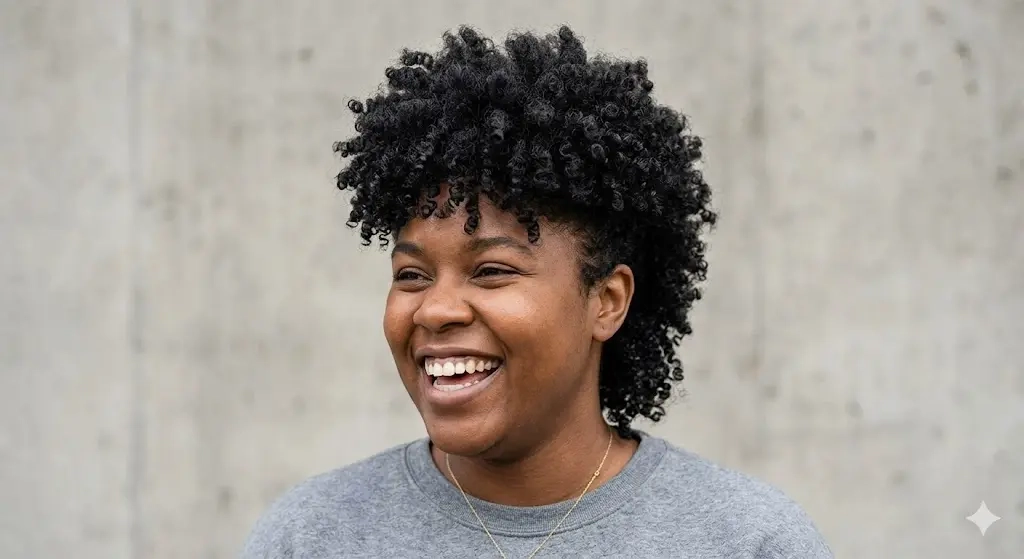
For natural curls (type 3 and above), a wolf cut needs careful shaping. This version keeps a rounded, cloud-like top for volume and tapers down at the nape into a short, textured mullet. The vertical column of curls on top lifts the eye upward, and the close-cropped sides prevent the round face from looking wider.
Best for: Coily and curly textures with medium density. Loose curls might need a diffuser to spring up; tight coils will hold the shape easily. Fine curly hair may look gappy.
Styling difficulty: Medium. A good leave-in conditioner and gel on soaking wet hair, then diffused or air-dried. You can’t brush it out — it needs to stay in curl clumps.
Maintenance: Every 8–10 weeks for the shape, but the nape taper might need a clean-up at 6 weeks. Dry cuts are non-negotiable here.
Salon reality: Find a curl specialist. Ask for a rounded shape on top with a tapered nape that doesn’t disconnect too sharply. Show a photo of a curly shag-mullet hybrid.
8. The Modern Mullet Wolf with Micro Bangs for Round Faces

Yes, micro bangs can work on a round face — but the placement has to be high and slightly arched, not a straight blunt line. These short bangs expose the forehead and create a longer vertical expanse, while the wolf layers at the crown add height.
Best for: Straight or slightly wavy hair, medium to thick. Fine hair doesn’t give the bangs enough density to look intentional. Wavy hair makes the micro bangs flip, which can work if you want a more playful finish.
Styling difficulty: High. Micro bangs require daily flat-ironing or blow-drying with a tiny round brush. The rest of the cut can be air-dried with a texture spray if your hair cooperates.
Maintenance: Every 3–4 weeks for the bangs, otherwise they hit an awkward in-between length that flips into your eyes. The mullet layers grow out okay.
Salon reality: Have the stylist cut the bangs dry, eyebrow-skimming at first, then gradually go shorter. Never ask for them to be cut straight across; a slight arch following the brow bone softens the face.
9. Textured Wolf Bob for Round Faces with Thick Hair

Thick hair on a round face can feel bulky around the jawline. This bob-length wolf cut leans on heavy texturising and shattered ends to remove internal weight, so the hair swings rather than sits. The length grazes the collarbone, which elongates the neck and counterbalances facial roundness.
Best for: Thick, straight to wavy hair. If your hair is prone to frizz, the texturising can puff up, so anti-humidity products become essential.
Styling difficulty: Low to medium. A smoothing serum and a quick blow-dry with a round brush at the front pieces are enough. Air-drying works if you have natural bend.
Maintenance: 7–9 weeks. The bob shape holds, but the internal layers can start to look heavy without regular thinning.
Salon reality: Ask for a “heavy texturised bob with shattered face-framing, no blunt perimeter.” The stylist should use slide-cutting or point-cutting to remove bulk without creating a shelf.
10. Asymmetrical Wolf Cut with Undercut for Round Faces
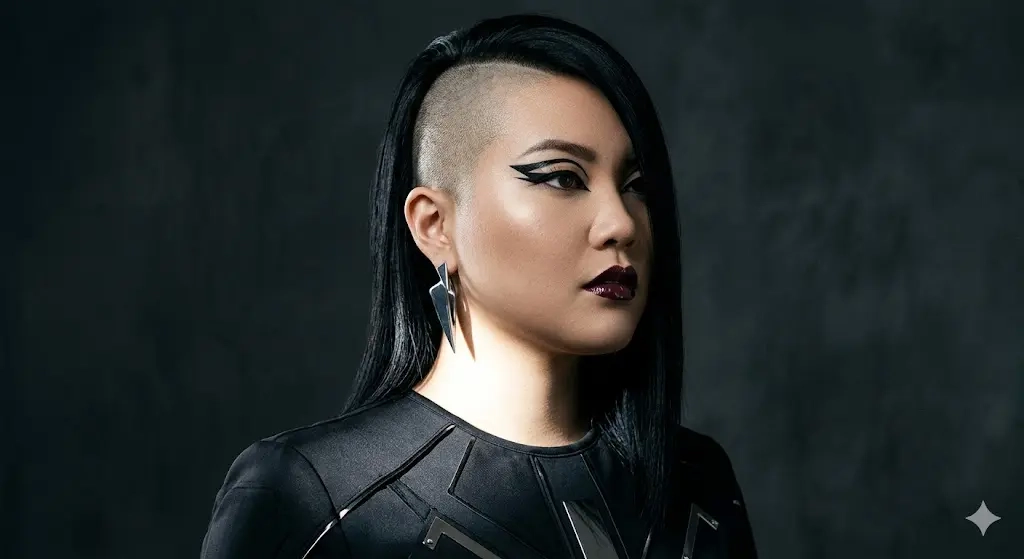
An undercut on one side removes the volume that often widens a round face, while the longer, heavier side drops down past the jaw, creating a sharp diagonal line. The wolf layers on top maintain some playful movement.
Best for: Thick hair — you need the density on the longer side to create contrast. Fine hair will look limp on the heavy side. Straight textures showcase the asymmetry best.
Styling difficulty: Medium. The undercut requires regular shaves, and styling means directing all the volume to one side. A flat iron on the longer section keeps the line crisp.
Maintenance: Every 2–3 weeks for the undercut if you want it skin-close. The cut itself can go 6–8 weeks.
Salon reality: Communicate exactly how high and how far around the head you want the undercut to go. A disconnected undercut that stops at the temple keeps the round face from looking unbalanced.
11. Feathered 70s Wolf Cut with Flipped Ends for Round Faces

This version blends wolf-cut layers with soft feathered ends that flip outward, not under. Outward flips at jaw level can actually widen a round face, so the trick here is to keep the flips starting below the jaw — at collarbone length — which draws the eye down and out without squaring the face.
Best for: Medium-length straight or wavy hair, medium density. Fine hair struggles to hold the flip without a lot of product.
Styling difficulty: Medium-high. You’ll need a round brush and blow-dryer or a flat iron to flick the ends out. A light-hold hairspray sets the shape.
Maintenance: 7–8 weeks. The feathered layers grow out softly.
Salon reality: Ask for “face-framing layers that start at the chin and longer feathered ends that flip out at the shoulders.” Emphasise no flip at jaw level.
12. Wolf Cut with Wispy Bottleneck Bangs for Round Faces

Bottleneck bangs are narrower at the top and widen around the brow bone before tapering down along the cheekbones. This shape mirrors an hourglass and elongates a round face by funneling attention toward the centre. The wispy texture prevents the bang from looking like a solid block.
Best for: Fine to medium straight or wavy hair. Thick hair will make the bangs heavy, losing the wispy effect.
Styling difficulty: Medium. The bangs need a quick blow-dry with a small round brush to keep the curve. The rest of the cut can be low-maintenance.
Maintenance: Every 3–4 weeks for the bangs. The wolf layers hold up for 6–8 weeks.
Salon reality: Bring a photo of bottleneck bangs and specify “see-through wispy fringe that’s narrow at the top, wider at the brows, and then tapers.” The stylist should point-cut heavily.
13. Edgy Razor Cut Wolf with Sliced Layers for Round Faces

A razor cut creates soft, almost feathery layers with a lot of internal movement. On a round face, this technique reduces bulk around the cheek area without creating a blunt line. The sliced layers create vertical texture that guides the eye up and down.
Best for: Straight to slightly wavy, medium-thick hair. Not recommended for very fine or fragile hair — the razor can cause split ends. Curly hair can get unpredictable with a razor.
Styling difficulty: Low. The razor cut encourages air-drying with a salt spray or light mousse. Too much heat styling can make the ends look straggly.
Maintenance: 8–10 weeks. Razored layers grow out softly but can lose definition if your hair is thick.
Salon reality: Find a stylist comfortable with razor cutting. Ask for “internal sliced layers to remove weight from the sides, not shorten the overall length.” A dry cut works best.
14. High-Contrast Two-Tone Wolf Cut for Round Faces

A bold colour contrast — like a dark underside and bright face-framing panels, or a chunky money piece — creates strong vertical stripes that visually slim a round face. The wolf cut’s textured layers break up the colour panels so they feel integrated, not stripey.
Best for: Straight to wavy hair where the colour separation stays visible. Curly hair hides the contrast unless the curls are very loose.
Styling difficulty: Medium for styling, high for colour upkeep. The cut itself can be fairly low-maintenance with a texture spray.
Maintenance: Touch-ups for the bright pieces every 4–6 weeks. The wolf shape needs a trim every 7–8 weeks.
Salon reality: The face-framing money piece should start right at the front hairline and be kept bright. Bleach damage might affect the ends of the layers, so pair it with regular bond-building treatments.
15. Tousled Beach Wolf Cut for Fine Hair and Round Faces

Fine hair tends to collapse in a traditional wolf cut. This version uses minimal layering — just enough to create a slept-in texture without removing density. A bit of wave spray and scrunching gives the illusion of volume without cutting away too much weight. The length stays around the shoulders so the face isn’t overwhelmed.
Best for: Fine straight or wavy hair. Thick hair won’t get the delicate, airy finish.
Styling difficulty: Low. Salt spray, scrunch, air-dry or diffuse briefly at the roots.
Maintenance: 8–10 weeks. Grows out invisibly because the layers are so light.
Salon reality: Tell the stylist, “I want a soft wolf cut for fine hair — keep most of the weight at the bottom, just add a few face-framing pieces and texture throughout.” Over-layering is the biggest risk.
16. Punk-Inspired Spiky Wolf Cut for Round Faces

This is a high-energy version with spiky, separated top layers and a cropped, close-to-the-head nape. The spikes draw the eye straight up, creating height that counteracts facial width. It’s not a subtle look, but it shifts proportions drastically.
Best for: Straight, thick hair that can stand up with product. Wavy hair won’t spike as sharply. Fine hair needs heavy-duty styling products.
Styling difficulty: High. Daily use of a strong-hold gel, wax, or pomade, plus blow-drying the top forward and up in sections.
Maintenance: Every 3–4 weeks. The shape loses its edge quickly as the top layers grow out and flop.
Salon reality: Show photos of punk shag cuts. Ask for very short, disconnected top layers that can be styled upward and forward. The nape should be clippered tight.
17. Sleek Straight Wolf Cut with Subtle Layers for Round Faces

Not every wolf cut has to be messy. This version keeps the layers long and minimal — just enough to create a soft V-shape at the back and some face-framing that tapers at the chin. The sleek, straight texture creates long vertical lines that elongate a round face.
Best for: Naturally straight, smooth hair, medium to thick density. Frizz ruins the sleek effect. Fine straight hair works if you use a shine serum.
Styling difficulty: Medium. You need a good flat iron and a heat protectant. A centre part keeps the symmetry that elongates the face.
Maintenance: 8–10 weeks. Layers grow out in a soft, blended way.
Salon reality: Ask for “long, subtle wolf layers with a V-shaped back and soft face-framing, but keep the overall length below the collarbone.” No heavy top layering.
Styling & Maintenance Advice for Your Wolf Cut
Most wolf cuts live or die by the products you use and how often you trim. Crown layers start to look droopy after five to six weeks. If you’re comfortable with a bit of root-lift spray and a round brush, you can push trims to seven weeks. But the moment those short layers start folding over instead of standing up, the style starts widening the face.
Heat styling isn’t mandatory every day, but it helps set the silhouette. A blow-dryer with a concentrator nozzle can direct the hair away from the face. For the bangs, a small round brush or a mini flat iron works. If you air-dry, a good texturising spray or salt spray prevents the layers from clumping together in a solid, puffy mass. Humidity makes wolf cuts expand sideways, especially on wavy hair. Anti-frizz serums or lightweight oils help, but you’ll still get a slightly softer, rounder shape on muggy days — accept it.
Trimming frequency varies. Bangs demand attention every two to four weeks. The layered crown every five to seven. The overall length can go two to three months. If you’re growing the cut out, the awkward phase hits around month three, when the mullet-like back starts looking disconnected. A stylist can blend that transition point to make the grow-out less severe.
What to Ask Your Stylist for a Round Face Wolf Cut
Be specific. A vague request for a “wolf cut” can result in a generic, top-heavy shag that widens your cheekbones. Here’s a checklist:
“Keep the shortest layer below my cheekbone — around the top of my ear or higher, but not at the widest part of my face.”
“I want vertical movement, not horizontal width. Layer through the interior, not just around the perimeter.”
“Face-framing pieces should start between my chin and collarbone, not at my jaw.”
“Don’t cut my bangs too wide. Keep them within the arch of my eyebrows.”
“Use point-cutting or a razor for softer ends so the shape doesn’t look blunt and square.”
“If you’re adding an undercut, let’s map out exactly where it sits so it doesn’t make my face look wider on the other side.”
These phrases give the stylist a clear roadmap. Bring at least two reference photos of people with a similar face shape and hair texture to yours.
Common Mistakes When Getting a Wolf Cut for a Round Face
Too much volume at the cheekbones. This is the number one error. If the shortest layers hit right at the cheekbones, the hair poofs out and mirrors the widest point of the face.
Blunt, heavy bangs. A straight-across, thick fringe draws a hard horizontal line that visually cuts the face in half and emphasises roundness. Wispy or curtain bangs almost always work better.
Skipping the consultation. Walking in and saying “wolf cut” without discussing your face shape leads to a one-size-fits-all result.
Not factoring in hair texture. Curly wolf cuts need dry cutting. Fine hair needs restraint with layering. Ignoring texture leads to flat tops, puffy sides, or uneven shapes.
Over-texturising fine hair. Removing too much weight from fine hair makes the ends look transparent and straggly. Less is more.
Expecting zero daily styling. Even the messiest-looking wolf cuts need some product and a bit of coaxing. If you want a true wash-and-go cut, this probably isn’t it.
FAQ
Will a wolf cut make my round face look chubbier?
Not if the layers are placed correctly. The key is height at the crown and length around the jaw, not volume at the cheeks. A poorly cut wolf cut can exaggerate roundness, but a well-planned one does the opposite.
Can I get a wolf cut with naturally curly hair and a round face?
Yes, but it needs a dry cut from a curl specialist. The shape should be rounded on top and tapered at the nape. Without that taper, curly wolf cuts can turn into a triangle.
How do I style a wolf cut without heat on a round face?
Use a lightweight mousse or salt spray on damp hair, scrunch, and let it air-dry. A middle part helps direct the layers down rather than out. For wavy hair, pin the face-framing pieces back while drying to set the direction away from the cheeks.
What’s the biggest styling mistake with a wolf cut and round face?
Over-directing the hair toward the face. When you blow-dry the bangs and layers straight forward or inward, it frames the face in a circle. Always direct the hair backward and slightly upward.
Is a wolf cut high maintenance?
Medium to high, depending on the version. The crown layers need regular trims, and bangs require frequent touch-ups. Daily styling can be quick with the right products, but it’s rarely zero effort.
Does a wolf cut suit thin, fine hair on a round face?
Only if you keep the layering minimal and the length around the shoulders. Too many short layers will make fine hair look wispy and flat. Ask for subtle internal texture, not heavy shagging.
How does a wolf cut grow out on a round face?
The first awkward stage is around three months, when the mullet back becomes noticeable. The crown collapses and the sides can start feeling heavy. A quick trim to rebalance the shape at that point helps it grow out more gracefully into a longer layered cut.
Final Thoughts
A wolf cut for a round face is less about following a trending photo and more about understanding how the layers interact with your bone structure. The styles that work best create length, draw the eye vertically, and remove weight from the widest part of the face. That might mean micro bangs that expose the forehead, a deep side part that cuts asymmetry, or an undercut that steals side volume.
The practical reality is that you’ll need to stay on top of trims and invest in a couple of styling products that work with your texture. Nothing in this list is a set-it-and-forget-it cut. But if you’re willing to spend ten minutes on it a few times a week, the payoff is a modern, sharply shaped silhouette that reads edgy without fighting your face shape. When you’re sitting in the salon chair, speak clearly about where you want the shortest layer to land. That single detail often separates a cut you love from one you’re already planning to grow out.
Further reading: 19 Wolf Cuts for Fine Hair That Add Incredible Texture.