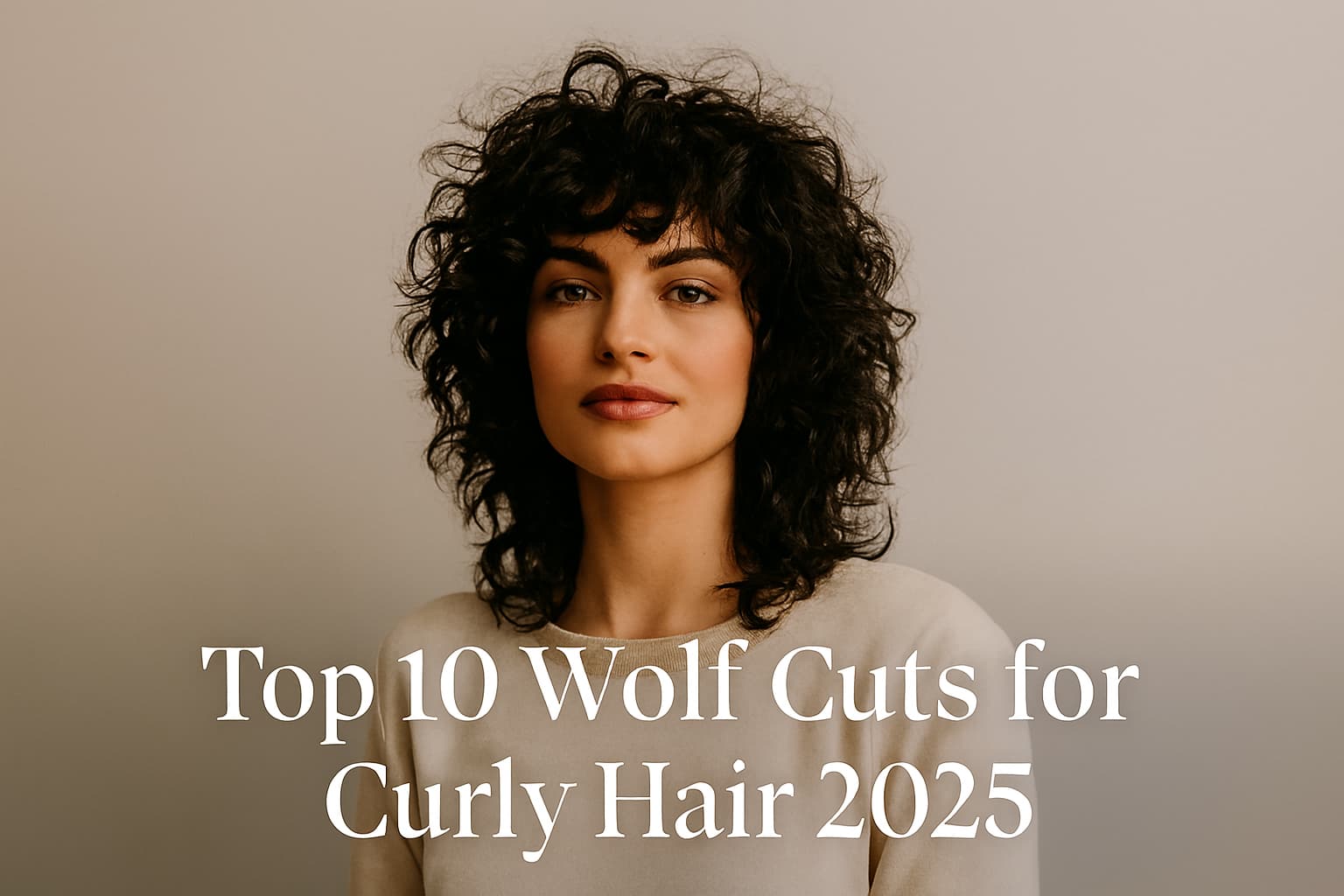
It started in salon chairs about two years ago, and hasn’t let up since. Clients with fine, limp hair kept showing me the same reference photo: shaggy layers, curtain bangs, a little attitude at the crown. They wanted the wolf cut, that modern mash-up of a shag and a mullet, but they were terrified it would look thin at the ends or widen their face. I understood the hesitation. On fine strands, removing too much weight in the wrong spots can leave hair looking stringy within weeks. And if you have a round face, the wrong short layers can exaggerate fullness in the cheeks rather than balance it.
The truth is, a wolf cut for fine hair isn’t about hacking away density — it’s about carving out shape strategically. The right version gives you the illusion of thicker, bouncier hair without requiring a blowout arsenal or backcombing skills you don’t have. I’ve watched clients walk out with a cut that, for the first time in years, felt like real movement.
Below are 19 ways to wear the trend, each observed in real life, on real textures, and with the small tweaks that matter for a round face. I’ve noted where styling gets quick or tedious, how the grow-out behaves, and what to tell your stylist.
1. The Soft Blended Wolf Cut with Curtain Bangs

This version leans closer to a long shag than a dramatic mullet. The layers begin just below the cheekbones and taper down with feather-soft ends. Curtain bangs part in the centre, opening up the forehead instead of hiding it — a winning trick for a round face because it creates vertical lines that lengthen the face visually. The wolf cut structure here stays subtle; you notice texture, not disconnection. Fine hair benefits from the removed weight around the crown but keeps enough density at the bottom so it doesn’t look sparse.
Face shape fit: Works beautifully on round or heart shapes.
Styling difficulty: Easy. A rough blow-dry with a medium round brush gets the bangs to flip softly.
Maintenance level: Medium. Bangs need a trim every three weeks to avoid poking the eyes.
Salon note: Ask for “point-cut layers that start at the lip line, not higher, to keep softness.”
2. The Wispy Wolf Cut with Micro Fringe

Micro fringes on a wolf cut read as editorial, but the wispy variation keeps things wearable. The fringe sits well above the brows, light enough to show forehead skin. For a round face, this short fringe can actually work in your favour — by exposing more forehead vertically, it helps break up circular proportions. The top layers are cut with a razor for a piece-y effect that gives fine hair instant volume at the crown without bulk.
Face shape fit: Surprising win for round faces, especially if the fringe is narrow rather than wide.
Styling difficulty: Moderate. You’ll need a flat iron or small round brush to create a tiny bend in the micro fringe; wash-and-go won’t cut it.
Maintenance level: High on the fringe (two-week trims), but the back layers can stretch to eight weeks.
Salon note: “Keep the micro fringe within the width of my pupils so it doesn’t overwhelm my cheeks.”
3. The Choppy Layered Wolf Cut for Ultra-Fine Strands

Density is the secret weapon here. A choppy wolf cut uses blunt-ish internal layering instead of wispy feathering, so the hair holds visual weight. This prevents the transparency that fine hair can fall into when over-texturized. On a round face, the choppiness adds needed angles around the jaw, breaking up softness without removing length. The back is slightly shorter, giving that signature wolf cut kick at the nape.
Face shape fit: Excellent for round faces that want edge without elongation tricks.
Styling difficulty: Low to moderate. A texturizing spray and scrunching can do the job.
Maintenance level: Moderate. The choppy ends start to look frayed after six weeks.
Salon note: “Use slide cutting, not thinning shears — I want rough texture, not feathered fuzz.”
4. The Long Wolf Cut with Subtle Face-Framing

A wolf cut doesn’t have to mean mid-length or short. This iteration keeps length near the collarbone with discreet layers woven through the last three inches. The face-framing pieces start at chin level and angle down, which defines a round face without adding width. Because the bulk stays long, fine hair keeps a solid perimeter, avoiding the over-layered look that can happen when too much is taken from the bottom.
Face shape fit: Great for round faces that prefer a longer silhouette.
Styling difficulty: Easy. A paddle brush and blow-dryer are enough; you can skip the round brush.
Maintenance level: Low. Trims every eight to ten weeks.
Salon note: “I only want face-framing layers — the back stays almost one length with soft internal texture.”
5. The Pixie-Wolf Hybrid for Super-Fine Hair

When hair is baby-fine and thinning at the temples, a cropped wolf cut-pixie fusion can change everything. The top carries choppy, longer pieces (around three inches), while the sides and back are tapered close but not shaved. For a round face, this style borrows the pixie’s height-on-top principle, drawing the eye upward and giving the illusion of a longer face shape. The nape remains soft and feathered, avoiding a harsh line.
Face shape fit: Ideal for round faces, especially if the crown is kept airy but tall.
Styling difficulty: Moderate. You’ll need a lightweight paste or texture cream and some finger-styling.
Maintenance level: High. A reshape every four to five weeks maintains the silhouette.
Salon note: “Leave more length at the front hairline so I can sweep it sideways — no squared-off short bangs.”
6. The ’70s Shag Wolf Cut with Feathered Ends

Think Stevie Nicks volume with less flick. This wolf cut leans heavy into feathered layers that curve outward at the ends, creating a bouncy, just-stepped-off-the-tour-bus look. A centre part with feathered bangs frames the eyes and mouth, which adds vertical balance to a round face. Fine hair loves this shape because the layering removes just enough weight to let natural bends form, making styling time quick.
Face shape fit: Works for round faces that don’t mind daily blow-drying to direct the feathers.
Styling difficulty: Moderate. A round brush and a concentrated nozzle are your friends.
Maintenance level: Medium. Layers lose their curl-out shape after six to seven weeks.
Salon note: “Feather the ends with a razor, but keep the shortest layer at my cheekbone to avoid width.”
7. The Blunt-Edged Wolf Cut with Internal Texture

This contradiction fools the eye. The perimeter is cut blunt — no wispy tips — but the inside is carved with hidden layers that lift the roots and add movement without losing the heavy baseline. On a round face, the blunt edge creates a strong vertical line from chin to shoulder, which stretches the face proportion naturally. It’s a clever wolf cut for anyone worried that layers equal thin-looking ends.
Face shape fit: Very flattering for round faces that want a clean, modern edge.
Styling difficulty: Low. The internal texture does a lot of the work; you can air-dry with a volumizing mousse.
Maintenance level: Low. Blunt ends still look neat even after two months.
Salon note: “Layer heavily inside, but don’t touch the exterior outline — I want a solid perimeter.”
8. The Bixie-Inspired Wolf Cut with Piece-y Layers

A bixie (bob-pixie) meets wolf cut in this chin-grazing shape. Stacked layers in the back push volume forward, while piece-y sections around the ears add a choppy, undone feel. For a round face, the combination of volume at the crown and tapered jawline breaks up circular fullness. The disconnected vibe keeps the cut from looking too “done,” which helps fine hair appear less flat throughout the day.
Face shape fit: Round faces benefit from the ear-to-chin tapering.
Styling difficulty: Low to moderate. A dry texture spray and some finger tousling.
Maintenance level: High. The shape collapses without a trim every five weeks.
Salon note: “Keep the nape stacked but soft — nothing severe that reads as a bob.”
9. The Romantic Wolf Cut with Wispy Tendrils

Not all wolf cut variations read edgy. This one uses extra-long wispy pieces around the face, almost like pulled-out tendrils from an updo, paired with softer, diffused layering through the back. On a round face, those tendrils create shadow and contour along the cheeks, slimming visually without the need for heavy contour makeup. The overall effect is airy, a little undone, and surprisingly polished.
Face shape fit: Excellent for round faces that want a softer, less severe frame.
Styling difficulty: Easy. Wrap the tendrils around a curling wand for 10 seconds, then shake out.
Maintenance level: Medium. Tendrils grow into your vision quickly; expect a trim every four to five weeks.
Salon note: “Pull out fine, wispy face-framing that starts at eye level and thins toward the ends.”
10. The Textured Bob Wolf Cut (Wolf-Bob)

French-girl bob gets the wolf cut treatment: the length hovers near the jaw but is sliced internally to remove bulk and let the hair move. The back is slightly shorter, just brushing the hairline, while the front angles down a touch. For a round face, the trick is keeping the length right at the jaw’s sharpest point, not above it, to avoid a widening effect. This style adds grit and piece-y separation that fine hair otherwise lacks.
Face shape fit: Suits round faces when the front is longer than the jaw.
Styling difficulty: Easy. A small amount of pomade on dry hair breaks up the shape.
Maintenance level: Medium. Jaw-length bobs lose their line every six weeks.
Salon note: “I want a wolf-bob with internal slicing, not a blunt bob — show me the texture.”
11. The Mid-Length Wolf Cut with Sliced Layers

This wolf cut sits between the collarbone and the shoulders, a sweet spot where fine hair still feels substantial. Layers are sliced in vertically, which removes weight but leaves length. The sliced technique creates separation and a bit of a feathered look without thinning the ends. A round face gets elongation from the mid-length line, and a few cheekbone-grazing pieces add shadow without shortening the face.
Face shape fit: Great everyday option for round faces.
Styling difficulty: Low. Air-dry with a salt spray for texture.
Maintenance level: Low. Trims every eight weeks keep the sliced layers from looking frayed.
Salon note: “Slice layers in — no horizontal sections. I want the length to stay solid.”
12. The Curly Wolf Cut for Fine Coils

Fine curly hair can get boxy without layering. A curly wolf cut frees up the curl pattern by removing weight from the top and keeping perimeter length. Rounded layers shape the silhouette, but on a round face, the stylist should avoid creating a perfectly round halo. Instead, direct the volume upward and slightly back so the face appears longer. Diffuse styling brings out the coil definition, and the shape holds for days.
Face shape fit: Very flattering for round faces when the crown volume is lifted, not widened.
Styling difficulty: Moderate. Curl cream, denman brush, diffuser — a regular wash-day routine.
Maintenance level: Medium. Curls hide irregular growth, but shape needs a refresh every two to three months.
Salon note: “Cut on dry curls only, and don’t take the top too round — elongate the silhouette.”
13. The Disconnected Wolf Cut with Bold Short Layers
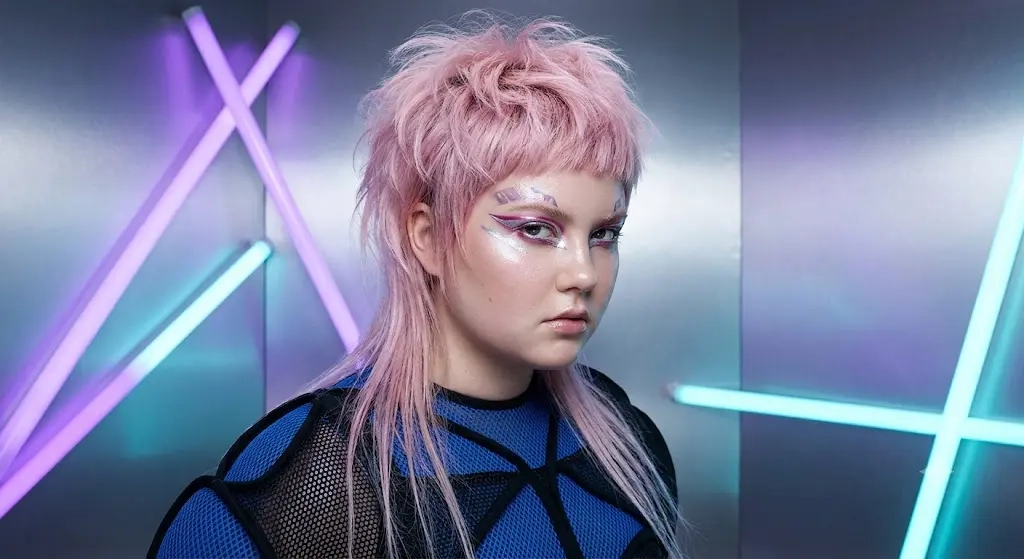
For anyone ready to commit, this wolf cut plays with dramatic contrast: short, choppy layers on top almost like a mullet’s crown, blending into longer, thinner lengths in the back. A round face is balanced by concentrating the short layers high on the head, above the parietal ridge, so the cheeks remain covered by longer pieces. It’s bold, but fine hair pulls it off better than thick hair because the disconnection doesn’t feel heavy.
Face shape fit: Only for round faces that want a strong, fashion-forward shape.
Styling difficulty: High. Requires root-lifting products, blow-drying the top forward, and backcombing for volume.
Maintenance level: High. Regrowth on the short top shows after four weeks.
Salon note: “Start the short layer at my crown only, not near my temples — I don’t want width at the cheeks.”
14. The Feathered Wolf Cut with Side-Swept Bangs

A deep side part and feathered layers that curl outwards define this late-’90s throwback. The asymmetry of a side-swept bang draws the eye diagonally across a round face, instantly slimming the width. The wolf cut layers are cut with a razor for that paper-thin flick at the ends, which gives fine hair plenty of movement and a just-left-the-salon bounce.
Face shape fit: One of the best bets for round faces thanks to the diagonal lines.
Styling difficulty: Moderate. You’ll need a round brush and a bit of hold spray to train the side sweep.
Maintenance level: Medium. Bangs that sweep sideways need a trim every three to four weeks.
Salon note: “Keep the shortest feathered layer at my eyebrow, not shorter — it needs to sweep across.”
15. The Airy Wolf Cut with See-Through Bangs

See-through bangs (Korean-style wispy bangs) add softness to the wolf cut without the heavy block of traditional fringe. They sit lightly on the forehead, revealing skin underneath. For a round face, this transparency prevents the face from looking compressed. The rest of the hair has long, airy layers that move freely, giving fine hair a cloud-like texture rather than stringy separation.
Face shape fit: Highly recommended for round faces that want fringe without weight.
Styling difficulty: Easy. Air-dry bangs forward, use a velcro roller for five minutes if needed.
Maintenance level: Medium. Bangs need snipping every three weeks; layers every eight weeks.
Salon note: “Thin out the bangs with point-cutting so they’re see-through, not solid.”
16. The Tousled Wolf Cut with Natural Waves

This style embraces the bedhead look deliberately. A wolf cut cut to hit at the shoulders, with layers that encourage the hair’s natural wave pattern, delivers that “I woke up like this” texture. Fine wavy hair often falls flat at the roots; the layering here lifts the root and lets waves form without weight. On a round face, the messy, undone texture softens the outline and distracts from symmetrical fullness.
Face shape fit: Round faces look fresh and casual, not rounder, with this disheveled framing.
Styling difficulty: Low. Scrunch in a wave spray and let it dry. Diffuse for extra oomph.
Maintenance level: Low to medium. Waves mask uneven growth; trims every eight to ten weeks.
Salon note: “Cut layers on damp, not wet hair, so the natural wave pattern guides the length.”
17. The Razored Wolf Cut for Extreme Movement

A razor is used for almost every strand, creating soft, tapered ends that flick and swoop. The wolf cut silhouette becomes a fluid line from crown to ends, never heavy. Fine hair benefits enormously because a razor cut leaves the ends less blunt, so they move more. For a round face, the movement around the cheeks and chin introduces visual angles without harsh layers. The overall feel is light and swingy.
Face shape fit: Works well for round faces that want soft, flowing texture.
Styling difficulty: Low to moderate. A light leave-in and air-dry; too much product weighs it down.
Maintenance level: Medium. Razored ends can look dry quicker; regular dusting every six weeks.
Salon note: “Razor-cut the entire head, but avoid taking the shortest layer above my eye level.”
18. The Classic Wolf Cut with Straight-Across Fringe

The full, straight-across fringe gives the classic wolf cut its iconic silhouette. The fringe hits right at the brow, and the layers taper into a shaggy neckline. A round face can wear this successfully if the fringe is cut slightly narrower than the temples and the layers start below the jaw — these two adjustments prevent the face from looking boxed in. Fine hair holds this shape surprisingly well when texturizing spray is worked into the roots.
Face shape fit: Round faces need a narrower fringe and lower layers to pull it off.
Styling difficulty: Moderate to high. Daily fringe styling with a flat brush and light holdspray.
Maintenance level: High. Blunt bangs demand a trim every two to three weeks.
Salon note: “Keep the fringe weighty but not wide — I want it to sit between my arch ends, not past my temples.”
19. The Asymmetrical Wolf Cut with Deep Side Part
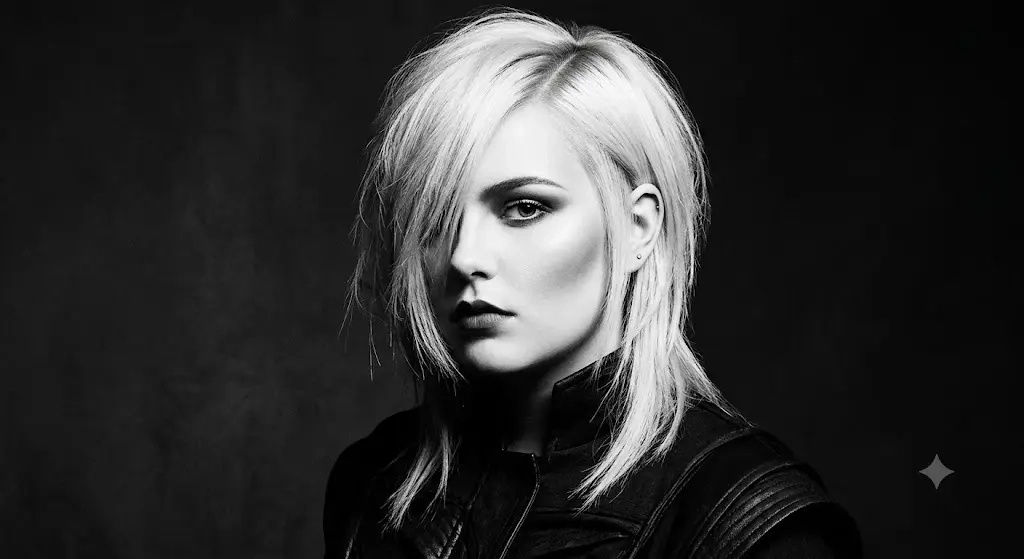
Parting the hair deeply on one side creates an instant lift and dramatic diagonal, making this wolf cut a strong choice for a round face. The heavier side sweeps across, while the lighter side is tucked back to reveal the ear. Layers are concentrated on the top and lighter side, preserving weight on the heavy side so it doesn’t look skimpy. This asymmetry tricks the eye into seeing a longer, more angular face.
Face shape fit: Exceptional for round faces wanting a single, powerful change.
Styling difficulty: Moderate. You’ll need a blow-dryer and a bit of root lifter to lock in the deep part.
Maintenance level: Medium. The lighter side can grow out without ruining the effect, but the heavy side needs shaping every six weeks.
Salon note: “Create a strong weight line on my preferred heavy side; keep the opposite side sliced and wispy.”
Styling Tips and Maintenance Realities for a Fine-Hair Wolf Cut
The biggest shock for many first-timers is that a wolf cut still requires some daily effort, even though it looks undone. Fine hair has a short memory — it often falls flat by midday. A root-lifting spray or a lightweight mousse applied to damp hair before blow-drying makes a tangible difference. I’ve seen a rough dry with just fingers yield more volume than a meticulous round brush on days when your arms are tired. Dry texture spray (the kind with some grip) is your best friend, not dry shampoo, which can sometimes coat fine hair too heavily and dull the movement you just cut into.
Humidity is the enemy. Fine hair that’s been razored can frizz out into undefined wisps. A small amount of smoothing cream on the ends and a light mist of anti-humidity spray help without pulling the layers straight. If you have wavy fine hair, accept that your wolf cut will look different on damp days versus dry winter air — and that’s part of its charm.
Trimming frequency varies by how short your shortest layer is. Crown layers that get too long lose their lift after about six to eight weeks. Bangs, depending on style, need upkeep every two to four weeks. If you’re not ready for that salon commitment, skip the micro fringe or heavy straight-across bang and opt for curtain bangs or face-framing that can grow out without attacking your field of vision.
One under-discussed reality: a wolf cut on fine hair can start looking straggly at the nape if too much weight was taken from the back. Ask your stylist to preserve a soft baseline at the neck so you don’t end up with wispy duck-tail pieces after a few weeks.
What to Tell Your Stylist Before the Scissors Touch Your Hair
Language at the salon is half the battle. These are phrases that have actually worked in my chair and clients’ experiences:
- “Keep the shortest face-framing layer at or below my chin — nothing that ends at the cheekbone.” (Crucial for a round face)
- “I want internal layers for movement, but leave the exterior outline fairly blunt so it doesn’t look too thin.”
- “Use point-cutting or slide-cutting, not thinning shears, because my fine hair needs soft edges, not gaps.”
- “Don’t widen my bangs beyond the arches of my brows — I want them to narrow my face, not widen it.”
- “I need a shape that air-dries well; please cut with my natural cowlicks and parting habits in mind.”
Bring a photo, but tell them what you like about it — not just “this cut.” Maybe it’s the choppy ends, the curtain bang, the crown volume. That gives your stylist a blueprint they can adapt to your exact hair density and head shape.
5 Common Wolf Cut Mistakes on Fine Hair (and How to Avoid Them)
1. Over-layering the crown. When too many short layers are stacked right on top, you get exaggerated height that can make a round face look rounder. Instead, concentrate the layering slightly farther back or blend it softly toward the front.
2. Bangs that span ear to ear. A wide, heavy fringe creates a horizontal line across the widest part of the face, emphasizing roundness. Keep the fringe width narrower than your temples, even if the reference photo shows a full blunt bang.
3. Expecting wash-and-wear magic. A wolf cut is low-maintenance, not zero-maintenance. Fine hair almost always needs a quick blast of volume spray and a finger-scrunch on the roots to wake up the texture.
4. Ignoring density when choosing the length. Fine hair that’s also sparse can’t support a long wolf cut with heavy layering — the bottom will turn transparent. Opt for mid-length or shorter if your ponytail circumference is on the thin side.
5. Asking for “the exact cut from TikTok.” Viral videos are often staged with extension-thick hair. Let your stylist modify the shape to your density, or you risk a version that only works in photos taken at one angle.
FAQ
Is a wolf cut a good idea for very fine, thin hair?
Yes, if the layers are subtle and the length is kept reasonable. Too many short layers on sparse hair can create a stringy appearance. A softer, blended version works better than an aggressively choppy one.
Can a wolf cut flatter a round face?
Absolutely. The key is vertical lines: curtain bangs, side parts, face-framing that starts below the chin, and layering that adds height at the crown rather than width at the temples.
How much styling does a wolf cut need in the morning?
On average, five to ten minutes. A quick blow-dry concentrating on the roots and a mist of texture spray can be enough. Bangs might need 30 extra seconds with a small round brush.
Will a wolf cut make my fine hair look stringy?
It can if too much weight is removed or if the cut is done with heavy thinning shears. Ask your stylist for point-cut layers that preserve a solid perimeter. Using a dry texture spray rather than heavy oils also prevents stringiness.
What’s the difference between a wolf cut and a classic shag?
A wolf cut is typically more dramatic at the crown and narrower at the bottom, almost mullet-like, while a shag has more uniform layers all around. Wolf cuts often feel a bit more disconnected and modern.
How often do I need trims?
Every 6–8 weeks for the shape overall. If you have bangs, expect to trim them every 2–4 weeks depending on how fast your hair grows and how precise the fringe needs to stay.
What products keep volume in a fine-hair wolf cut?
A root-lifting spray on damp hair, a lightweight mousse, and a dry texture spray on dry hair. Avoid heavy creams and oils that can collapse the layers.
Can I wear my wolf cut wavy or curly if my fine hair is naturally straight?
You can curl it with a wand, but the shape will soften and blend more. Natural texture always yields the best result because a wolf cut is built to work with how your hair behaves on its own.
Final Thoughts
There’s a reason the wolf cut keeps showing up on mood boards and salon menus: when it’s adjusted properly for fine hair and a round face, it can give you the volume and movement that other cuts promise but rarely deliver in real life. The key is precision, not drama. Ask your stylist to carve rather than chop, to watch where that shortest layer lands, and to leave you enough density at the ends so you don’t feel apologetic about your hair in a ponytail. If you get it wrong, it grows out — that’s the quiet comfort of this shaggy shape. But get it right, and you might finally understand why this cut has such a loyal following.
Further reading: 20 Wolf Cuts for Thick Hair That Remove Bulk Beautifully.
Further reading: 17 Wolf Cut Styles for Round Faces That Transform Your Features.
Further reading: 19 Italian Bob Haircut Ideas That Add Instant Volume..
Further reading: 19 Butterfly Layered Haircuts That Are Trending in 2026 (So Pretty You'll Want One ASAP).