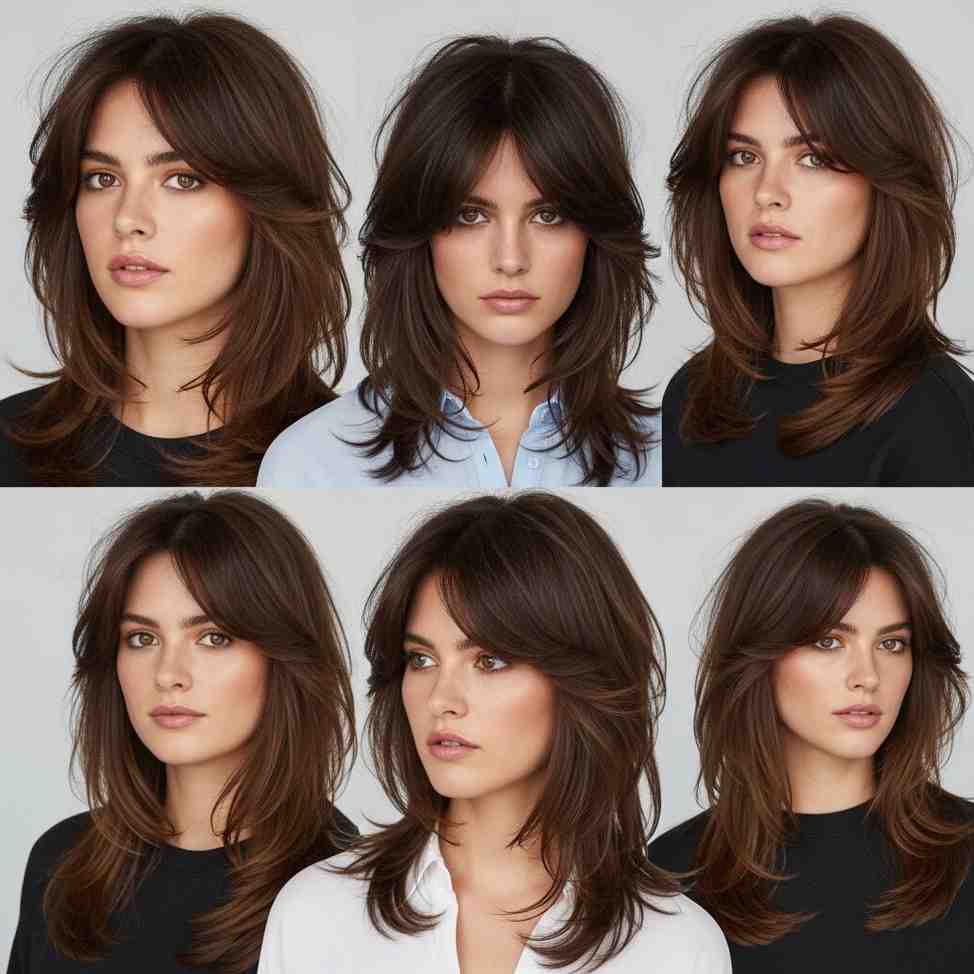
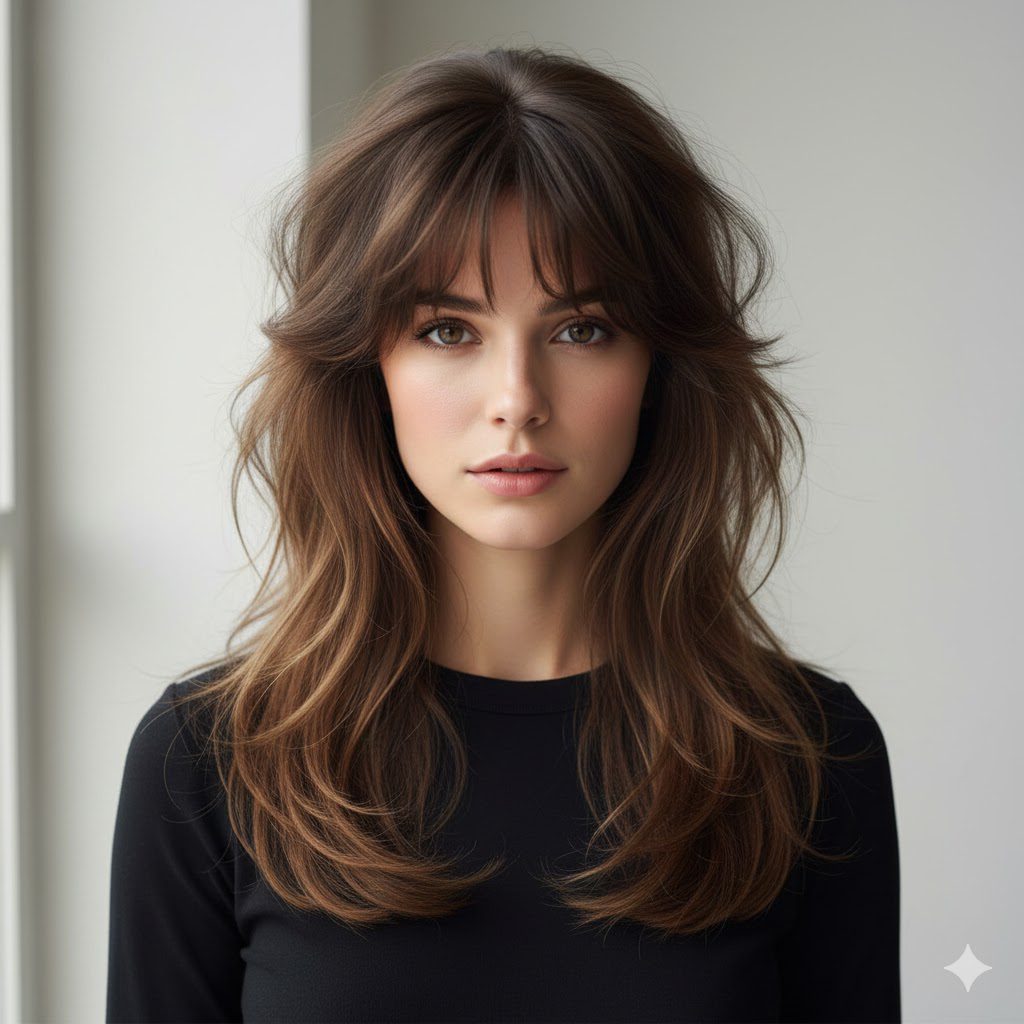
Every stylist I’ve talked to this year says a version of the same thing: clients walk in with screenshots of “butterfly layers,” and half of them are really asking for a wolf cut without knowing that’s the name for it. The two trends merged sometime in late 2025, and by now the line between a butterfly cut and a wolf cut has mostly disappeared. What’s left is a layering style built around movement near the face and lift through the crown, cut short enough to move but long enough to still feel like your hair.
The appeal makes more sense once you see it in person instead of in a filtered photo. Heavy layers used to mean flat roots and thin-looking ends. Butterfly layering flips that. The shortest pieces sit near the cheekbone and jaw, the crown gets internal layers for lift, and the rest stays long. On a round face, that combination does real work. It breaks up width at the widest point of the cheek and adds visual length the eye reads as more oval. That’s part of why this cut keeps showing up in searches from women with rounder face shapes specifically, not just as a general trend.
Here’s the part nobody puts in the caption: this cut needs a blowout to look like the photo. Air-dried, most of these styles fall flatter and can read stringy instead of piecey. If you don’t blow-dry your hair a few times a week, that’s worth knowing before you sit in the chair. A lot of the disappointment people feel with this haircut has nothing to do with the cut itself and everything to do with how it was styled after leaving the salon.
Below are 19 versions of the trend, from soft and low-commitment to full wolf-cut territory, with honest notes on who each one actually suits.
1. Classic Butterfly Wolf Cut with Curtain Bangs

Long layers stack heavily around the crown and taper into curtain bangs that split at the center part. It reads soft from the front and much more layered from the side. Wavy and straight hair both take it well, especially medium-to-thick density. On a round face, the bangs break up forehead width while the layers add angles near the jaw, which is exactly the combination this face shape benefits from. Styling sits at medium difficulty; you’ll want a round brush for the bangs specifically. Expect a trim on the bangs every 3 to 4 weeks even if the rest of the cut only needs attention every 10 weeks. On fine hair, ask the stylist not to cut the layers too short near the crown, or the top can look wispy within a few weeks of growth.
2. Long Butterfly Layers with a Money-Piece Face Frame

This one keeps most of the length untouched and only layers two face-framing pieces, usually paired with a lightened money piece near the cheek. It’s the lowest-effort cut on this list and a good entry point if you’re nervous about commitment. Thick, straight-to-wavy hair holds the shape best. For a round face, the lightened piece pulls the eye downward and elongates the face without changing much else. Maintenance leans more toward the colorist than the cutter, since the money piece needs upkeep more than the layers do. One real issue: if the colorist over-lightens too close to the root, regrowth shows within four weeks instead of eight, so ask for a soft, grown-out placement from the start.
3. Short Butterfly Wolf Cut Bob

A chin-to-collarbone bob with wolf-cut texture worked through it, choppy rather than blunt at the ends. It suits fine-to-medium hair well because the layering tricks the eye into seeing more volume. This is one to approach carefully on a round face; shorter layers that hit right at the jaw can add width instead of removing it. Ask for the front pieces to stay a little longer than the rest to counter that. Styling difficulty runs higher than it looks, since the choppy ends usually need texturizing spray or a light flat iron to lie right. Trims every 6 weeks keep the shape; skip that window and the cut grows into an awkward triangle around the three-month mark.
4. Curly Butterfly Layers Built for Round Faces

Cut curl by curl, dry, with shorter framing pieces near the cheek that curl up and away from the face rather than down and in. This is a genuinely good option for a round face because the crown layers add height while the shorter side pieces keep width off the cheek. It works on 2C through 3B curl patterns. Styling difficulty is moderate and depends heavily on a solid curl cream and diffuser routine. Dry cuts every 10 to 12 weeks are worth the extra cost here, because curls shrink as they dry and a wet cut almost always ends up shorter than planned. Mention your shrinkage percentage to the stylist before they touch the scissors.
5. Butterfly Shag with Bottleneck Bangs

Shaggy layers run through the whole head, paired with bangs that part in the center and flare out near the cheekbone, sometimes called a bottleneck fringe. Fine-to-medium straight or slightly wavy hair suits it best. For round faces, the bottleneck shape narrows right where the face is widest, which makes it one of the more genuinely slimming options here rather than just a trendy layer job. Styling difficulty is medium; texture spray does most of the work on the shag layers. Bang trims are monthly, no way around it. On very straight hair, skip the product step and the shag layers can look stringy instead of piecey by midday.
6. Medium-Length Butterfly Cut with Feathered Ends

Shoulder-length with the ends feathered outward into a soft flip, closer to a modern take on a 70s shag than a wolf cut. Straight and wavy medium-density hair works well. On a round face, the direction of the flip matters more than usual: ask the stylist to angle the layers so the ends flip away from the face, not toward it, or the shape can visually shorten the face at jaw level. Easy to medium styling difficulty, mostly a round-brush blowout. Trims every 8 weeks keep the flip intentional rather than accidental. Humidity is the real enemy here; the flip tends to collapse by afternoon without a light-hold spray.
7. Butterfly Wolf Cut Mullet Hybrid

A short, heavily layered crown that blends into a longer wolf-cut back, closer to the rock-and-roll end of this trend. Thick, straight-to-wavy hair holds the shape best. It can work on a round face if the stylist keeps the crown layers close to the head instead of adding width at the temples, but this is the highest-risk cut on the list for that face shape if the consultation is rushed. Styling difficulty is genuinely high, with daily texture paste involved. Trims every 5 to 6 weeks. Bring reference photos, and be honest that this style is highly stylist-dependent; a lot of people request it, love it in the chair, and then find the daily upkeep more than they expected once the salon blowout wears off.
8. Fine Hair Butterfly Layers (Soft & Airy)

A gentler, low-layer version built specifically for fine or low-density hair, where the ends get just enough texture to avoid looking heavy without removing so much weight that the hair looks thin. Long layers with minimal face-framing suit a round face here, since anything shorter adds width this hair type can’t visually support. Styling difficulty is low. Maintenance is low-to-medium, though trims every 10 to 12 weeks matter more than people expect, since fine hair shows split, thinning ends faster than thicker types. The one phrase worth using at the salon: ask for minimal layer removal. Over-layering fine hair is the single most common regret with this cut.
9. Thick Hair Butterfly Wolf Cut (Weight Removal Focus)

Built for hair that’s genuinely thick or coarse, with heavy internal layering and wolf-cut texture at the ends to remove bulk rather than add movement. For a round face, this cut can be slimming, since removing weight near the cheeks reduces the visual bulk that makes a round face look rounder. Medium styling difficulty; a blow-dry with a large round brush shapes it. Trims every 8 weeks, and this is a cut where the stylist’s skill with thinning shears really shows. Ask specifically for point cutting rather than slide cutting if your hair is prone to frizz, since slide cutting on coarse, thick hair can leave the ends looking blunt-cut choppy instead of soft.
10. Wavy Butterfly Layers with Beachy Texture

An undone, salt-spray finish where the layers exist mainly to enhance natural wave pattern rather than create a specific shape. Natural 2A-2C wave suits it best with minimal effort. On a round face, waves add perceived width, so ask for the layers to start slightly higher on the head than usual to offset that. Low styling difficulty on naturally wavy hair, medium if you’re recreating the texture on straight hair with a wand. This cut is often paired with balayage, so ask upfront whether the color and cut happen in one appointment or two, since the combined service runs long. Realistically, the wave droops by late afternoon without a texture spray touch-up; that’s normal, not a bad cut.
11. Butterfly Cut with Bottleneck Curtain Fringe

A tapered, bottleneck-shaped curtain fringe paired with long layers through the rest of the hair. Straight-to-wavy hair of any density takes it well. This is genuinely one of the better options for a round face on this whole list, since the bottleneck shape narrows right at the cheekbone and elongates the face more effectively than a standard curtain fringe. Medium styling difficulty, since the fringe needs a quick blow-dry most mornings to sit right. Bang trims every 3 to 4 weeks are non-negotiable with this shape. Mention any cowlick near your hairline before the cut; a strong cowlick will fight the bottleneck shape daily if the stylist doesn’t account for it when cutting.
12. Long Butterfly Wolf Cut with Balayage

Length stays long, but wolf-cut layering starts around mid-back, with balayage highlights tracing the shape of the layers. Thick-to-medium straight or wavy hair suits it. For a round face, keeping the overall length past the chin helps counter roundness, so this works best as a longer interpretation of the trend rather than a short one. Medium styling difficulty. Color needs refreshing every 3 to 4 months, cut every 10 to 12 weeks, and realistically these often happen as two separate salon visits, not one, so budget the time and cost accordingly. One note for round faces specifically: ask for highlights to start a little lower than the cheekbone, since placement too close to the face can visually widen it.
13. Chin-Grazing Butterfly Bob (Wolf-ified)

A chin-length bob with choppy, wolf-cut texture rather than a smooth blunt line. Fine-to-medium straight hair holds it best. This is the shortest length on the list and the riskiest for a round face without a counterbalance, like a long side-swept piece or diagonal fringe, since chin-length hair sits at the widest part of a round face by default. If you have a round face and want this length, say so directly in the consultation and ask the stylist how they’d adjust it, rather than just handing over a photo of someone with a different face shape. Medium-to-hard styling difficulty, usually needs daily flat iron or texture spray. Trims every 5 to 6 weeks. This is genuinely the cut I hear the most regret about from round-face clients who skipped that conversation.
14. Butterfly Layers with Face-Framing Pieces Only (Minimalist Version)

The length stays almost entirely untouched, with only two or three pieces near the face layered. It’s a good option if you’re growing out a previous short cut or wearing extensions and don’t want to lose length. Any texture works. For a round face, it’s a safe, subtle way to test the trend, since the framing narrows the face slightly without a dramatic change. Easy styling, arguably the most beginner-friendly cut here. Maintenance is low. A lot of clients use this as a trial cut before committing to a fuller butterfly or wolf shape later, which is a reasonable way to approach it if you’re unsure.
15. Butterfly Wolf Cut for Round Face + Jawline Softening

Layers concentrate right around jaw length to draw the eye downward, with lighter internal layering underneath for volume control rather than heavy top layers. This one is built with round faces specifically in mind and works well on medium-to-thick straight or wavy hair. Medium styling difficulty, blow-dry needed for shape. Trims every 8 weeks. The phrase worth using at the salon is “graduated layers starting below the cheekbone,” which gives the stylist a precise placement instead of a vague reference photo. Most of the inspiration photos for this cut online are shot on oval faces, so ask to see it on a round-face model, or at least a diagram, before agreeing to it.
16. Butterfly Shag Mullet for Thick Curly Hair
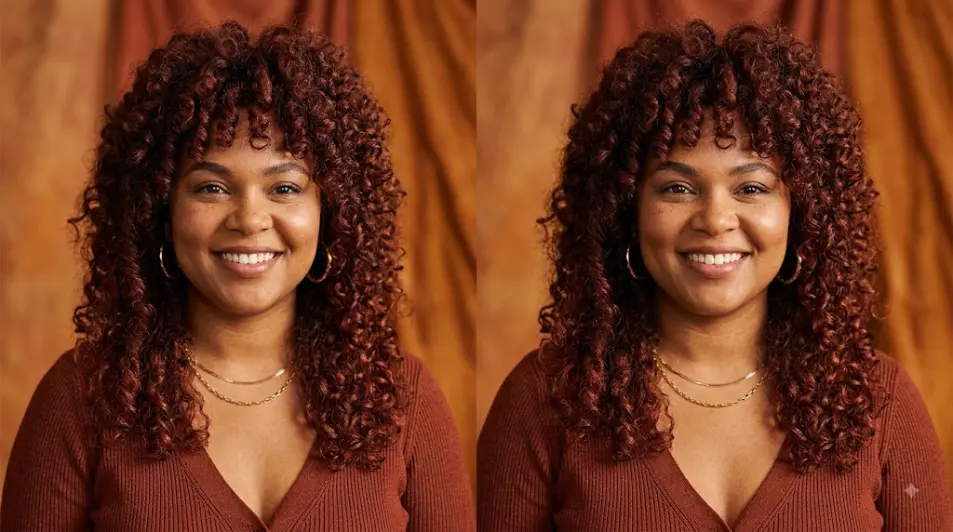
Heavy volume through the crown, shag-layered ends, and curl texture left to do most of the visual work. Thick curly or coily hair suits it best. On a round face, the vertical volume through the crown helps balance width at the cheek, as long as the side layers stay a bit longer than the top ones. Styling difficulty is high; this is not a wash-and-go cut even on naturally curly hair. Dry cuts every 10 to 12 weeks. A curl specialist matters more here than with most cuts on this list, since a generalist stylist unfamiliar with curl patterns tends to cut everything shorter than intended. Ask directly about the stylist’s curl-cutting experience before booking.
17. Soft Butterfly Layers with Side-Swept Bangs

A diagonal side bang blended into long, soft layers, less dramatic than the bottleneck or curtain versions. Straight-to-wavy fine or medium hair works best. The diagonal line breaks the symmetry of a round face in a subtle way, which reads as slimming without looking like an obvious “face shape” haircut. Easy-to-medium styling. Bang trims every 4 to 5 weeks keep the sweep intact. This style depends on a strong part memory, so if you have a cowlick anywhere near your part, mention it; it can undo the swoop within a few hours of styling otherwise.
18. Butterfly Wolf Cut with Blunt Ends (Textured Contrast)
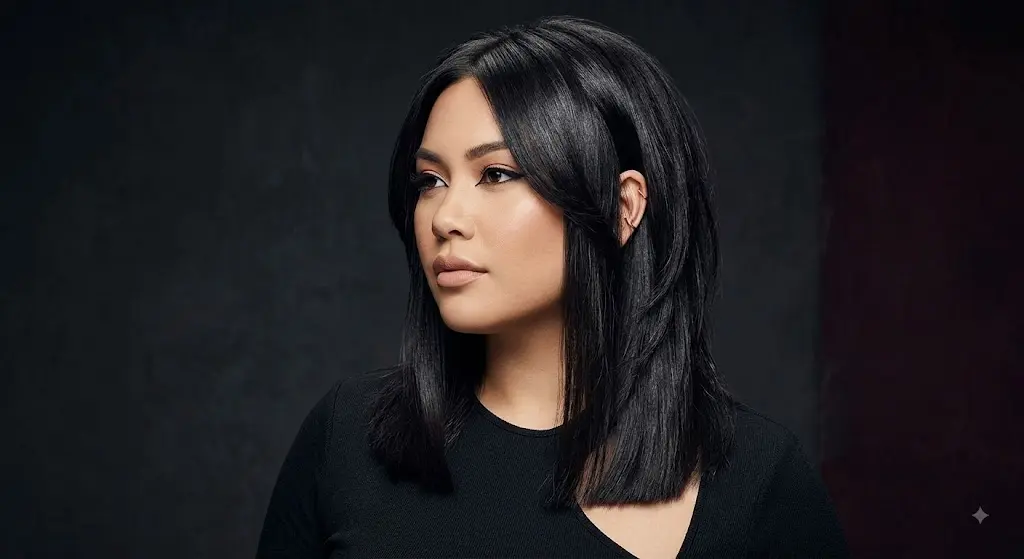
Heavy internal wolf-cut layering paired with a blunt perimeter, so the shape reads controlled rather than shaggy. Thick, coarse hair holds this contrast best. For a round face, the blunt line can shorten the face if it’s not angled properly, so ask for slight layering right at the ends near the cheekbones specifically, rather than a fully straight blunt line all the way around. Styling difficulty is medium-to-high and depends on a precise blow-dry technique to keep the internal layers from disappearing under the blunt line. Precision cuts every 6 to 8 weeks. This is not a forgiving cut in inexperienced hands; ask to see a stylist’s portfolio for this specific technique before booking, since a small mistake in the blunt line placement is much more visible than in a fully blended layer job.
19. Voluminous Butterfly Wolf Cut for Fine to Medium Hair

A root-focused cut where the layers exist mainly to create the appearance of volume, with wolf-cut texture at the ends for movement. Fine-to-medium hair with limited natural volume benefits the most. For a round face, volume should build up at the crown, not out at ear level, so mention that directly, since added width at the sides is the opposite of what a round face needs. Medium styling difficulty; a volumizing mousse at the root and a round brush do most of the work. Trims every 8 to 10 weeks. Realistically, without the right blow-dry technique at home, the salon-day volume flattens within a day or two, which is one of the more common disappointments people report with this cut.
Styling & Maintenance Advice
None of these cuts are truly wash-and-go, even when the photos suggest otherwise. Most rely on a round-brush blowout or a diffuser to get the layers to sit the way they were cut. That’s not a flaw in the haircut; it’s just the reality of a style built on movement.
Heat protectant matters more here than on a one-length cut, since the shortest layers near the face take repeated heat exposure and are usually thinner strands to begin with. A light texture spray or sea-salt spray brings out the piece-y quality of the ends without weighing them down. For curl and wave patterns, a curl cream or light gel keeps definition through humidity better than mousse alone.
Trim frequency depends on how aggressive the layering is. Soft, minimal versions can stretch to 10 or 12 weeks. Anything described as a wolf cut, shag, or mullet hybrid needs 5 to 6 weeks to hold its shape, and bangs of any kind need trims every 3 to 4 weeks regardless of the rest of the cut.
Volume issues usually come down to root product placement, not the cut itself. Apply mousse or volumizing spray at the root, not the mid-lengths, and dry the crown first, upside down if needed, before shaping the rest.
Frizz and humidity are the most common complaints with face-framing pieces and shag layers specifically, since they’re cut shorter and more exposed. An anti-humidity spray on the front pieces after styling helps more than most people expect.
If you’re new to layered styling, start with a beginner-friendly version, like the minimalist face-framing cut or the soft side-swept bangs, before committing to something high-maintenance like the mullet hybrid.
What to Ask Your Stylist
Bring more than a screenshot. Bring a photo of the cut on someone with a similar face shape and hair density if you can find one, especially for round faces, since most inspiration photos online are shot on oval faces.
Ask for internal layering instead of heavy top layers if you want the shape to grow out more gracefully. Internal layers are cut underneath the surface and stay hidden as the length grows, while top layers show an obvious grow-out line within a couple of months.
For thick or coarse hair, ask for point cutting rather than slide cutting if you’re prone to frizz. Point cutting softens ends without roughing up the cuticle the way slide cutting can on coarser textures.
For round faces specifically, the phrase “graduated layers starting below the cheekbone” gives a stylist a precise landmark instead of a vague sense of “shorter around the face.”
Mention cowlicks, strong natural partings, and curl shrinkage before the scissors come out, not after. All three change where a layer actually falls once dry, and a stylist can only account for them if they know in advance.
If you’re unsure about committing to a full wolf-cut version, ask about a “trial cut,” meaning a softer version with fewer layers removed, so there’s room to go shorter or more textured later without starting over.
Common Mistakes
Requesting a dramatic wolf-cut mullet hybrid without discussing daily styling time, then feeling disappointed when the cut doesn’t look salon-fresh without effort at home.
Getting curly hair cut wet without mentioning shrinkage, which usually results in layers ending up shorter than expected once the curls dry and spring up.
Choosing a chin-length version on a round face without asking for a longer counterbalancing piece, which can add width right where the face is already widest.
Skipping bang or fringe trims and expecting the rest of the cut’s maintenance schedule to apply; fringes almost always need attention more often than the rest of the head.
Bringing a reference photo of a different face shape or hair texture without saying so, which leaves the stylist cutting for the photo instead of for your actual hair.
Expecting an air-dried result to match a blown-out salon photo. The cut is the same; the styling step is not optional for this particular trend.
Yes — it’s still one of the most requested cuts I see referenced in consultations. It’s shifted since 2023, though: the 2026 version leans into the wolf cut, so layers show more visible texture and less blended movement than the original had.
Ask for long layers cut shortest near the face and jaw, with internal layers through the crown for lift. Bring a photo, but say your hair type and face shape out loud too — “butterfly cut” isn’t a standardized term and means something slightly different in every salon.
I wouldn’t recommend it. The face-framing layers depend on precise, symmetrical placement, and a mistake near the face shows far more than one in one-length hair. Style it yourself if you want — leave the cutting to a stylist.
Very fine, low-density hair is the one to be careful with, not avoid entirely. Heavy layering removes weight it doesn’t have to spare, and ends can look thin within weeks. It’s the amount removed that matters, not layering itself.
Anyone growing their hair out for length, or saving thickness for an updo, might want to wait — layers take real time to grow back out. Very fine hair should ask for a soft, minimal version instead of skipping it.
Yes, but go for the softer version, not a heavy wolf-cut-style one. Ask your stylist for minimal layer removal specifically, or the ends can end up looking sparse.
Neither, outright — a butterfly cut is a type of layer cut, just with the shortest layers near the face instead of spread evenly. A classic even layer cut grows out easier; butterfly layers give more face-framing movement.
It works, but it asks more of your trim schedule — every 5 to 6 weeks instead of 8 to 10, since there’s less length to hide the grow-out line.
Yes — wavy hair is one of the better textures for it. Ask your stylist to cut it slightly damp rather than bone dry, so the layers don’t end up shorter than expected once it air-dries.
Final Thoughts
The butterfly wolf cut trend earns its popularity honestly: it’s one of the few layering styles that genuinely changes how a round face reads, not just how trendy the hair looks. The tradeoff is that placement matters more than most people realize going into the consultation, and the maintenance is real, not theoretical.
If you’re going in for one of these cuts, the conversation with your stylist matters as much as the reference photo. Say your face shape out loud. Mention your hair texture and how much time you actually spend styling on a normal day. The gap between a photo you love and a haircut you love almost always closes in that conversation, not in the chair.