There’s a shift that happens every September. The light changes, the air gets that first dry bite, and somehow everyone starts rethinking their hair. For short-haired women, fall is genuinely one of the better seasons to work with — the cooler, drier air is less brutal on fine or color-treated hair, humidity drops, and the season’s palette of warm coppers, deep chestnuts, and muted blondes naturally complements shorter lengths.
That said, ‘short hair’ is doing a lot of work as a category. A cropped pixie cut sitting an inch off the scalp behaves completely differently from a jaw-length bob or a chin-grazing lob that you’re growing out. The hairstyles on this list reflect that range — we’re covering pixies, bobs, crops, and short shag cuts, all styled in ways that read distinctly fall rather than just whatever happens to be left from summer.
One honest note before we get into it: short hair in fall is low-maintenance in some ways and very high-maintenance in others. You avoid the weight and frizz of long hair, but trims become more frequent — every 4 to 6 weeks for most pixies and blunt bobs, or the shape starts to lose definition fast. If that cadence doesn’t work for your schedule or budget, some of the longer short styles on this list (like the shaggy bob or the ear-length lob) give you a bit more flexibility.
1. The Textured Pixie with Piece-y Crown

Forget the sleek, helmet-shaped pixie that looked great in the early 2000s. The fall 2025 version is piece-y, slightly undone, and has a crown that sits with visible texture instead of lying flat. The back is kept tight and tapered, usually with a fade or a clean scissor-cut neckline, while the top has enough length to create soft movement when styled with a light pomade or wax.
Best for: Fine to medium hair that tends to lie flat. The added texture gives the appearance of density without adding product weight.
Face shape: Strong results on oval and heart-shaped faces. On rounder faces, ask for slightly more height through the crown — it elongates the face without being dramatic.
Styling difficulty: Medium. Takes 5–8 minutes with a small amount of texture cream and a blow-dryer to rough-dry the crown upward.
Maintenance: Every 4–5 weeks, or the taper at the nape starts growing in and the shape softens out.
Realistic note: On very thick or coarse hair, the crown can puff outward instead of sitting with the piece-y texture you’re going for. This needs adjustment at the cut level — internal thinning through the top sections.
2. Blunt Bob at Jawline Length

The blunt bob is one of those cuts that looks simple in a photo and slightly more complicated in person — the weight line has to sit exactly right or it can make jaws look wider than they are. At jawline length specifically, it hits a sweet spot for fall: long enough to tuck behind the ear, short enough that it doesn’t need much heat styling to look put-together.
Best for: Thick, straight, or slightly wavy hair. Very fine hair can pull off a blunt bob but it needs internal layering to keep the ends from looking stringy.
Face shape: Best on longer or more rectangular faces. On rounder faces, a slight A-line angle (shorter at the back, slightly longer in front) changes the proportion significantly.
Styling difficulty: Low to medium. Works well air-dried if your natural texture is relatively smooth.
Maintenance: Every 6 weeks. The blunt line does grow out with fairly graceful shape.
Realistic note: Very humid climates (even in fall) will cause the ends to flip outward unpredictably. A smoothing serum and slight tension with a round brush during blow-drying controls this.
3. Copper-Toned Shaggy Bob

This one leans into everything fall is about. The shaggy bob — which typically sits between the chin and the collarbone but we’re keeping it at chin length or above here — uses curtain bangs and heavy internal layering to create a look that reads slightly 70s without crossing into costume territory. Pair it with a warm copper or auburn tone and it becomes genuinely season-specific.
Best for: Medium to thick hair with natural wave or slight texture. Straight hair works but needs more styling effort to get the waves to read correctly.
Face shape: Softer on oblong and oval faces. The curtain bangs help visually shorten longer face shapes.
Styling difficulty: Medium-high. Usually requires a texturizing spray, a 1-inch barrel curling wand to enhance the wave, and some light finger-raking to break it up.
Maintenance: The cut itself holds shape for 6–8 weeks. The copper tone is another story — warm reds fade faster than most shades and will need a color refresh or toning gloss every 4–6 weeks.
Realistic note: If your natural hair is dark and you’re considering the copper tone, ask your colorist specifically about how much lightening is required before the warm tone reads accurately on your strands. On medium-dark hair without pre-lightening, it often reads as a subtle brownish-red rather than a true copper.
4. French Crop with Soft Fringe

A French crop sits short on the sides and back, with a slightly heavier, forward-swept fringe across the forehead. It’s a cleaner, more structured cut than a pixie but without the androgynous edge. In fall, the soft fringe element reads particularly well — it covers the forehead, adds warmth to the face, and pairs well with both polished and casual styling.
Best for: Fine hair where the heavier top section creates the appearance of density. Also excellent on straight and slightly wavy hair.
Face shape: Best on oval, round, and square faces. The fringe softens angular jawlines and adds visual weight to the upper portion of rounder faces.
Styling difficulty: Low. A small amount of gel or texture paste worked through damp hair and then blown forward is usually all this needs.
Maintenance: Every 4–5 weeks if you want the sides to stay tight.
Realistic note: The fringe length matters. Ask for it to sit just above or at the brow — any longer and it reads less intentional and just looks like an awkward overgrown bang.
5. The Tousled Ear-Length Lob

This is the longest ‘short’ style on the list, sitting right at or just below the ear. The tousled version skips the precision of a blunt cut — it uses soft layers and a slightly undone finish that works particularly well going into fall. It’s not trying to look polished and that’s the point. Think of it as the kind of hair that looks like you just pulled it out of a loose bun.
Best for: Wavy or naturally textured hair. On pin-straight hair, you’ll spend real time creating the tousled effect with a wand or diffuser.
Face shape: Broadly flattering. The length sits below the cheekbone on most face shapes which keeps it from drawing attention to any one feature.
Styling difficulty: Low if your hair has natural movement. Medium if it’s straight.
Maintenance: Every 6–8 weeks. The tousled style is relatively forgiving as it grows out — the extra length just adds to the soft look.
Realistic note: If you’re transitioning from a shorter cut to this length, there’s an awkward phase around the nape and ears where the hair is neither long enough to tuck nor short enough to sit cleanly. A few strategic trims during the grow-out help.
6. Micro Bob with Stacked Back

Shorter than the standard jawline bob, the micro bob sits between the chin and the mid-ear. The stacked back is what gives it structure — the back sections are cut on a steep angle so they build volume right at the crown while the front pieces angle slightly forward. It’s a cut that looks intentional from every angle, which doesn’t happen with every short style.
Best for: Straight and slightly wavy hair. Works well on thick hair because the stacking removes some of the bulk from the lower sections. Not ideal for curly hair — the stack tends to exaggerate volume in unpredictable ways.
Face shape: Strong on oval and diamond shapes. Can be adjusted for round faces with a slightly longer front angle.
Styling difficulty: Low to medium. A round brush and blow-dryer is the standard styling approach.
Maintenance: Every 5–6 weeks. The stacked back grows out fairly noticeably once it loses its shape.
Realistic note: Make sure your stylist sees what a stacked back actually looks like on your density — on very thick hair, the stacking can sit too full and make the back of the head look disproportionately round.
7. Wispy Pixie with Face-Framing Pieces
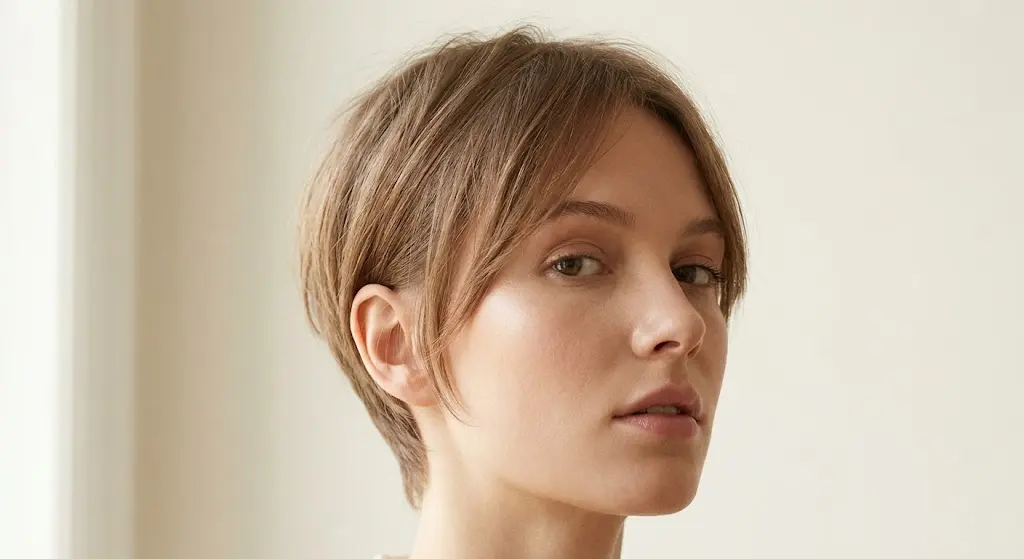
This is the pixie cut for people who aren’t quite ready to commit to a hard, clean-cut look. The wispy version keeps everything short but uses soft, tapered ends around the face — near the temples and in front of the ears — to create face-framing softness. It reads less severe than a traditional pixie and works well into fall when slightly undone finishes are everywhere.
Best for: Fine to medium hair. The wispy pieces tend to disappear on very thick hair without significant thinning work.
Face shape: Oval and heart-shaped faces benefit the most from the face-framing pieces. They draw attention to the cheekbones and jawline.
Styling difficulty: Low. Air-drying with a light styling cream is enough for most textures.
Maintenance: Every 4–5 weeks. The wispy pieces grow out into something shapeless fairly quickly.
Realistic note: Ask specifically for ‘soft, tapered ends near the temples’ rather than just a ‘wispy pixie’ — stylists interpret wispy differently, and some go much more aggressive with the thinning than you’d want.
8. Warm Brunette Sleek Bob

Not everything in fall needs to be textured or undone. The sleek, smooth bob in a warm brunette shade — think medium chestnut or dark caramel — is a reliable fall choice that leans into the season through color rather than texture. The cut is straightforward: blunt or very slightly graduated ends, no visible layers, and a center or slightly off-center part.
Best for: Straight or slightly wavy hair that responds well to heat styling. Thick hair should request some graduation to keep the ends from appearing too heavy.
Face shape: Best on longer, oval, or oblong faces.
Styling difficulty: Medium. Requires a blow-dryer and round brush, or a flat iron for the ends to sit smooth.
Maintenance: Color-wise, warm brunette shades hold reasonably well for 6–8 weeks. Trim every 6 weeks to maintain the blunt line.
Realistic note: The sleek bob takes longer to style than it looks like it should. Budget 10–15 minutes with a round brush if your hair has any natural texture or wave.
9. Layered Pixie Bob (Pob) with Side Part

The pixie bob sits in the middle ground between a classic pixie and a longer bob — usually around the bottom of the ear to the mid-jaw. Adding a side part and soft internal layers through the crown and sides creates movement without the cut losing its overall compactness. It’s one of the more wearable shapes on this list because it photographs well, works with most textures, and doesn’t require as aggressive a commitment as a full pixie.
Best for: Most hair textures. Wavy hair benefits especially from the internal layers, which let the natural texture work for you.
Face shape: The side part helps balance asymmetry and is particularly flattering on round faces where a center part can emphasize fullness.
Styling difficulty: Low to medium.
Maintenance: Every 6 weeks.
Realistic note: Ask your stylist to avoid going too heavy with the layering at the back — on this length, aggressive back layers can leave the nape looking thin and disconnected from the sides.
10. Short Curtain Bang Bob

Curtain bangs have been in rotation long enough that they feel earned rather than trendy at this point. On a short bob, they work differently than they do on longer hair — because there’s less length to frame the face overall, the bangs carry more visual weight and really become the focal point of the cut. Worn slightly grown-out, parted loosely down the middle, they sit at a length somewhere between brow-grazing and eye-level.
Best for: Straight and wavy hair. Very curly hair makes curtain bangs harder to manage and the fall-apart factor is higher throughout the day.
Face shape: Works on most. Particularly useful on square or angular faces where the soft parted bang breaks up the sharpness of the forehead.
Styling difficulty: Medium. Needs a round brush and blow-dryer to get the characteristic outward curve. Air-dried, they tend to go flat or split in odd directions.
Maintenance: The bangs need trimming every 3–4 weeks, which is separate from your bob trim schedule.
Realistic note: If you have a strong widow’s peak, the center part of curtain bangs will fight against it. A slightly off-center variation usually reads better.
11. Cropped Curly Shag

Natural texture and a fall-forward cut in one. The cropped curly shag keeps the overall length at chin or above but uses a heavy layer structure — similar to a wolf cut but much shorter — to let individual curl formations show through clearly. Diffused and left to do its thing, it has a casual, slightly retro quality.
Best for: Naturally curly or coily hair, type 2c through 3b. Loosely wavy hair can work if you’re using a diffuser and curl-defining cream.
Face shape: Round and oval faces carry this cut well. The volume distribution around the crown and sides creates balance.
Styling difficulty: Medium — the cut does most of the work once the curl system is in place. The product layer matters here: a leave-in, curl cream, and light gel is a common combo.
Maintenance: Every 6–8 weeks.
Realistic note: Ask for this cut on dry hair if at all possible, or ask your stylist to dry-cut the final layer work after a wet cut. Curly hair behaves so differently wet vs dry that a wet-only cut often doesn’t land where you expect it.
12. The Grown-Out Pixie with Textured Ends

The grow-out stage of a pixie is notoriously awkward. But intentional grow-out styling — where you work with where the hair actually is rather than against it — can look genuinely good at the 3–6 month post-pixie point. Textured ends, a little product to define the pieces around the ears, and a slightly disheveled finish make this feel like a choice rather than a phase.
Best for: Anyone who had a short pixie cut 3–5 months ago and is growing it out. Particularly good on wavy hair where the varied lengths create natural movement.
Face shape: Depends on where you are in the grow-out — the stylist can shape the existing length to work with your face shape without compromising the growth.
Styling difficulty: Medium. Texture spray and light pomade work better than smoothing products at this stage.
Maintenance: Strategic trims every 6–8 weeks to shape the growth without losing too much length.
Realistic note: The nape is usually the most difficult part of a pixie grow-out — it goes from clean-cut to bushy fairly fast. Keep asking for the nape to be cleaned up even when you’re trying to grow everything else out.
13. Short Bob with Subtle Highlights

Short hair with highlights behaves differently from highlighted long hair — the contrast reads more concentrated. A short bob with a few carefully placed babylights or face-framing pieces (not a full highlight job) looks fall-appropriate in warm honey, caramel, or soft bronze tones. It adds dimension without the upkeep commitment of an all-over color change.
Best for: Any hair texture. The highlights work visually the same way on straight and wavy hair.
Face shape: Face-framing placement of highlights near the hairline and temples draws focus toward the face regardless of face shape.
Styling difficulty: Low — the highlights do the visual work without requiring elaborate styling.
Maintenance: Babylights and soft highlights grow out gracefully — expect 10–14 weeks before the grow-out becomes visually obvious.
Realistic note: On dark brown or black hair, warm highlights can oxidize toward an orange or brassy tone without proper toning. Ask for a toner to be applied over the highlights immediately after and use a color-safe shampoo at home.
14. Asymmetric Pixie Cut

An asymmetric pixie has one side slightly longer than the other — sometimes by a centimeter, sometimes by a few. It sounds subtle and it is, but it changes the whole reading of the face. The longer side can sweep across the forehead slightly, creating softness on one side while the shorter side sits close to the ear. It’s one of the more editorial-feeling cuts on this list without being unwearable day-to-day.
Best for: Straight and slightly wavy hair. The asymmetry is harder to control on very curly hair since curl shrinkage affects both sides differently.
Face shape: Strong on oval and oblong faces. Can add interesting asymmetric balance to rounder faces.
Styling difficulty: Low once you know which direction each side should go. Most of the time, the longer side is slightly pointed toward the face rather than tucked behind the ear.
Maintenance: Every 4–5 weeks. Asymmetry requires precise maintenance or the sides start to look accidentally uneven rather than intentional.
Realistic note: This is one of those cuts that needs a stylist you genuinely trust — the margin between ‘intentional asymmetry’ and ‘lopsided’ is small, and it comes down almost entirely to the specific angle and how clean the shorter side is cut.
15. Textured Lob with Face-Framing Layers

Sitting at ear-to-jaw length, this is the transitional cut — not quite a classic bob, not trying to be a pixie. The texture comes from visible layers that start around the cheekbones and create softness through the ends. Face-framing pieces are left slightly longer than the rest to frame the jaw. In fall tones — dark auburn, chestnut brown, or even a cooler ash-brown — it reads really cleanly.
Best for: Medium to thick hair. Fine hair can pull off a version of this but the layers need to be conservative — too much layer work on fine hair removes weight and the ends start to look sparse.
Face shape: The face-framing layers add visual length to rounder faces. Oval and heart-shaped faces work well too.
Styling difficulty: Low to medium depending on your natural texture.
Maintenance: Every 6–7 weeks.
Realistic note: If your hair is on the finer side and you’re drawn to this look, ask for ‘soft, internal layering only — no surface layers’ and see how the first cut behaves before committing to heavier layer work.
16. Side-Swept Undercut Pixie
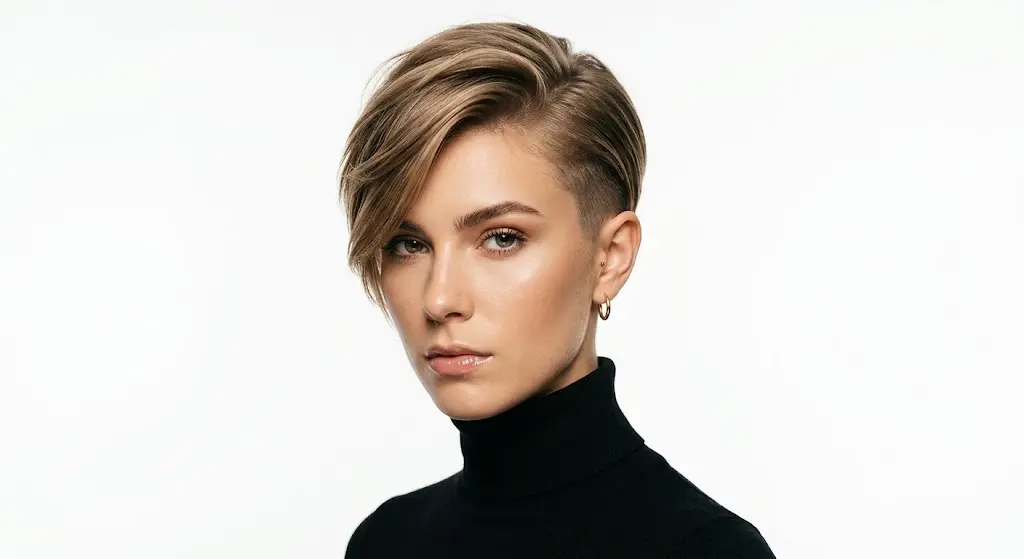
The undercut element here is subtle — it’s not a dramatic skin fade but a softer disconnection between the sides and the top. The top section is left with more length and swept to one side, creating a sweep that partially covers the shorter section beneath. It’s a design-forward cut that looks more complex than it is to style.
Best for: Fine to medium hair. Thick hair might need the undercut section taken shorter to create true contrast.
Face shape: Looks particularly good on oval and oblong faces. The sweep adds width to longer faces in a controlled way.
Styling difficulty: Low. A small amount of pomade or firm-hold wax swept in the direction of the part is all it needs.
Maintenance: Every 4–5 weeks, or the undercut section grows in and loses the disconnected look.
Realistic note: The undercut grows in quickly and it can look unintentionally bushy on the sides if you go more than 5 weeks between trims. Worth being honest with yourself about whether you’ll commit to that schedule.
17. Short Wolf Cut (Cropped)

The wolf cut went through its moment on long and medium hair, but the short version — kept at jaw length or above — is actually where it works best. It uses the same logic of heavy crown layers and shaggy, tapered ends, but on a shorter canvas the effect is more concentrated. The result is something between a shag and a pixie: lots of texture, visible layers, movement at the front, tighter at the nape.
Best for: Medium to thick hair with natural wave or texture. Fine hair needs to approach this cautiously — the aggressive layering can leave the ends looking thin.
Face shape: Best on oval and round faces. The crown volume creates height and the shaggy sides add width in an even, non-dramatic way.
Styling difficulty: Medium. Usually styled with a texturizing spray applied to damp hair and diffused or rough-dried.
Maintenance: Every 6–8 weeks.
Realistic note: The short wolf cut is easy to over-do. Too much layering at the top and the crown can start to look mullety rather than intentionally shaggy. Look at reference photos carefully and bring a specific example to your stylist.
Styling & Maintenance: What Short Hair Actually Needs in Fall
The shift from summer to fall hair care isn’t dramatic, but a few things are worth adjusting.
Heat Tools
Short hair gets hot-tooled at close range, which means heat damage accumulates faster than it does on longer lengths. Use a heat protectant every time you use a blow-dryer, flat iron, or curling wand — on short hair this isn’t optional. Low-to-medium heat (300–350°F) is enough for most styling tasks on shorter cuts. You don’t need 450°F to blow out a bob.
Trimming Frequency
For most short cuts — pixies, French crops, micro bobs, undercuts — the realistic trim schedule is every 4–6 weeks. A 6-week stretch often means the last 2 weeks start to look noticeably less sharp. If you’re coming from long hair and aren’t used to that cadence, it’s the most important thing to budget for when deciding whether a short cut is actually practical for your life right now.
Product Reality
For textured styles: a salt spray or texturizing spray on damp hair before rough-drying gives definition without the heaviness of a cream. For smoother styles: a few drops of lightweight serum through damp hair before blow-drying controls frizz without weighing the ends down. For pixies and crops: a small amount of matte pomade or wax worked between the fingers and then pressed through the top sections adds control and piece-y texture.
Frizz in Fall
Despite the lower humidity, early fall can still have humid days depending on where you live. An anti-humidity spray or light hairspray over a finished style extends how long it holds.
What to Ask Your Stylist
Vague descriptions lead to vague haircuts. Here’s how to be more specific about what you’re going for.
For a textured pixie: ‘I want piece-y texture through the crown with a tapered, clean neckline. Not too much thinning on top — I want to keep some weight there.’
For a shaggy bob: ‘I want internal layers starting from the cheekbones down, curtain bangs that sit at or just below brow level, and a soft, undone finish — not blunt or polished ends.’
For a stacked bob: ‘I want a steep graduation at the back that builds volume at the crown, with the front pieces sitting at the jaw. Can we check the angle from the back before finishing?’
For a cropped wolf cut: ‘I want heavy layers at the crown with shaggy ends, but I don’t want the back to go too short — I’d like to keep some length at the nape rather than a tight taper.’
For highlights on a short bob: ‘I want face-framing pieces only, not a full highlight, in a warm caramel/honey tone. I’d like a toner over the top so they don’t read brassy.’
Bring a photo. It is the single most useful thing you can do. A photo taken in similar lighting to your salon, showing a cut that’s close in shape and length to what you’re asking for, removes an enormous amount of interpretation error.
Common Mistakes to Avoid
Going too short too fast. If you’ve had medium or long hair for a while, starting with a bob or ear-length lob instead of jumping straight to a pixie gives you time to figure out what you actually like about shorter hair.
Choosing a cut based on someone else’s hair texture. A textured, shaggy bob on thick wavy hair looks completely different on fine straight hair. Ask your stylist which cuts specifically suit your texture, not just which cuts look good in photos.
Skipping the trim when the shape starts softening. With short cuts especially, ‘I’ll go next week’ turns into a month, which is when you start questioning whether you even like the cut — but the cut has just grown out of shape.
Using too much product on fine hair. It weighs the ends down and makes the cut look flat rather than textured.
Asking for too many changes at once. A new color, a new cut, and curtain bangs added in one session is a lot of variables. If you’re unsure about any element, hold one back for the next appointment.
FAQ
Who should not get layered short hair?
Honestly, layering isn’t the problem — it’s the degree of layering relative to your density. If you have very fine hair that already lacks volume, aggressive surface layering removes weight and can leave the ends looking thin and sparse. If that sounds like you, you’re better off with a blunt or very lightly graduated cut that maintains the weight line. You can still get soft internal layering; just ask your stylist to keep it minimal and avoid thinning shears through the ends.
How often do short hairstyles need trimming?
Pixies and crops: every 4–5 weeks. Bobs and lobs: every 6–8 weeks. The shorter the cut, the faster the shape dissolves.
What fall hair colors work best on short hair?
Warm brunette tones — chestnut, medium auburn, dark caramel — read particularly well on shorter lengths because the color is concentrated and more visible than on longer hair. Copper is a popular fall choice but fades fast, so keep that in mind for maintenance budgeting.
Can I get a short fall hairstyle if my hair is very thick?
Yes, but the approach matters. For thick hair, blunt cuts create a solid, heavy weight line that’s actually flattering. Shaggy or textured cuts need the right internal thinning (done with scissors, not thinning shears through the surface) to keep the volume where you want it. The stacked bob and the blunt jawline bob are particularly suited to thick hair.
What is the easiest short hairstyle to maintain for fall?
The ear-length tousled lob is probably the most forgiving in terms of grow-out and day-to-day styling. If you want something shorter, the French crop with soft fringe is a low-effort option with a clean result.
Final Thoughts
Short hair in fall comes down to finding the cut that suits your actual lifestyle — your trim budget, your styling tolerance, your hair texture. The 17 styles on this list cover a real range, from the practically zero-effort tousled lob to the structurally demanding asymmetric pixie. None of them are wrong, but not all of them are right for every person.
The most useful thing before booking an appointment is to look at 2–3 real-person photos (not editorial) of the cut on hair that’s similar in texture and density to yours. It gives you a more accurate sense of what the cut actually does, day 10 and week 6, rather than what it looks like in studio lighting.
Once you find the right one, fall is genuinely one of the better times of year to start fresh with short hair. The season does some of the work for you.