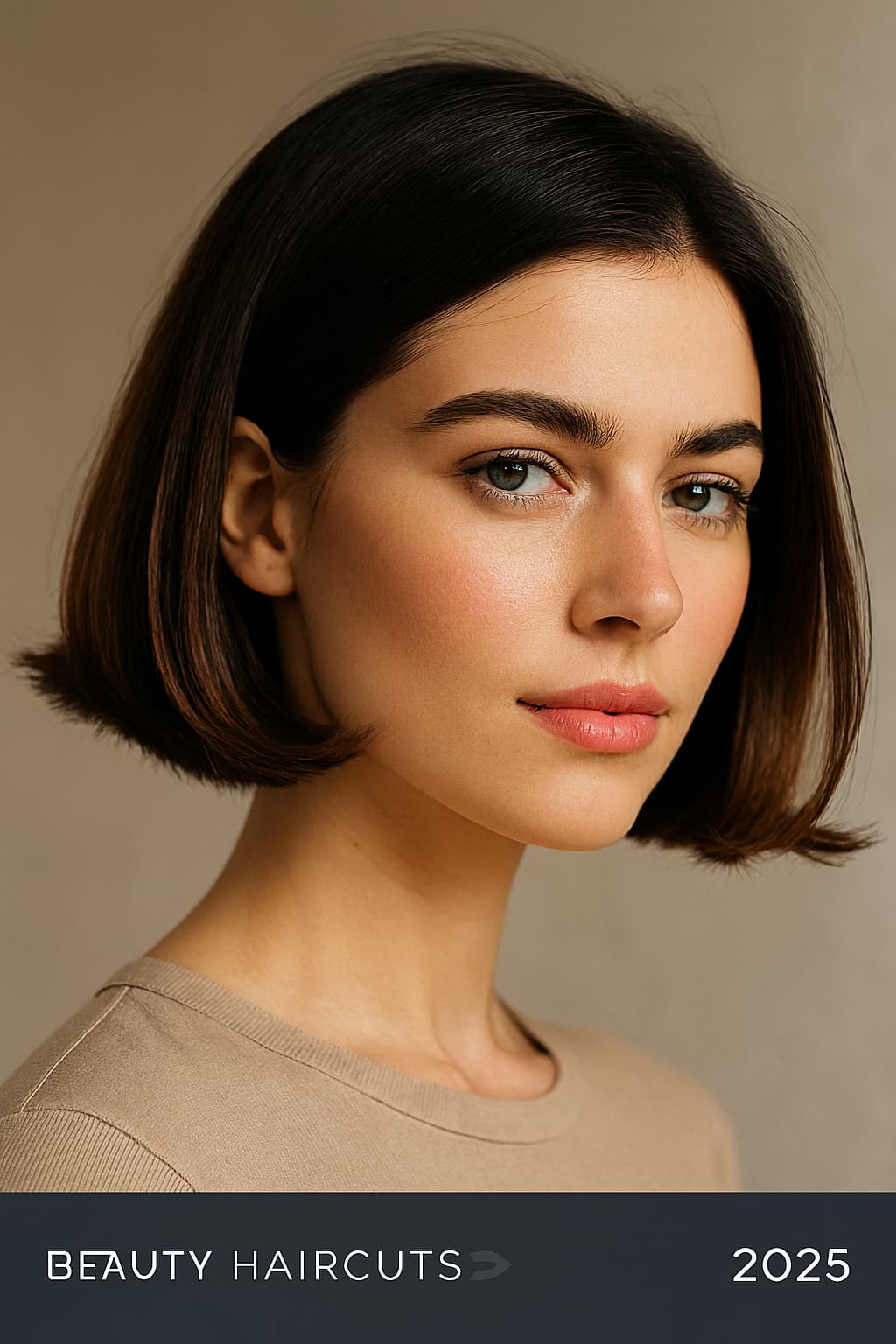
Cloud bangs have been floating across Pinterest boards and TikTok feeds for a reason. They’re soft, they’re full, and they sit with this rounded, pillowy volume that feels distinctly different from the sharp, blunt fringe of the early 2000s or the flat, overworked curtain bangs that became almost ubiquitous a few years back. The “cloud” in the name refers to that lifted, airy quality — bangs that don’t paste themselves flat to the forehead, but instead hold a gentle curve and a little body on their own.
The trend has roots in Korean beauty aesthetics, where effortless-looking but carefully constructed fringe has been popular for years. Stateside, it caught on as women started moving away from very structured styles toward something that looks less done — lighter, floatier, almost like your hair just naturally fell that way. Which, if you’ve tried to re-create that look yourself, you know it absolutely did not just fall that way. It takes some technique.
Who does this actually work for? Honestly, more people than you’d expect — but not everyone. If your hair is fine and low-density, you’ll need to work with a stylist who understands that the cloud shape relies on some weight in the fringe section. Very sparse bangs won’t hold that curve; they’ll go flat. On the other hand, if you have thick, coarse hair, the challenge is getting the bangs light enough to move without becoming a solid curtain across your forehead. Medium-density hair with some natural wave or texture is probably the sweet spot.
One honest styling truth: these bangs need a round brush or a curling iron every single morning if you want them to look the way they do in photos. They don’t air-dry into that cloud shape. They air-dry into something more like a deflated half-moon. Plan for at least five minutes of dedicated bang styling daily — more in humid weather.
1. Classic Cloud Bangs on Long Straight Hair
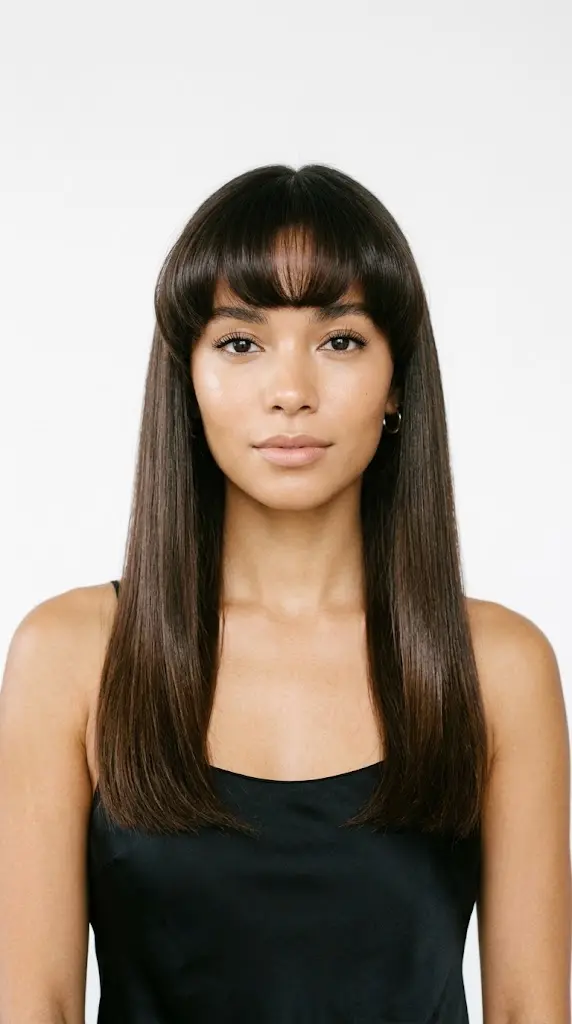
The original version of this style. Long, sleek hair paired with full, rounded fringe that skims the eyebrows creates a strong contrast between the softness of the bangs and the smoothness of the rest of the length. The bangs are cut in a gentle curve across the forehead — not blunt-straight, but not heavily graduated either. They’re one consistent length in the center, feathering only slightly at the temples.
Best for: Straight to slightly wavy hair, medium to thick density. This look struggles on very fine hair because there isn’t enough weight to hold the rounded shape.
Face shapes: Oval and heart shapes benefit most here. The rounded bang line softens a pointed chin or a prominent forehead. On round faces, these bangs can make the face look shorter — worth knowing before you commit.
Styling difficulty: Moderate. You need a mid-sized round brush and a blow dryer with a concentrator nozzle. Roll the brush under the fringe while directing heat downward, then finish with a flat iron for just a second or two to set the curve.
Maintenance: Trim every 3–4 weeks. Bangs grow fast, and once they reach past the brows, they lose that cloud shape and start to look heavy.
2. Cloud Bangs With a Wavy Bob
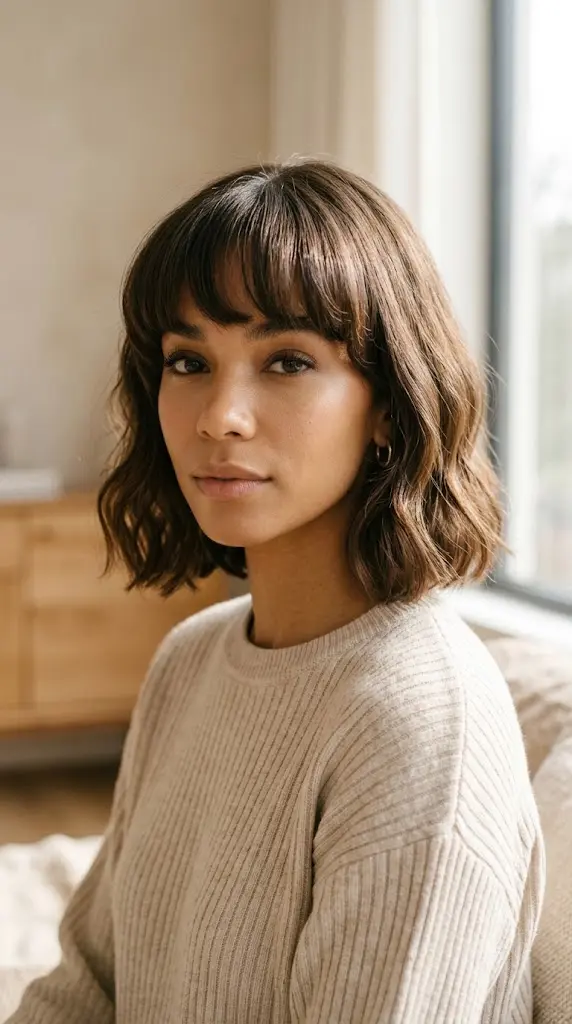
This is a more relaxed interpretation — the bangs are still full and rounded, but the rest of the hair is cut into a medium bob with soft waves or bends. The combination has an almost vintage quality, somewhere between a 1970s editorial and modern-day effortless cool.
Best for: Naturally wavy or heat-waved hair, medium density. If your hair is on the thicker side, the bob will hold its shape with minimal effort. If it’s fine, ask your stylist to avoid too much internal layering in the bangs or they’ll deflate faster.
Face shapes: Particularly good for square and diamond face shapes. The soft waves widen the lower face gently while the rounded bangs balance the forehead width.
Styling difficulty: Low to moderate. The waves can be rough-dried and scrunched, but the bangs still need that round brush moment.
Maintenance: This is actually one of the lower-maintenance cloud bang variations because the textured bob forgives a less-than-perfect bang day. You can pin them to the side and the whole look still works.
3. Wispy Cloud Bangs on Medium-Length Hair

Instead of full, dense fringe, wispy cloud bangs use point-cutting or razor-thinning to create a lighter, more see-through version of the style. The volume and curve are still there, but individual hairs are slightly separated, giving the forehead a peek-through quality.
Best for: Fine to medium hair. This variation is actually designed for people who want the cloud look but don’t have enough density to carry full bangs without looking sparse.
Face shapes: Flatters almost every face shape because the lighter fringe doesn’t overpower features.
Styling difficulty: Surprisingly tricky. Wispy bangs need to be styled with a lighter touch — a small round brush and low heat — or individual pieces start frizzing and the whole airy effect collapses. Humidity is your enemy here.
Realistic expectation: In a dry climate, these can look ethereal. In August humidity, they puff out in unpredictable directions. Keep a travel-size hair spray on you.
4. Curtain-Cloud Hybrid Bangs

This style borrows the parting technique of curtain bangs but uses the rounded, lifted styling of cloud bangs. The result: bangs that frame the face from a center or off-center part, but still hold that soft, elevated body instead of falling flat.
Best for: Medium to thick hair with some natural movement. Very straight, heavy hair may not hold the curtain parting without help from a curling iron.
Face shapes: One of the best options for oblong or long faces, because the width of curtain bangs visually shortens face length, and the cloud lift adds softness without weight pulling downward.
Styling difficulty: Moderate to high. This involves two different techniques — parting and directing the bangs outward, then lifting and curving them. A 1-inch curling iron or a round brush with blow dryer works best.
Maintenance: Every 4–5 weeks, since the grow-out on curtain bangs is slightly more forgiving than full fringe.
5. Cloud Bangs With Blunt Lob

A blunt, collarbone-length lob anchored by cloud bangs creates one of the more polished combinations in this list. The two shapes — straight, precise length and pillowy, rounded fringe — play off each other well.
Best for: Hair that’s naturally straight or that’s been chemically treated to be smooth. Wavy or textured hair can work here, but the blunt lob will need regular blow-outs to maintain that sleek contrast.
Face shapes: Works well for oval and rectangular face shapes. On heart-shaped faces, the blunt lob can sometimes look wide at the ends — worth discussing with your stylist before committing to exactly how blunt the ends should be.
Styling difficulty: The bangs are moderate difficulty. The lob adds to the time investment because smooth, blunt ends usually need a blow-out.
Maintenance: High. Blunt cuts show every millimeter of growth, and the bangs still need trims every 3–4 weeks.
6. Textured Cloud Bangs on a Shag Haircut

The shag has layers that reach all the way up through the crown and into the fringe, so cloud bangs on a shag look naturally integrated rather than added-on. They curl slightly under at the ends, and the rest of the hair’s layers flow outward from there.
Best for: Wavy, curly, or thick straight hair. This is probably the best cloud bang option for women with high-density hair — all that layering removes weight and gives the fringe a chance to breathe.
Face shapes: Soft shag layers around the cheekbones and jaw visually balance round and square faces well. This is also one of the few fringe styles that can work on round faces without shortening them further, because the surrounding texture creates vertical movement.
Styling difficulty: Medium. The shag layers can be diffused or rough-dried, and then you hit the bangs with a round brush. It’s actually a faster styling process than it looks because imperfection is built into the style.
Maintenance: Shags need trims every 6–8 weeks to keep the layers from getting bulky. The bangs, every 3–4 weeks.
7. Cloud Bangs on Natural Curly Hair
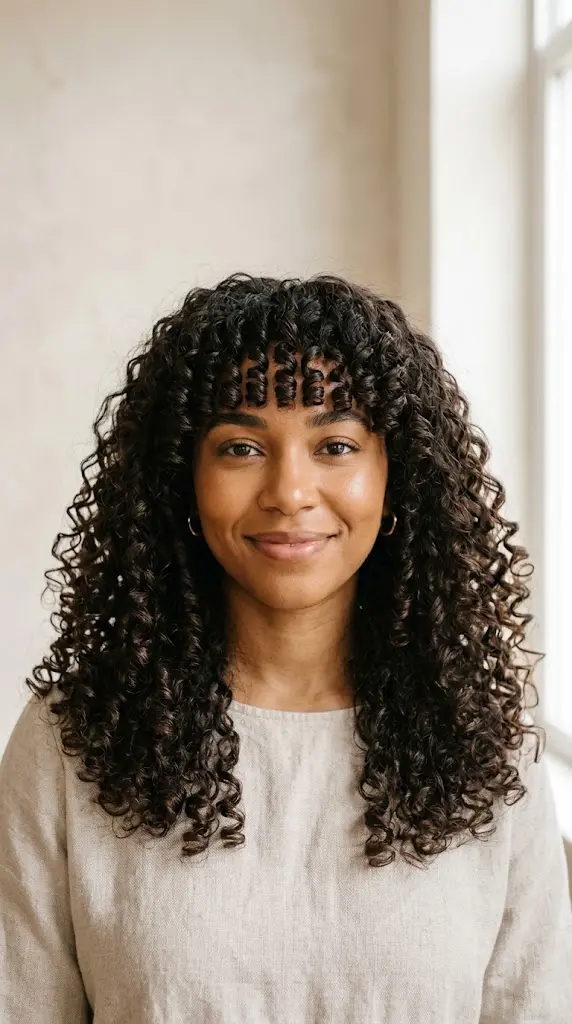
This takes more planning than any other variation. Cloud bangs on curly hair require a dry cut — cutting the bangs while hair is dry and in its natural curl pattern, not wet. Done right, they spring up with that same rounded shape as the classic version. Done wrong, they retract to an inch above the brows when they dry and look nothing like what you expected.
Best for: 2A–3B curl patterns. Tighter coils (3C and above) are more challenging because the shrinkage factor is harder to predict and control.
Face shapes: The natural volume of curly bangs adds width at the forehead. This tends to flatter heart and diamond face shapes most. On round faces, it can read as very wide across the top.
Styling difficulty: High. You can’t just take a round brush to these. Curly cloud bangs are styled by raking curl cream through the fringe section, then either diffusing or air-drying while holding the bang section in a rounded shape.
Maintenance: Refresh with a curl spray in the mornings. Trim every 4–6 weeks — more often in the early stages while you and your stylist figure out the right length accounting for shrinkage.
8. Side-Swept Cloud Bangs

All the volume, but angled. These bangs are styled to sweep slightly to one side, still holding that rounded, lifted quality but creating a diagonal line across the forehead instead of a symmetrical one. It’s slightly less structured than full cloud fringe, but still has that soft body.
Best for: Most hair types, including fine hair. The side direction means you only need the fringe section to hold volume, not the entire width of the forehead, so fine hair can often pull this off.
Face shapes: Very flattering for round faces — the diagonal line creates an illusion of more length and angles. Also good for wide foreheads.
Styling difficulty: Lower than full cloud bangs. You’re working with gravity instead of against it, directing the bang where it naturally wants to go.
Maintenance: These grow out naturally and gracefully. You can even transition this into a curtain bang as the length increases.
9. Micro Cloud Bangs (Baby Fringe)

Shorter than standard cloud bangs — these sit at the mid-forehead rather than the brow line. The cloud quality comes from the styling lift rather than a lot of length, so they look like a dense, rounded cap of hair across the top of the forehead.
Best for: Medium to thick hair. Very fine hair can’t generate enough density for this look to read as intentional rather than just a too-short trim.
Face shapes: This is a strong look for oval faces. On round or short faces, it can emphasize forehead height and visually shorten the face further. Long faces actually benefit from this — it creates a horizontal break that disrupts the length.
Styling difficulty: Moderate. Shorter bangs need more precise styling because any messiness is more visible.
Maintenance: High. At this length, growth shows within two weeks.
10. Cloud Bangs With Layers and Face-Framing Pieces

Full cloud fringe paired with long, face-framing layers that blend from the bang section down to the cheeks and jaw. The two elements work together to create an overall soft frame for the face.
Best for: Medium to long hair, medium to thick density.
Face shapes: One of the better combinations for diamond face shapes. The bangs draw attention to the narrow forehead area while the face-framing layers add width at the cheekbones.
Styling difficulty: Moderate. Once you know how to style the bangs, the layers take care of themselves.
Maintenance: Layers need refreshing every 8–10 weeks, bangs every 3–4 weeks.
11. Blunt Cloud Bangs on Dark Hair

Dark hair — deep brown, black, or very dark auburn — makes the contrast between the bang line and skin more visible, giving blunt cloud bangs a more graphic quality. On dark hair, the rounded shape reads more precisely than on lighter shades.
Best for: Straight to wavy dark hair, medium to thick density.
Face shapes: The boldness of this combination works well on strong bone structure — square jaws, prominent cheekbones. On soft, round faces, the contrast can be overwhelming.
Styling difficulty: Moderate. Dark hair tends to show shine easily, which works in your favor here — a little hair oil on the bangs after styling gives them a polished, editorial finish.
Maintenance: Color-treated dark hair needs additional moisture, so if you’re also coloring, factor in deep conditioning treatments into your routine to prevent the bang section from going wiry.
12. Cloud Bangs With Collarbone-Length Layers

Mid-length hair with cloud bangs and soft layers that land around the collarbone has an easy, everyday quality. It’s not trying to be anything dramatic, which is kind of the point.
Best for: Most hair textures. This length and density combination is forgiving for both fine and thick hair.
Face shapes: Good default option for most face shapes, particularly oval. The collarbone length keeps everything proportional.
Styling difficulty: Low to moderate. Collarbone-length hair blow-dries quickly, and the layers handle most of the styling work.
Maintenance: Moderate. Layers need refreshing more often than a one-length cut, but the longer fringe on cloud bangs means you can sometimes go five weeks between bang trims instead of four.
13. Bottleneck Cloud Bangs

Bottleneck bangs are wider at the center and narrower at the sides — the opposite of traditional fringe that spans the full forehead. Cloud-styling this shape gives you a concentrated puff of volume in the center with a softer graduation toward the temples.
Best for: Wide foreheads or M-shaped hairlines. The concentrated center fringe draws the eye inward rather than across.
Face shapes: Particularly useful for those with wide hairlines or widows peaks they want to minimize.
Styling difficulty: Moderate to high, because you’re maintaining two different textures — the center section styled up and rounded, the side sections blended into the rest of the hair.
Maintenance: Every 3–4 weeks, same as other cloud bang variations.
14. Grown-Out Cloud Bangs (The In-Between Phase)

This is the most overlooked “style” in the list, but also the most real. Once your cloud bangs reach the nose or below, they’re officially in grow-out territory. This doesn’t have to be a bad thing. At this length, they can be swept into a curtain shape, tucked behind the ears, or incorporated into a low half-up style.
Best for: Anyone who already has cloud bangs and is growing them out — this is about managing the in-between length rather than starting fresh.
Styling difficulty: Oddly higher than at the ideal length. Too long to hold the cloud shape on their own, too short to fully style away.
Tips: A soft headband or two small bobby pins at the temples keep them out of your face on bad days. Avoid cutting them off out of frustration — give it two more inches and they’ll blend into face-framing layers naturally.
15. Cloud Bangs With Balayage or Highlights

Adding dimension to the bang section through soft balayage or babylights draws the eye to the fringe in a way solid-color hair doesn’t. Lighter pieces within the bangs create a natural-looking gradient.
Best for: Any hair texture, but the effect is most visible on straight to wavy hair where light catches the different tones evenly.
Face shapes: The lighter, highlighted bangs make the forehead area brighter, which generally works well for heart and oval faces. On wide foreheads, very light front pieces can draw too much attention to the width.
Maintenance: Balayage in the bang section is high-maintenance relative to the rest of the hair because the fringe fades faster — more sun exposure, more styling heat, more washing. Budget for a toner or gloss every 6–8 weeks.
16. Cloud Bangs on a Pixie Cut
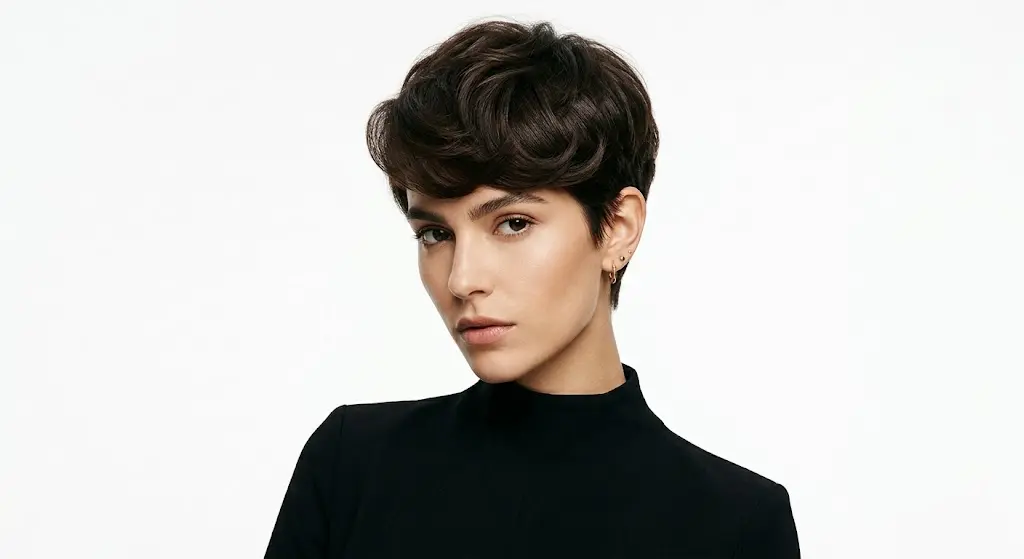
Short cloud bangs on a pixie sit differently than on longer hair — they’re almost more of a styled swoosh of fringe that lifts away from the forehead rather than a full fringe. The surrounding short layers give the whole cut a cohesive texture.
Best for: Thick hair. Fine hair on a pixie with cloud bangs can look too wispy to read as intentional.
Face shapes: Best for oval and long face shapes. A pixie already emphasizes the forehead, and adding full fringe to a round face can make it look very compact.
Styling difficulty: Low. Pixie styling is generally faster than longer styles. The bang section just needs a flick with a small brush and minimal product.
Maintenance: Pixies need the most frequent trims — every 4–6 weeks. The bangs require the same.
17. Romantic Cloud Bangs With Loose Waves

The soft version of this trend. Full, rounded bangs paired with loosely waved, longer hair creates a look that feels more romantic than editorial. The waves don’t need to be perfect — deliberately imperfect S-waves work better here than precise barrel curls.
Best for: Medium to long hair, medium density. This is one of the better cloud bang options for fine hair if the waves are achieved through braiding overnight rather than heat, since the added texture gives fine hair more visual weight.
Face shapes: Particularly good for square and rectangle face shapes. The combination of soft waves and rounded bangs introduces curves where the face shape doesn’t naturally have them.
Styling difficulty: Low to moderate if the waves are created with a braiding or twisting method. Higher if you’re curling with a wand and trying to keep things consistent.
18. Minimalist Cloud Bangs on an Air-Dry Hairstyle

The most honest version of this trend. Minimal styling, no attempt to make the bangs look polished, just letting them sit with whatever natural texture they have while the rest of the hair air-dries. The result is more lived-in than editorial, but it fits certain aesthetics — and certain schedules — better than a fully styled version.
Best for: Wavy or slightly wavy hair. Completely straight hair won’t develop any cloud shape without heat. Curly hair air-dries into its own thing and the bangs can actually work beautifully if you’ve perfected your curl routine.
Face shapes: Relaxed styling means the bang shape is less controlled, so this is best for face shapes that don’t need precise fringe placement — oval, heart, and softly round faces can usually pull this off.
Styling difficulty: Low — but only if your natural texture cooperates.
Maintenance: Same as any other cloud bang variation. The cut still needs trims. What changes is the daily routine, not the upkeep schedule.
Styling & Maintenance Advice
The biggest misconception about cloud bangs is that they’re a set-it-and-forget-it style. They’re not. The “effortless” quality people see in photos is the result of about five minutes of very deliberate work each morning.
Here’s the practical breakdown:
For the round brush method: Start on damp, not soaking-wet, bangs. Roll the brush underneath the fringe section and direct a blow dryer downward with the concentrator attachment pointing from root to tip. The goal is to flatten the outside of the bang while building volume underneath — the opposite of what a flat iron does. Finish with a cool shot from the dryer to set the shape.
For a curling iron method: Use a 1- to 1.25-inch barrel, wrap the entire bang section around the barrel rolling away from the face, hold for 5–7 seconds, release, and gently open the curl with your fingers without breaking the shape. Lightly mist with flexible hold hairspray.
Product suggestions: A volumizing mousse on damp bangs before blow-drying adds structure. A light-hold pomade or finishing cream (a tiny amount — pea-sized) pressed through dry bangs after styling adds definition without stiffness. Avoid heavy serums in the bang section; they weigh down the volume and leave a greasy-looking finish.
Humidity and frizz: This is where most people struggle. Fine and medium hair in humid climates can lose that cloud shape within 20 minutes. Anti-humidity sprays (Kenra Platinum Silkening Mist or IGK Antisocial are good options) applied before and after styling extend the hold significantly. Don’t fight humidity with a flat iron — you’ll end up with a strange combination of crispy and frizzy.
Trimming frequency: Plan for every 3–4 weeks. Some people try to stretch it to 5–6 weeks and by week five, they’re wearing the bangs pinned back and wondering why they got them. Bangs that are past the brows by more than a centimeter don’t hold the cloud shape anymore. They just hang.
What to Ask Your Stylist
Getting cloud bangs requires some specific communication, and “I want cloud bangs” is not enough on its own. Different stylists interpret the shape differently, so bring photo references and have a short conversation before they touch your hair.
Ask for: “Rounded fringe with a soft curve — not straight across, but not heavily graduated either. I want the center to sit at my brows and the shape to hold a little body without being flat.”
Ask about: How they plan to achieve the volume. If they say “just blow-dry them forward,” they may not be familiar with the specific technique. A stylist who understands cloud bangs will talk about the angle of the cut and how the internal shape of the bang section creates that rounded effect before any styling even happens.
If you have thick hair: Ask for point-cutting at the bottom of the bangs to thin the ends without shortening the length. Thick bangs that are straight-cut across the bottom look like a visor.
If you have fine hair: Ask for minimal thinning inside the bang section. You need as much density as possible in the fringe to create the cloud shape. Over-thinned fine bangs collapse by noon.
If you’re unsure about the commitment: Ask for a version that’s cut at eyebrow level or slightly below. This is long enough that you can pin them back on bad days while you adjust to the maintenance, but short enough to still style into the cloud shape.
Common Mistakes
Cutting them too short the first time. Bangs shrink slightly when they dry, especially if you have any natural wave. Ask your stylist to cut them conservatively — you can always trim more.
Over-directing them straight forward. If you roll the round brush pushing the bangs straight out from the forehead rather than rolling underneath, you get the opposite of cloud — flat, face-framing fringe that looks like you just blow-dried your hair out of your face.
Using too much product. A common instinct is to apply more serum or oil when bangs look frizzy. Heavy product makes them look weighted down and greasy. Use a light spray instead.
Skipping the cool shot. The shape is set by cooling, not by heat. Blasting the bangs with cool air at the end of styling — while holding the round brush in place for 10 seconds — locks the curve. Skip this and the shape drops within an hour.
Letting them go too long between trims. This is the most common one. People get the cut, love it for two weeks, and then slowly stop styling them as they grow because “it’s not worth it anymore.” The bangs then look shapeless, which puts them off the style entirely. Regular trims keep the style working with you instead of against you.
FAQ
Q: Who should not get cloud bangs?
Honestly, the biggest challenge isn’t face shape — it’s lifestyle. If you’re not willing to spend five minutes on your bangs every morning, this cut will frustrate you within two weeks. People who routinely air-dry their hair and skip heat styling will find cloud bangs difficult to maintain in their intended shape. Beyond lifestyle, very fine, low-density hair is genuinely challenging because the cloud effect requires enough hair in the bang section to hold a curve. If you have fine hair that already looks sparse at the front, cloud bangs can emphasize that thinness rather than camouflage it. And if you have very curly hair and haven’t worked with a dry-cut specialist before, I’d have that conversation before committing — the shrinkage factor can result in bangs that look nothing like what you expected once they’re dry.
Q: How long does it take to style cloud bangs each morning?
Realistically, five to eight minutes if you’re experienced with a round brush. Ten to fifteen in the beginning while you’re learning the technique. A few things make this faster: starting with damp (not wet) bangs, using a concentrator nozzle on your dryer, and having a good quality round brush with the right barrel size (25–30mm for most bang lengths).
Q: Can I get cloud bangs with curly hair?
Yes, but the process is different and the expectations should be calibrated. The cut must be done on dry hair, the length must account for curl shrinkage, and the styling relies on curl-defining products rather than heat. When done well, curly cloud bangs can look incredible — the natural curl provides the “cloud” volume without any styling effort. Find a stylist who has specific experience cutting curly fringe.
Q: Do cloud bangs work for round faces?
They can, but certain variations work better than others. Full, symmetrical cloud bangs on a round face can shorten the face further. The better options for round faces are side-swept cloud bangs (diagonal line creates the illusion of length), curtain-cloud hybrids (width of the fringe balanced by a visible center part), or a slightly longer version of the fringe that reaches past the brow to elongate the face visually.
Q: How often do cloud bangs need to be trimmed?
Every three to four weeks, without exception, if you want them to keep their shape. Some people can push to five weeks if the bangs are cut on the longer side. But if you’re someone who regularly cancels salon appointments or goes months between trims, know that this is a style that punishes that habit more than most.
Q: What’s the grow-out like?
Better than blunt bangs, worse than curtain bangs. Because cloud bangs are relatively full and straight across, the grow-out phase — when they’ve hit the nose but aren’t yet long enough to pin back comfortably — is genuinely awkward. It lasts about 4–8 weeks depending on your growth rate. Styling them into a side sweep or clipping them with small bobby pins makes this phase more manageable.
Final Thoughts
Cloud bangs are one of those styles that look easy in photos and require real effort in real life. The people who get them and love them tend to be women who either already have an established blow-dry or heat-styling routine, or who are genuinely willing to build one. If that’s you, the payoff is real — there’s a softness to a well-styled cloud fringe that’s hard to replicate with any other bang shape.
If you’re on the fence, start with a slightly longer version of the cut that gives you more flexibility. You can always trim more, and having a few centimeters of extra length makes the grow-out less painful if you decide it’s not for you. Talk to your stylist honestly about your morning routine. The cut should fit your life, not the other way around.