Star parts started showing up in kids’ hair care groups and Instagram reels over the last year, and they’ve stuck around for a good reason. Instead of a straight line down the middle, the part zigzags into a star shape at the crown, then a braid, ponytail, or set of buns finishes the look. It reads as more put-together than a plain center part, but it barely adds time once you get the rhythm of the zigzag.
Parents like these styles because they solve a real problem. Mornings before school are rushed, hair needs to survive recess and PE, and a lot of kids won’t sit still for more than five minutes. Star parts work with that reality. Most of the styles below take five to fifteen minutes, use basic tools, and hold up through a full school day without constant fixing.
They also work across a wider range of hair types than people assume. Straight hair shows the star shape cleanest, but curly and coily hair can wear it too, especially paired with braids, twists, or puffs instead of a slick part. One honest caveat worth knowing upfront: on curly or coarse hair, getting a crisp star shape takes more patience with a rat-tail comb and a bit of gel, and it won’t look as sharp on day one as it does on day three, once the edges settle.
- 1. Classic Star Part with Double French Braids
- 2. Star Part High Ponytail with Star Clips
- 3. Star Part Space Buns
- 4. Star Part with Dutch Braid Pigtails
- 5. Star Part Low Ponytail with Ribbon Wrap
- 6. Star Part Fishtail Braid Pigtails
- 7. Star Part Bubble Ponytails
- 8. Star Part with Single Side Braid
- 9. Star Part Crown Braid (Halo Braid)
- 10. Star Part Half-Up Half-Down with Star Barrette
- 11. Star Part Twin Buns with Star Hair Ties
- 12. Star Part Waterfall Braid
- 13. Star Part Braided Headband
- 14. Star Part with Loose Curls and Star Clips
- 15. Star Part Micro Braids Pigtails
- 16. Star Part High Bun with Star Pins
- 17. Star Part Twisted Pigtails
- 18. Star Part Simple Ponytail with Star Sequin Bow
- 19. Star Part Pigtail Puffs
- Styling and Maintenance Tips for Star Part Hairstyles
- What to Ask Your Stylist
- Common Mistakes With Star Part Hairstyles
- Final Thoughts
1. Classic Star Part with Double French Braids

Two French braids run from a center star part down to the nape. Best on shoulder-length to long hair, straight or wavy — fine hair holds the braid shape better than very thick hair, which tends to loosen by lunchtime. It’s low-maintenance once it’s in: it survives PE, recess, and nap time with little re-tucking. Difficulty is medium, since French-braiding a moving kid’s head takes practice, and early attempts often look uneven near the ears. If a stylist is doing it for an event, ask for looser braiding near the part — tight braiding right at the hairline is the most common cause of tension headaches.
2. Star Part High Ponytail with Star Clips
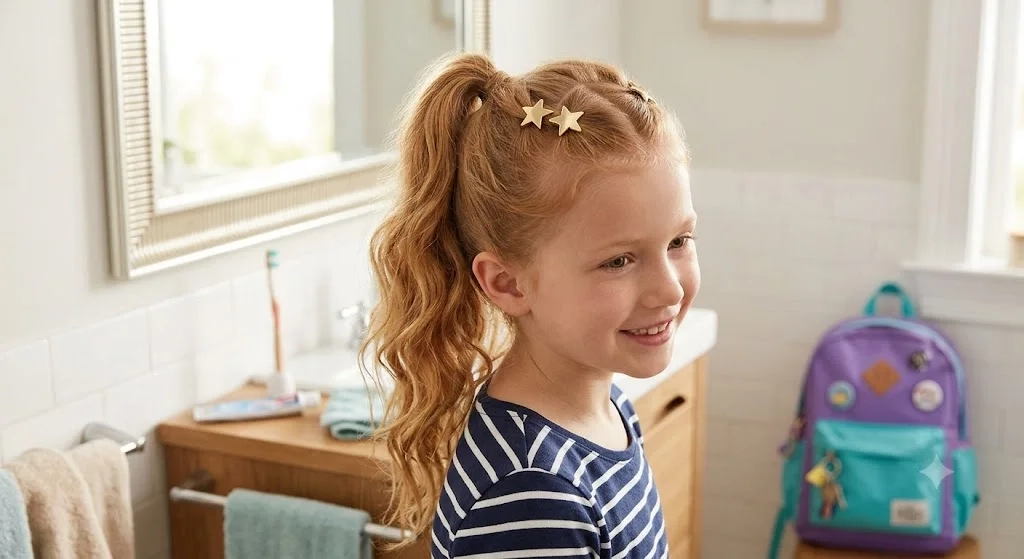
A single high ponytail, sectioned off by a star part at the crown, with two or three small star clips along the part lines. Works on any hair length past the chin, on straight to loosely wavy textures. Curly hair can do this too, but the star softens within an hour as curls spring back. Styling takes under five minutes once you know where the zigzag sections go. Maintenance is easy — a quick brush-through at pickup usually fixes it. The main issue is slipping: fine hair needs snag-free elastics and small pins, or the ponytail droops by afternoon.
3. Star Part Space Buns

Two buns above the ears, divided by a star part running from the crown forward. This one photographs well and is easier to learn than it looks, since buns hide small sectioning mistakes that a sleek ponytail would show. Best on hair at least chin-length; very short hair (above the ears) won’t hold the twist needed for a bun. Good for active kids, since both buns sit close to the head. Maintenance is low — a loose bun can usually be re-twisted without redoing the whole style. On thick or coarse hair, expect a fuller, looser bun shape rather than a small, tight one.
4. Star Part with Dutch Braid Pigtails

Dutch braiding crosses strands underneath instead of over, so the braid sits higher and looks more raised than a French braid. This suits medium to thick hair well, since the extra volume gives the braid definition instead of a flat look. Good for kids who move a lot — raised braids hold up better than flat ones. Difficulty is higher at first if you learned French braiding first, since the underhand motion feels backward. Once it clicks, it takes about the same time. Expect some frizz along the braid by afternoon on textured hair; a little edge cream at the part line before starting helps more than fixing frizz later.
5. Star Part Low Ponytail with Ribbon Wrap
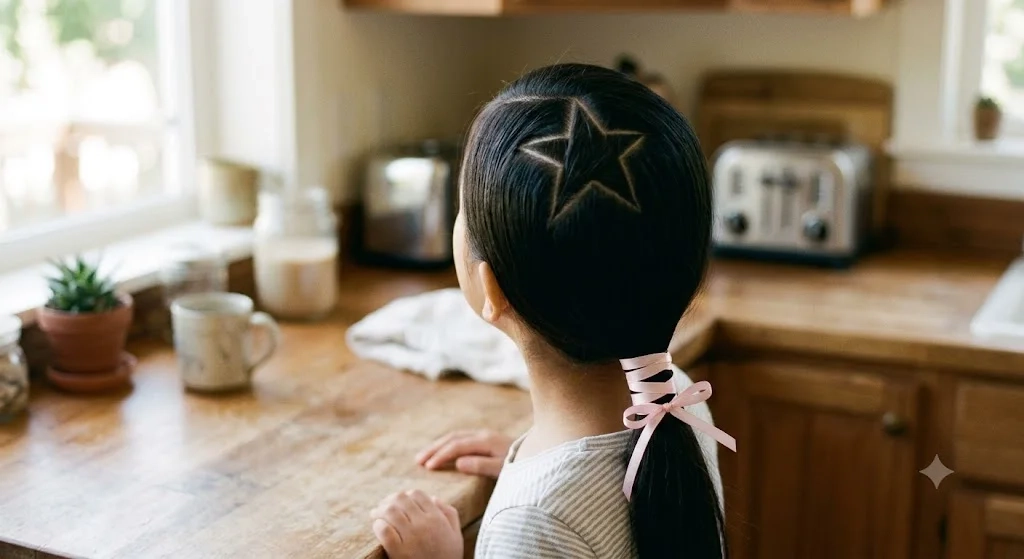
A low ponytail with a star part on top, finished with a ribbon wrapped around the base instead of a plain elastic. This is one of the most forgiving styles here for beginners, since the star part is the only technical step. Suits nearly every hair type and length past the shoulders. Low ponytails also tend to hold longer through the day than high ones, since there’s less pull from movement. Maintenance is minimal — a light brush at day’s end clears most tangles. Watch for slipping on very silky or freshly washed hair; tie the ribbon snug and check it again after drop-off.
6. Star Part Fishtail Braid Pigtails
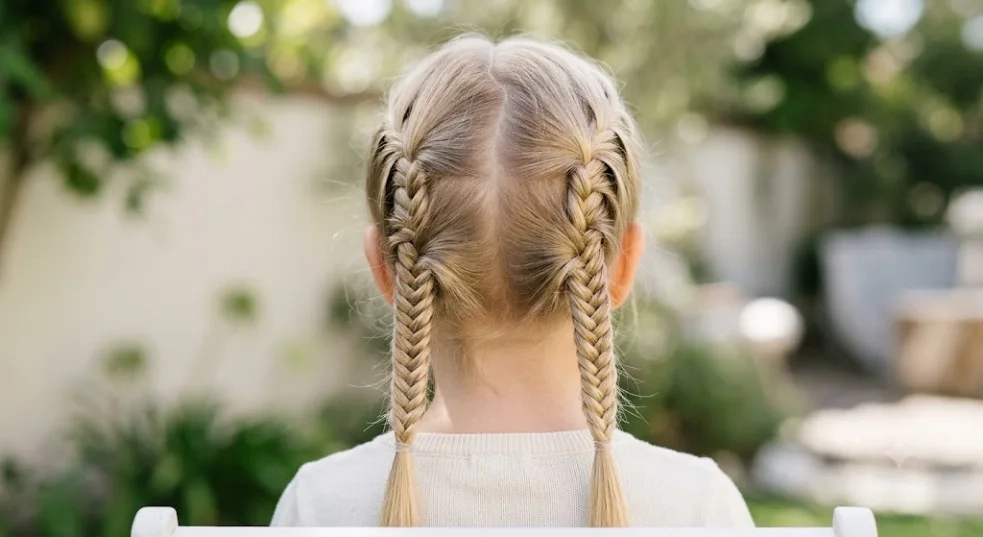
Two fishtail braids from a star part, thinner and more textured-looking than a regular braid. This works well on fine to medium hair, where smaller strand sections show up more clearly than in very thick hair. It’s the slowest style on this list to learn — fishtail braiding uses two sections instead of three, and it takes repetition before it feels quick. Once mastered, it holds well, often lasting two days with light touch-ups. For photos or a performance, ask a stylist to pancake the braid (gently widen each section) for more visible texture.
7. Star Part Bubble Ponytails

A ponytail sectioned into three or four “bubbles” with small elastics along its length, starting from a star part. Kids tend to like this one because it’s playful, and it’s simple once the ponytail is in — the bubbles are just evenly spaced elastics, no braiding needed. Best on hair with length to spare, since each bubble uses some up. Works on any texture, though curly hair bubbles look fuller and less separated. Maintenance is easy through the day. The most common mistake is uneven elastic spacing, which throws off the whole shape — measuring with your fingers between each one keeps it consistent.
8. Star Part with Single Side Braid
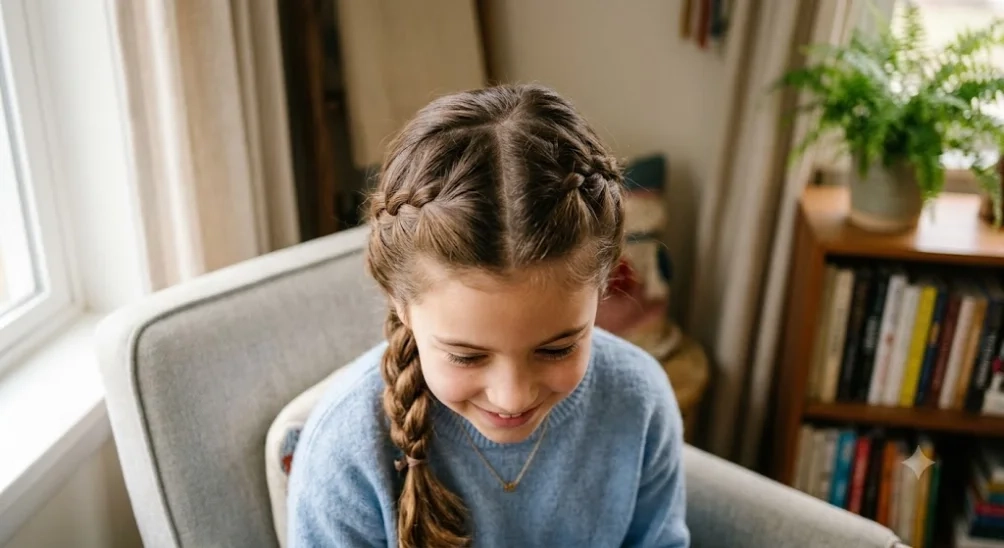
One braid pulled to the side, starting from an off-center star part instead of a symmetrical one. This asymmetrical version reads a little older and is popular with kids around eight to twelve who want something less “babyish.” Suits medium to long hair, straight or wavy. Difficulty is low to medium, close to a standard braid, though getting the off-center part to look intentional takes some comb practice. Maintenance is simple — one braid to touch up instead of two. On thinner hair, add texturizing spray before braiding so it doesn’t look flat by the end of the day.
9. Star Part Crown Braid (Halo Braid)
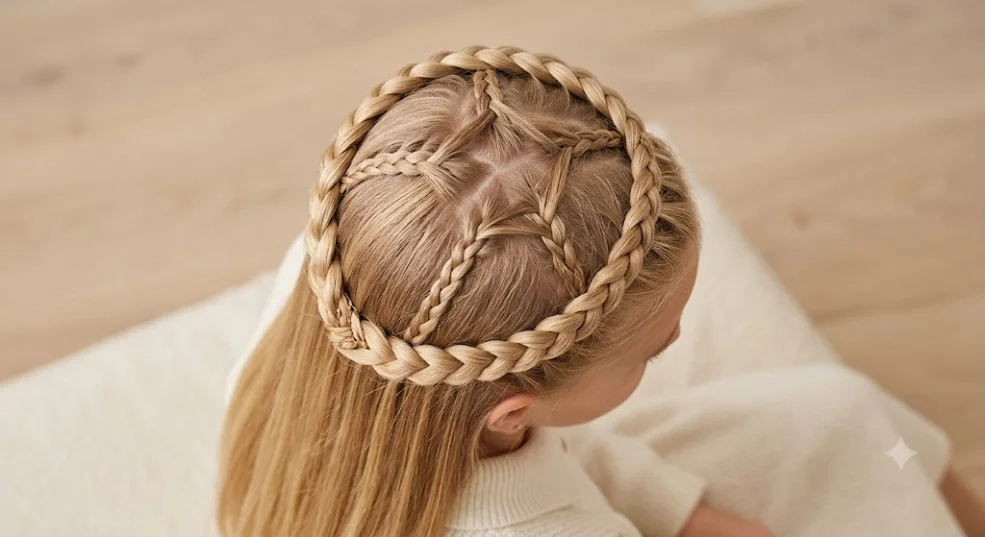
A braid that wraps around the head like a halo, starting from a star part and pinned in place. This is one of the more advanced styles here and needs hair past the shoulders, since shorter hair won’t reach all the way around. It works best on straight and wavy hair; very curly hair can do it too but needs more pins to hold the shape. Styling takes closer to fifteen or twenty minutes, so it fits weekends or special occasions better than a rushed Tuesday. It holds impressively well through a full school day, since the braid anchors at multiple points.
10. Star Part Half-Up Half-Down with Star Barrette
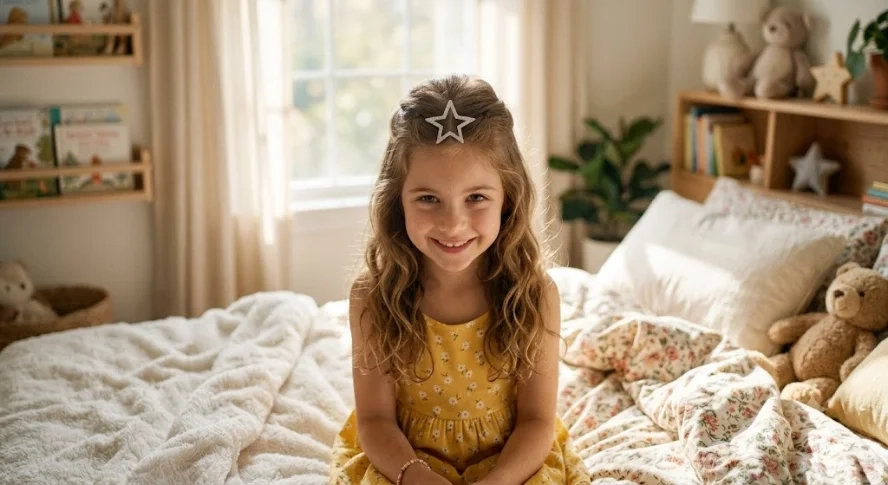
The top section is gathered from a star part and clipped with a star barrette, while the rest stays down. This is the fastest style on the list — some parents get it done in under two minutes. Works on any hair length from chin-length up and any texture, since only the top section needs shaping. Maintenance is close to zero. The trade-off is durability: with nothing else holding the hair back, it falls out of place faster than braided styles, especially during PE. It suits calmer school days or picture day better than a full day of running around.
11. Star Part Twin Buns with Star Hair Ties

Like space buns, but higher on the head near the crown, divided by a tighter star part and finished with star-print hair ties. Suits medium to thick hair best — thin hair leaves visible gaps at the base of each bun. Difficulty is moderate; getting both buns even in size and height takes a few tries. Once secure, they hold well through active play. On fine hair, expect the buns to look smaller than reference photos, since there’s simply less hair to work with — a density issue, not a technique problem.
12. Star Part Waterfall Braid

A braid running horizontally from a star part, letting strands “fall” out as it goes instead of being woven in all the way. It looks intricate but suits an intermediate stylist rather than a true beginner. Works best on hair with some layers, since one-length hair doesn’t fall out of the braid as cleanly. Best for straight to wavy textures; very curly hair can hide the waterfall effect. This isn’t an everyday-durable style — it’s closer to a special-occasion look and softens noticeably by mid-afternoon, so save it for photo day rather than gym day.
13. Star Part Braided Headband
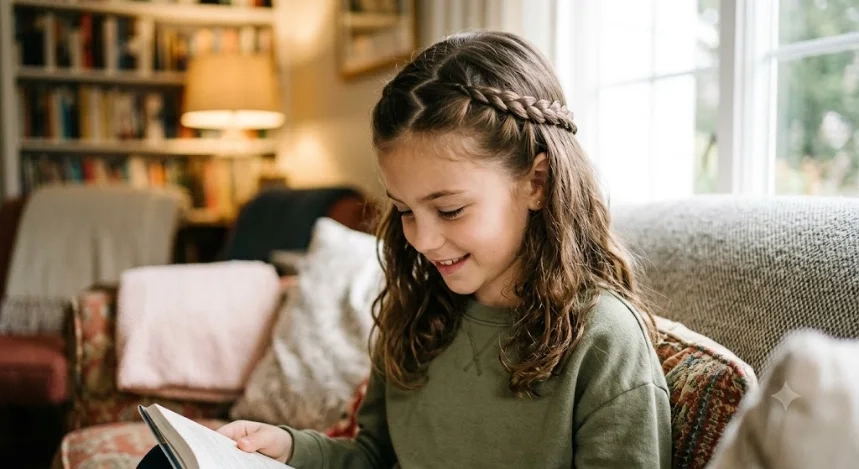
A single braid that starts at a side star part, crosses the head like a headband, and tucks in near the opposite ear. This works well for kids who don’t love pigtails but still want hair out of their face. Suits most lengths past the chin. Difficulty is low to medium. Maintenance is easy, and because it doesn’t rely on two matching braids, small unevenness is less noticeable than in symmetrical styles. On slippery, freshly washed hair, the headband braid can slide backward through the day — texturizing spray beforehand helps it stay put.
14. Star Part with Loose Curls and Star Clips

Hair left mostly down, with just the front section styled into a star part and pinned back with star clips, while the rest keeps its natural curl or wave. This is the lowest-effort styled look here for naturally curly or wavy hair, with no braiding involved. It’s a weaker fit for very straight, fine hair, which won’t hold enough texture to look intentional without curling first. Maintenance through the day is minimal. The main risk is tangling — loose hair picks up more knots by afternoon than braided or tied-back hair, so a detangling brush at pickup saves time at bath.
15. Star Part Micro Braids Pigtails

Two pigtails, each made of several thin braids rather than one thick one, sectioned from a star part. This is a strong option for coarse or very curly hair, where thin braids hold shape and definition better than one large braid does. It takes more time upfront — closer to twenty or thirty minutes — but lasts longer, often two to three days before a redo. That trade-off makes it worth considering during busy weeks. If a stylist is doing repeat installs, ask them to shift the parting pattern slightly each time; braiding the exact same section repeatedly can thin the hairline over months.
16. Star Part High Bun with Star Pins

All the hair pulls into a single high bun, with the front section parted into a star before smoothing back. This is one of the neatest, most polished options here, closer to a dance-recital style than an everyday one. Suits long, straight to wavy hair best; very thick hair makes an oversized bun, which some kids like and others find heavy by the end of the day. Styling takes about ten minutes for a clean result. Maintenance is low once it’s in, though flyaways show more on a smooth bun than a braided style — a bit of smoothing gel at the part keeps it neat.
17. Star Part Twisted Pigtails

Two twisted pigtails from a star part — each section is simply twisted rather than woven in three strands. This is often the easiest technique here to learn, since twisting is a more forgiving motion for beginner hands. It works especially well on natural curly and coily hair, where the twist blends into the hair’s existing texture. Maintenance is easy; a light oil or curl cream at the start keeps the twists from unraveling. One thing to know: twists loosen faster than braids on very silky, straight hair, so this style tends to suit textured hair more than pin-straight strands.
18. Star Part Simple Ponytail with Star Sequin Bow
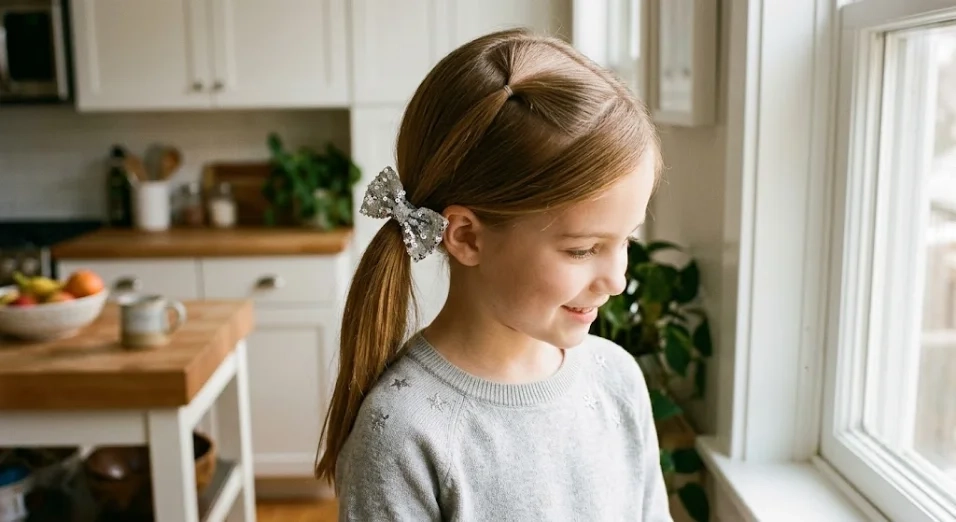
A no-fuss single ponytail with a star part on top and a sequin star bow tied over the elastic. This is the easiest style on the entire list and a good starting point for anyone new to doing a star part at all. Works on any hair type and length past the chin. Difficulty is low, and it takes only a few minutes. Maintenance through the day is simple — smoothing loose strands is usually all it needs. Because there’s minimal structure holding it, fine or slippery hair may need a second small elastic underneath the bow for extra grip.
19. Star Part Pigtail Puffs

Two rounded puffs high on the head, sectioned by a star part, with no braiding at all — just gathered and secured. This is a go-to for natural coily and kinky hair textures, where puffs show off the hair’s volume instead of compressing it. It’s also one of the quickest styles here, since there’s no braiding or twisting, just gathering, securing, and a bit of shaping with edge control at the part. Maintenance is low day to day, though puffs benefit from a satin bonnet or pillowcase at night to keep them from flattening or frizzing before the next wear. This style gets overlooked in a lot of “cute hairstyle” roundups that lean heavily on straight or wavy examples, but it holds up just as well through an active school day.
Styling and Maintenance Tips for Star Part Hairstyles
A rat-tail comb is the one tool that makes or breaks a star part. Regular combs are too wide for clean zigzag lines, and fingers alone tend to produce a shape closer to a lightning bolt than a star. Start at the crown, make short diagonal strokes outward in a five- or six-point pattern, and don’t chase perfect symmetry on the first try — braids or buns cover most of the star anyway, so only the visible crown section needs to look sharp.
Heat styling isn’t necessary for most of these looks, which is worth knowing before buying a curling wand for a seven-year-old. Curls for a loose-curls-and-clips look can come from foam rollers or a braid-out done the night before, which is gentler on young hair and skips the risk of a hot barrel near a wiggling kid. If heat is used at all, keep it on the lowest setting and save it for special occasions rather than daily use — repeated heat on fine, young hair dries it out faster than it does on adult hair.
Product needs are simple. A lightweight leave-in conditioner or detangling spray before styling makes sectioning easier and cuts down on breakage. Gel or edge cream smooths the part line and controls flyaways, but a little goes a long way — too much can look greasy on finer strands by midday. Skip heavy adult styling creams made for coarse hair unless the child’s hair is genuinely that texture.
Trimming every eight to twelve weeks keeps ends healthy enough for these styles to look neat, especially braided ones, where split ends show up as fuzzy texture along the braid. Frizz has more to do with humidity and hair porosity than with technique — on humid mornings, expect any style to look a bit softer by the end of the school day. That’s normal, not a sign of a mistake.
For volume on fine hair, a light backcombing at the crown before starting the star part gives the braids or buns more visible shape. Beginners should practice on a doll or their own hair first. Trying a completely new braid type for the first time on a moving child usually ends in frustration for both people involved.
What to Ask Your Stylist
If a professional is doing your child’s hair — for photos, a recital, or just a hectic week — a few specific requests get better results than a reference photo alone.
Ask for looser braiding near the hairline, not just along the length. Most tension headaches from kids’ hairstyles come from tight sectioning right at the part, not from the braid itself.
If your child’s hair is layered, mention it before the stylist starts. Layers make ponytails and buns look fuller but can let short pieces fall out of braids and crown styles within an hour. For anything braided, blunt, one-length ends tend to hold better.
For repeat protective styles like micro braids, ask the stylist to shift the parting pattern slightly each time rather than braiding the same sections. Consistent tension on the same hairline over months is a known cause of gradual thinning, and it’s easy to avoid with small variation.
If your child has sensitive skin at the temples or nape, mention it before styling starts. Some kids react to gel or edge control with mild irritation, and a stylist can swap in a gentler, fragrance-free product.
Finally, ask how long the style will realistically last with normal kid activity, not showroom conditions. A stylist who says plainly that a waterfall braid won’t survive dodgeball is more useful than one who oversells the durability.
Common Mistakes With Star Part Hairstyles
Parting too thickly at the crown is the most common one. A star needs several thin points to read clearly; two or three wide sections just look like a rough zigzag.
Pulling too tight is another. It’s tempting to braid tightly so the style survives the day, but excess tension right at the hairline can cause headaches and, over time, contribute to breakage at the part.
Skipping detangling before styling causes uneven sections and more breakage during braiding. A few minutes with a detangling brush and some leave-in spray before starting saves time overall, even on a rushed morning.
Using the wrong hair ties matters more than people expect. Plain rubber bands or metal-edged elastics snag and break hair, especially fine or damaged strands. Snag-free fabric elastics cost more but prevent a lot of unnecessary breakage.
Expecting curly or coily hair to hold a style exactly like a straight-hair reference photo is a common letdown. The star part still looks great, but the finished shape — puff, twist, or braid — naturally looks different on different textures, and that’s not a flaw to fix.
Redoing a protective style in the same spot too often — same braids, same tension, same parting — can quietly thin the hairline over months. Rotating the pattern occasionally protects hair long-term.
To style a girl’s hair, start by gently brushing out tangles and selecting a hairstyle that matches her hair type, age, and activity. Ponytails, braids, buns, twists, and half-up styles are versatile options suitable for everyday wear. Using gentle hair accessories and avoiding excessive tension helps protect the hair and scalp while keeping the hairstyle comfortable and long-lasting.
The best school hairstyles are quick, comfortable, and secure enough to last through classes and playtime. Popular options include a low ponytail, two braids, a high bun, or a half-up hairstyle. Use a soft, snag-free hair tie and gently detangle hair before styling to reduce breakage. If the child has curly or textured hair, apply a leave-in conditioner or curl cream first to make styling easier and help control frizz.
A star hairstyle is created by dividing the hair into five or more equal sections using a rat-tail comb. Part each section to form a star shape at the crown, then secure each point with small elastic bands before finishing with ponytails, braids, or buns. This style takes practice, but clean partings and even tension create the best results. Using styling gel or edge control can help keep the design neat throughout the day.
For a hairstyle that takes five minutes or less, choose simple styles such as a sleek ponytail, messy bun, bubble ponytail, half-up top knot, or quick side braid. Keep a detangling brush, hair ties, and bobby pins nearby to speed up the process. These styles work well for busy mornings and can be adapted for straight, wavy, curly, or coily hair.
When styling a 3-year-old’s hair, focus on comfort and gentle handling. Soft pigtails, loose braids, mini ponytails, and simple buns are great choices because they keep hair tidy without pulling on the scalp. Always use soft elastics and avoid tight hairstyles that can cause discomfort or hair breakage. Detangle with a wide-tooth comb and a child-friendly leave-in conditioner to make styling easier.
Gen Z hairstyles often emphasize effortless texture and individuality. Popular looks include claw clip updos, messy buns, curtain bangs, butterfly clips, sleek low buns, loose waves, and face-framing layers. Instead of aiming for perfect styling, use lightweight texturizing spray or mousse to create natural movement and volume. Personalizing the look with colorful accessories is also a common trend.
Final Thoughts
Star parts work because they solve an actual problem instead of just looking nice in photos. They keep hair out of the way during recess, they photograph well for school pictures, and after a handful of practice rounds on the zigzag part, most of these styles fit into a normal morning routine.
The best approach is picking two or three styles that match your child’s actual hair type and patience level, rather than chasing every version on this list. A five-minute ponytail on a Tuesday and a proper braid on picture day cover most of what a school year actually needs.