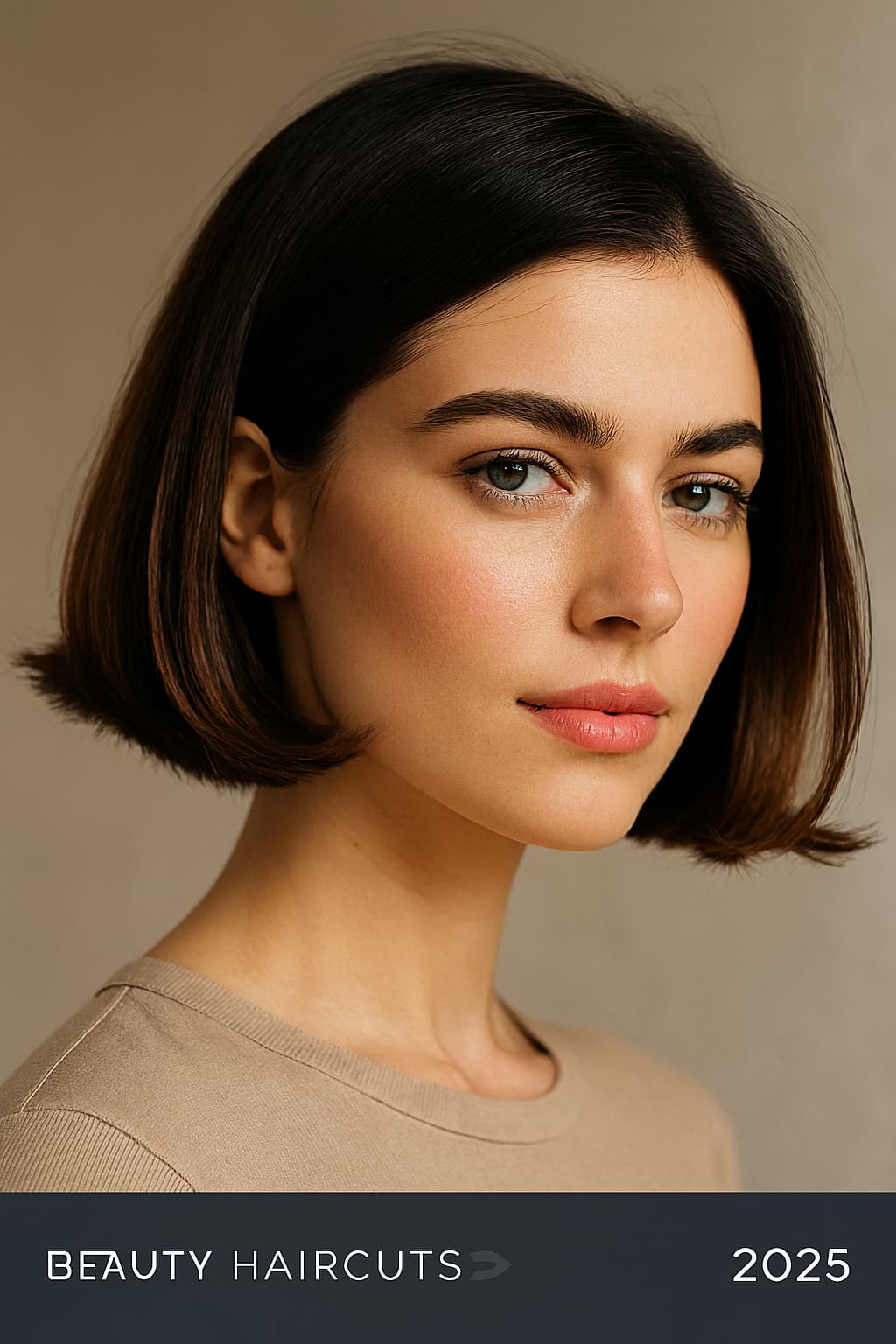
There’s a reason the blunt bob refuses to fade. Every few seasons it swaggers back onto the runway, floods your Instagram saved folder, and lands in salon chairs with renewed obsession. But calling them all “blunt bobs” is like calling every red lipstick the same. The cut has splintered into a dozen personalities—some razor-sharp and severe, others soft and secretly layered inside. And frankly, the difference between a cut that makes you feel impossibly chic and one that makes you feel like you’re wearing a helmet lives in the details.
What I’ve noticed after years of watching these bobs walk out of salons (and occasionally limp out after a miscommunication) is that women rarely regret the length. They regret not understanding how their own hair behaves with a hard perimeter line. Thick hair can box out. Fine hair can look stringy if the weight is pulled wrong. Wavy hair might bounce into a pyramid if the stylist doesn’t account for shrinkage. That’s what this piece is about—the specific, the real, the “you need to know this before you go.”
The blunt bob in isn’t just a haircut. It’s an editorial choice. It signals that you’re intentional about your silhouette. It pairs beautifully with a strong brow, a bare neck, a good earring. But it also requires a relationship with your stylist and, honestly, with your blow-dryer. Some versions are wash-and-go. Some demand a flatiron pass every morning. I’ve laid out 18 distinct interpretations, with notes on who they actually suit, how much work they hide, and what to say in the chair so you don’t end up with a cut that only looks good on the mood board.
1. The True Chin-Length One-Length Bob

Nothing faking it here. The ends hit precisely at chin level with zero graduation. From the back, the line looks like it was drawn with a ruler. Hair swings as a single solid unit—no wispy bits, no cheekbone-shortening layers. It’s almost architectural.
This works best on straight to slightly wavy hair that isn’t overly thick. If your strands are dense and coarse, the weight at the chin can create a triangular silhouette that feels heavy. Oval and heart-shaped faces wear it beautifully because the length doesn’t fight the jawline. On round faces, it can emphasize width unless you keep the styling very sleek and forward-laying. Styling difficulty is moderate: you’ll need a flatiron or a meticulous round-brush blow-dry to keep the line crisp. Maintenance? Every 4 weeks if you want that line to stay razor-straight. Ask for a solid perimeter cut, but tell the stylist to point-cut the very tips subtly so the line doesn’t look bulky in photos.
2. The Italian Bob (You’ve Seen It, You Love It)

Slightly longer, skimming the shoulders, with a barely-there inward bend at the ends. The Italian bob looks like you air-dried your hair after a swim in Capri, even if you actually spent twenty minutes with a round brush. The silhouette is soft but still blunt—the perimeter is heavy, but the interior has some hidden graduation so it doesn’t kick out.
Best for medium to thick hair with a natural wave. The bend is what gives it that careless ease; pin-straight hair tends to look a little severe with this cut. Almost all face shapes can manage it because the length elongates the neck. Styling difficulty is low to medium—a quick blow-dry with your head flipped over, then a slight tuck at the ends with a brush. If you’re in humidity, the bend can flip unpredictably, so have a lightweight cream on hand. Trims every 6-7 weeks suffice since the shape is meant to be lived-in.
3. The Parisian Cheekbone-Grazing Bob

Shorter than the chin bob, this one stops right at the cheekbones, often paired with a micro-fringe or full brow-skimming bangs. It’s audacious. The blunt line sits high, exposing the entire neck and jaw. The visual effect makes your features look more front-and-center, so you have to really like your bone structure.
Works on fine to medium hair that doesn’t pouf out at the sides. Thick hair can mushroom unless the interior is aggressively texturized—something to be careful with. Oval and angular faces pull it off naturally; softer round faces might find it widens the cheeks. Styling difficulty is fairly high because if you sleep on it wrong, that short blunt edge can stick out at odd angles. Maintenance: salon visits every 3-4 weeks. Ask for a strong perimeter but request that the back be slightly tapered toward the nape so the shape doesn’t look blocky from the side.
4. The Blunt Lob That Feels Effortless

A collarbone-length blunt cut that manages to feel both polished and easy. The ends are razor-sharp, but the length gives you enough room to pull it into a low ponytail or twist. It’s the gateway cut for anyone nervous about going too short. You still get that graphic, heavy line, but without the cheekbone commitment.
Perfect for wavy, straight, and even looser curly textures—the longer length gives curls room to spring without shrinking into a triangle. Almost universally flattering on face shapes. The main drawback: if you have very fine hair, a blunt lob can sometimes drag down volume at the crown if too much weight is left in the back. Ask your stylist to slice out internal weight discreetly while keeping the perimeter hard. Styling difficulty: low to medium. A good air-dry cream and a few strategic flatiron bends will do. Trims every 6-8 weeks.
5. Micro Fringe Meets Razor-Sharp Ends

This is the blunt bob that announces itself. The fringe is cut short, straight across the forehead, usually hitting above the eyebrows. The bob itself stays at chin or jaw length, with a crisp line. Together, they frame the eyes intensely. It’s a look that reads editorial, but in real life you’ll be asked if you cut it yourself—in the best way.
Hair type: straight, fine to medium, with a flat texture. Wavy hair can make the micro fringe behave unpredictably, and you’ll fight it with a flatiron daily. Face shapes with smaller foreheads and defined brows carry it best; if your forehead is taller, a slightly longer brow-grazing fringe might feel safer. Styling difficulty is high on the fringe—expect a quick flatiron touch-up every morning. The bob itself is manageable. Trims for the fringe every 2-3 weeks; the bob every 4-5. Tell your stylist to connect the fringe seamlessly into the sides without leaving gaps.
6. The ‘Not-So-Blunt’ Textured Bob for Fine Strands

Here’s where the blunt philosophy bends. The perimeter is kept heavy and one-length, but inside, the stylist uses slide-cutting or deep point-cutting to remove weight so fine hair doesn’t fall lank. From the outside, it still looks solid. Run your fingers through, and it feels airy.
Ideal for fine, straight, or slightly wavy hair that collapses under too much heaviness. All face shapes can navigate this; the key is keeping length right around the jaw or a touch below to avoid a pinched look. Styling is easy—blast the roots with a volumizing spray, rough dry, then smooth the ends with a flatiron just on the perimeter. Maintenance is every 5-6 weeks. The risk: if your stylist takes out too much interior weight, the ends can start looking thinned-out and ragged, losing that blunt illusion. So you really have to communicate: “I want a solid line, but the inside needs to breathe.”
7. The Weighty, Dense Blunt Bob (Thick Hair Only)

Some blunt bobs are cut to control volume. This one celebrates it. The hair is dense, the line is heavy, and the shape holds itself. It looks almost sculpted. Think of those thick-haired women who can walk out with zero product and the bob just falls like a silk curtain.
Only works if you genuinely have a lot of hair. If your hair is medium density with some wave, you might still pull it off with strategic internal thinning. But fine hair will look sparse and sorry. Face shapes that can balance the visual weight—oval, oblong, heart—do best. Square jaws can look powerful in a good way, but the width may be emphasized. Styling is a workout: blow-drying takes time because there’s so much hair. Maintenance trims are crucial every 5 weeks; once it grows, that heavy perimeter starts to flare. Ask your stylist to keep the back very slightly shorter than the front to avoid the shelf effect at the nape.
8. The Tousled Wavy Blunt Bob with Broken Edges

The ends are blunt, but they’re not a single solid line—they’ve been gently point-cut or razored just at the final 2mm so they move. Paired with natural waves, the result is a messy-yet-intentional texture that feels like you spent the day at the beach then walked into a gallery opening.
Perfect for wavy and curly hair (type 2 to 3a). Straight hair will just look jagged. Round and square faces benefit from the soft, broken line that doesn’t create a harsh horizontal. Styling difficulty is low—scrunch in a salt spray or curl cream and diffuse or air-dry. But humidity can swell the waves into a fuzzy triangle, so a humidity-resistant gel cast that you scrunch out is your friend. Trims every 6-8 weeks. The danger: if the ends are over-razored, they can start looking thin and frazzled. Ask for “blunt shape with shattered tips, not thinned-out lengths.”
9. Face-Framing Blunt Bob with Barely-There Layers

The perimeter remains decisively blunt, but the stylist cuts a few internal shorter pieces around the face—hidden, not choppy—that soften the front without breaking the solid line. When you tuck hair behind your ear, the blunt outline is still pristine; those wispy face-framers only show when the hair moves.
Works on straight to wavy hair of any density. All face shapes can use the softness near the cheekbones to break up the straight line. Styling difficulty is moderate: you’ll want to direct those pieces forward with a round brush or flatiron to get the right bend. Trims needed every 5-7 weeks. The trick is to tell your stylist “I want face-framing, but don’t let it interrupt the perimeter; keep the base heavy.” Otherwise, you risk layers blending into the ends and losing the blunt identity.
10. The Asymmetrical Blunt Bob (Longer in Front)
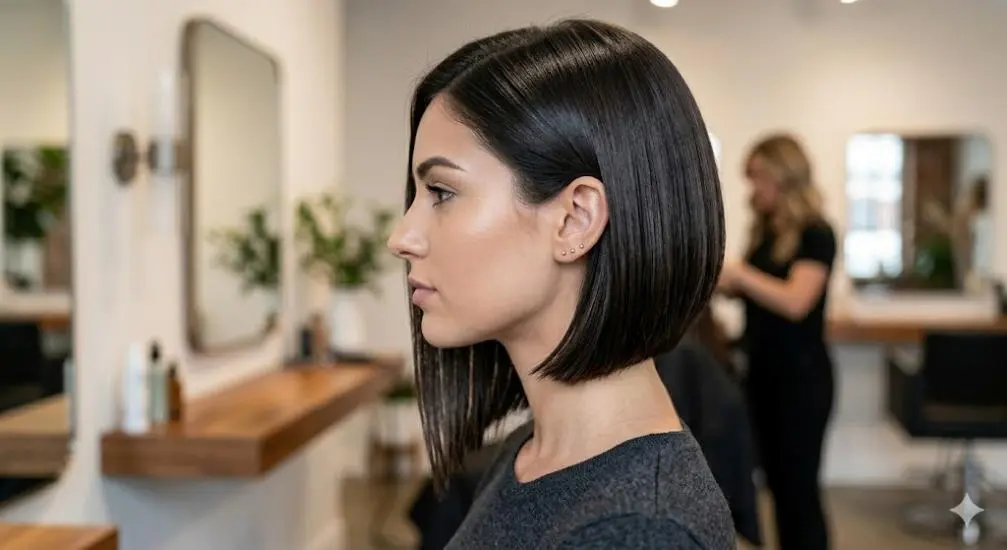
A precise line that dips lower in the front, sometimes by a full inch or more. One side may be slightly longer too, though often it’s symmetrical but angled. The front hits around the collarbone while the back stays at the nape. It’s a subtle, graphic shape that elongates the neck without feeling severe.
Best on straight to slightly wavy hair; curly textures will obscure the asymmetry. Oval, heart, and round faces can use the longer front to slim the jawline. Square faces may feel the angle accentuates the jaw’s width. Styling difficulty: medium, because you need to ensure the front lies properly flat or curved inward. A flatiron helps. Trims every 5-6 weeks, and you’ll need a stylist who understands how to map the asymmetrical guide so it doesn’t gradually become uneven at home.
11. Curls in a Blunt Perimeter – Yes, It Works

Cut dry, curl by curl, the blunt bob for tight textures (3b to 4c) preserves the shape of each coil while carving a strong silhouette. It’s not about stretching the hair; it’s about working with the natural shrinkage so the perimeter sits where you want it when dry. The result is a rounded, cloud-like shape with a clear bottom line.
Requires an experienced curl specialist. Fine curly hair can get weighed down if the length is too heavy, so the interior will likely be shaped with longer layers. All face shapes can pull this off; it’s all about where the dry length falls. Styling is product-heavy—leave-in conditioner, curl cream, gel—and air-drying or diffusing. Trims every 8-12 weeks, though the shape may soften faster. The biggest mistake is cutting wet without accounting for shrinkage, leaving you with a bob that’s suddenly cheekbone-high and triangular.
12. The Forward-Angled Blunt Bob (Subtle A-Line)

The back is slightly shorter, stacked imperceptibly, while the front remains blunt and longer, dipping toward the collarbone. Unlike a sharp A-line, the angle is modest—think 10 to 15 degrees. This keeps the integrity of a blunt perimeter but introduces a little movement and swing.
Works well on straight to wavy medium to thick hair. Fine hair might lose the impact if the angle is too deep. Round and square faces benefit from the longer front that breaks up horizontal width. Styling difficulty is medium: blow-dry the front forward using a paddle brush to get that sleek fall. Trims every 5-6 weeks to keep the angle clean. Ask the stylist to avoid over-stacking the back; you want the perimeter to remain visibly solid from the side.
13. The Mirror-Gloss Sleek Blunt Bob

This cut is all about finish. The shape itself is a simple chin-length or jaw-length one-length blunt bob, but the hair looks like liquid glass. Think polished to a high-shine, absolutely straight, with no visible texture. The color often plays a role—deep blacks, true reds, cool-toned brunettes.
Needs pin-straight, naturally smooth hair or a very good flatiron and patience. Wavy or textured hair will fight this look daily. Best on oval and heart faces; it’s unforgiving to any asymmetry in the jaw. Styling difficulty is high maintenance: you’ll need a heat protectant, a high-shine serum, and a flatiron pass section by section. Anti-humidity spray is non-negotiable. Trims every 4 weeks—any uneven ends will catch the light and ruin the illusion.
14. The Retro ‘70s Shag Blunt Bob Hybrid

Here’s the rebel. The perimeter is blunt, but the interior has shaggy layers, a heavy curtain bang, and lots of texture. It’s a collision of two worlds: the solid line of a bob with the feathered internal chaos of a shag. The ends look dense, but the crown has volume and bounce.
Ideal for wavy and curly hair, fine to medium density. Thick hair may need substantial interior thinning. Round faces get great lift from the shaggy crown; square faces get softness. Styling difficulty: low. It’s meant to be messy—scrunch, diffuse, go. But trims are tricky: the blunt perimeter needs refreshing every 6 weeks, while the shag layers can grow out and look heavy on top if neglected. Ask your stylist to keep the bottom two inches heavy and solid, then layer above aggressively.
15. Bleached-Out Platinum Blunt Bob with Dark Roots

The cut is simple—typically a one-length lob or chin bob—but the color does the heavy lifting. Icy platinum, often with a dark root shadow, makes the blunt line appear even sharper, like it’s outlined. The contrast emphasizes the perimeter.
Works on straight to slightly wavy hair. Curly textures might make the color look softer, which can be pretty too. All face shapes, but be cautious if your skin tone can’t carry such stark lightness without washing you out. Styling difficulty is moderate, and bond-repair treatments become essential because bleaching compromises hair integrity. A blunt cut on bleached ends can look dry and split if not deep-conditioned obsessively. Trims every 4-5 weeks to snip away any damage before it travels upward.
16. The Nape-Undercut Blunt Bob (Hidden Surprise)

From the front, it reads as a classic chin-length or collarbone blunt bob. Then you turn around and there’s a closely clipped or shaved nape underneath. The blunt perimeter sits over it, keeping the solid line in front while removing bulk in the back—a lifesaver for thick, hot necks.
Necessary for very thick, coarse hair that tends to mushroom at the nape. Fine hair doesn’t need this, and the regrowth on an undercut can look odd if you ever want to grow it out. Oval and heart faces get the illusion of a slimmer neck. Styling difficulty is low because the undercut self-maintains; just dry the top layer as usual. Trims for the blunt part every 5 weeks, undercut touch-ups every 2-3 weeks if you want it tight. Be ready for an awkward grow-out phase that requires patience.
17. Sharp-Inclined Blunt Bob (Higher at Back)
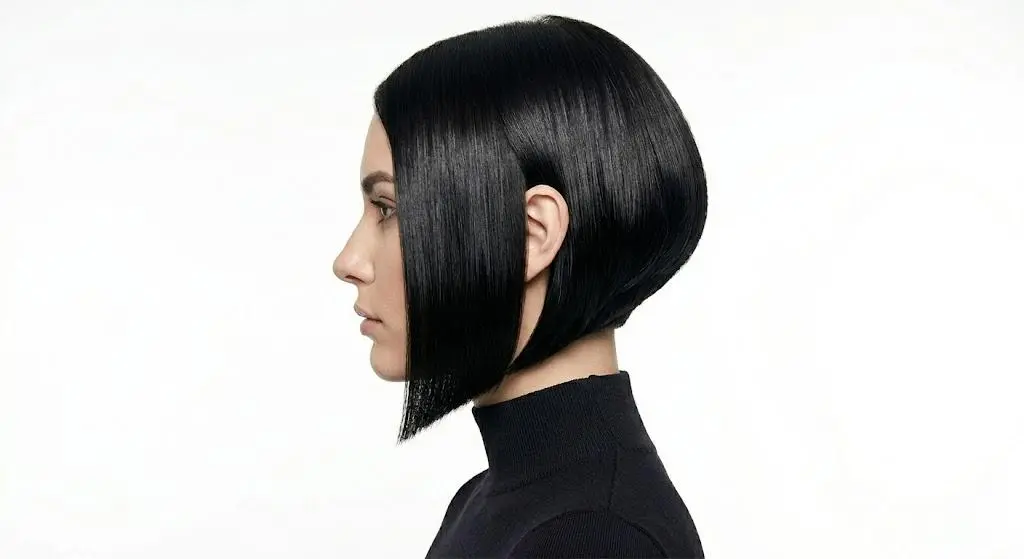
This is the more dramatic sibling of the subtle A-line. The back is stacked high, often to the occipital bone, while the front sweeps down to jaw or even chin length, all while maintaining a completely blunt perimeter—no layering visible from the profile. The side silhouette looks like a sharp diagonal slash.
Straight, smooth hair is key; waves and curls disrupt the clean line. Best on oval, long, and heart-shaped faces. It can make a round face look wider if the incline cuts across the cheeks. Styling requires precision: a flatiron is essential to keep that angled line crisp. Trims every 4 weeks, and a stylist who knows how to carve an incline without thinning out the bottom edge. Over-direction during cutting can ruin the line, so ask for a side-parting guide to set the angle.
18. The Soft Interior Blunt Bob (Grow-Out Friendly)

Outwardly blunt, but the internal layering is so subtly blended that as it grows, the shape doesn’t immediately collapse into a mullet or lose its structure. The ends are solid, but the body has movement. After 8 weeks, it still looks intentional, just softer.
Great for anyone who can’t commit to salon visits every month. Works on straight to wavy hair, fine to medium. Thick hair will need a bit more weight removal. All face shapes can manage it; it’s the most forgiving blunt iteration. Styling is low to medium—blow-dry with a round brush at the ends, or let it air-dry and it will still hold a shape. Trims every 7-8 weeks. Tell your stylist: “I want the blunt perimeter, but build in internal graduation that’s invisible when it’s freshly cut so the grow-out stays graceful.”
Styling and Maintenance: What Nobody Tells You
The blunt bob’s best friend is a good blow-dry. Whether you’re using a round brush to curl the ends under or a flatiron to create a subtle bend, heat is often non-negotiable for that polished look. But heat damage on such an exposed cut shows quickly—split ends are magnified when the line is supposed to be clean. Use a heat protectant every single time. A smoothing cream like Olaplex No.6 or a lightweight oil on mid-lengths and ends keeps the blunt edge looking sealed.
For volume on fine hair, apply a root-lifting spray or mousse before drying, then set the top with a large Velcro roller while it cools. Thick hair will need a dehumidifying spray if you live somewhere sticky; otherwise the blunt line can puff out and lose its definition. Dry shampoo is your second-day ally—sprayed at the roots, it also adds grit to help bend the ends without them going flat.
Trimming frequency is more urgent with a blunt bob than with layered cuts. To keep the line sharp, schedule appointments every 4 to 5 weeks. If you’re okay with a slightly softened shape, 6 to 7 weeks is plausible. The moment you feel the ends starting to flip in different directions or see small splits when you hold the hair up to light, it’s time.
What to Ask Your Stylist (Exact Words)
Walk into the salon with phrases that are specific and visual. Don’t just say “blunt bob.”
- “I want the perimeter completely one-length, no graduation at the bottom, but please slice out some internal weight so it doesn’t look triangular from the back.”
- “Keep the line strong but point-cut the last millimeter so it’s not chunky.”
- “If I tuck my hair behind my ears, I still want to see a solid line along the bottom.”
- “Can you dry cut the perimeter to check how my natural texture sits, then refine the interior?”
- “I want a blunt shape that still moves when I walk—can you do hidden internal layering without breaking the edge?”
- “I have a cowlick at the back; please check how the blunt line falls and maybe leave a tiny bit of extra length there.”
Common Mistakes That Can Ruin a Blunt Bob
Too much thinning shear work on the ends. It’s a classic error: the stylist tries to “soften” the look and suddenly your blunt bob has wispy, see-through tips that lose the graphic impact. A blunt cut thrives on density at the perimeter. Also, cutting a true one-length bob on very curly hair while it’s wet without accounting for shrinkage—you’ll end up with a shape that’s far shorter and wider than intended. Another mistake: expecting a blunt bob to magically create volume on baby-fine hair without any product or root prep. It won’t. You need that foundation. And finally, ignoring your hairline and growth patterns—the blunt line will always expose a strong cowlick or uneven nape, so a good stylist has to customize the cut, not just follow a template.
FAQ
Does a blunt bob make your face look rounder?
It can if the length hits right at the widest part of your cheeks or jaw. Dropping the length slightly below the jawline or adding a subtle forward angle tends to elongate a round face. Face-framing pieces that aren’t part of the blunt perimeter can also offset the widening effect.
Can blunt bobs work on curly hair?
Absolutely, but it needs to be cut dry, curl by curl, with careful weight removal so the shape doesn’t triangle out. Shrinkage is real—your stylist has to map the silhouette in its natural state. A curly blunt bob often looks rounded and beautifully structural.
How often do I need a trim to keep the line sharp?
Every 4 to 5 weeks for a crisp, fresh-from-the-salon edge. If you embrace a slightly lived-in shape, 6 to 7 weeks can work, but you’ll notice the corners start to drop and the line softens.
What’s the difference between a blunt bob and a sharp bob?
They’re often used interchangeably, but a “sharp bob” usually refers to a cut with a very clean, crisp line, often slightly angled. A blunt bob specifically means the perimeter is one length, with no graduation or layers breaking that solid edge.
I have fine hair. Will a blunt bob make it look thinner?
Not if the weight is managed correctly. Too much heaviness at the bottom can pull the roots flat, making fine hair look sparse. Ask for internal weight removal (slicing, not texturizing the ends) so the shape stays full-looking but not heavy. Volumizing products at the root are non-negotiable.
Can I pull off a blunt bob with a double chin?
Yes, but placement matters. A length that hits just below the jaw or at collarbone can visually lengthen the neck instead of drawing a stark line across the chin. Softness around the face, like subtle face-framing that doesn’t break the perimeter, also helps.
How do I grow out a blunt bob gracefully?
The easiest way is to transition to a soft interior blunt bob style. Ask for long internal layers that keep the shape connected as it grows, and resist the urge to add lots of choppy layers. Regular trims that maintain the perimeter but take a little length off the bottom over time will prevent that awkward mullet phase.
Is a blunt bob high maintenance?
The precision version is definitely higher maintenance than a layered cut—more heat styling to keep the line sleek, and frequent trims. But a more textured, lived-in blunt bob can be washed, air-dried, and scrunched, requiring much less daily effort. It depends on the version you choose.
Final Thoughts
A blunt bob is one of the most intentional choices you can make with your hair. It’s not a cut that hides—it’s a cut that frames and defines. There’s a version for the woman who loves her flatiron and her monthly salon visits, and there’s a version for the woman who just wants to look pulled together after a quick air-dry. The trick is matching the variation to your real life, your real texture, and your real patience for upkeep. Take a few of these screenshots to your consultation, but even more importantly, take the words. A blunt bob should feel like yours, not like a copy of a reference photo.
Further reading: 18 Bob Haircuts with Curtain Bangs That Instantly Elevate Your Look.
Further reading: 20 Layered Bob Haircuts: The Real Guide to Styling & Maintenance.